
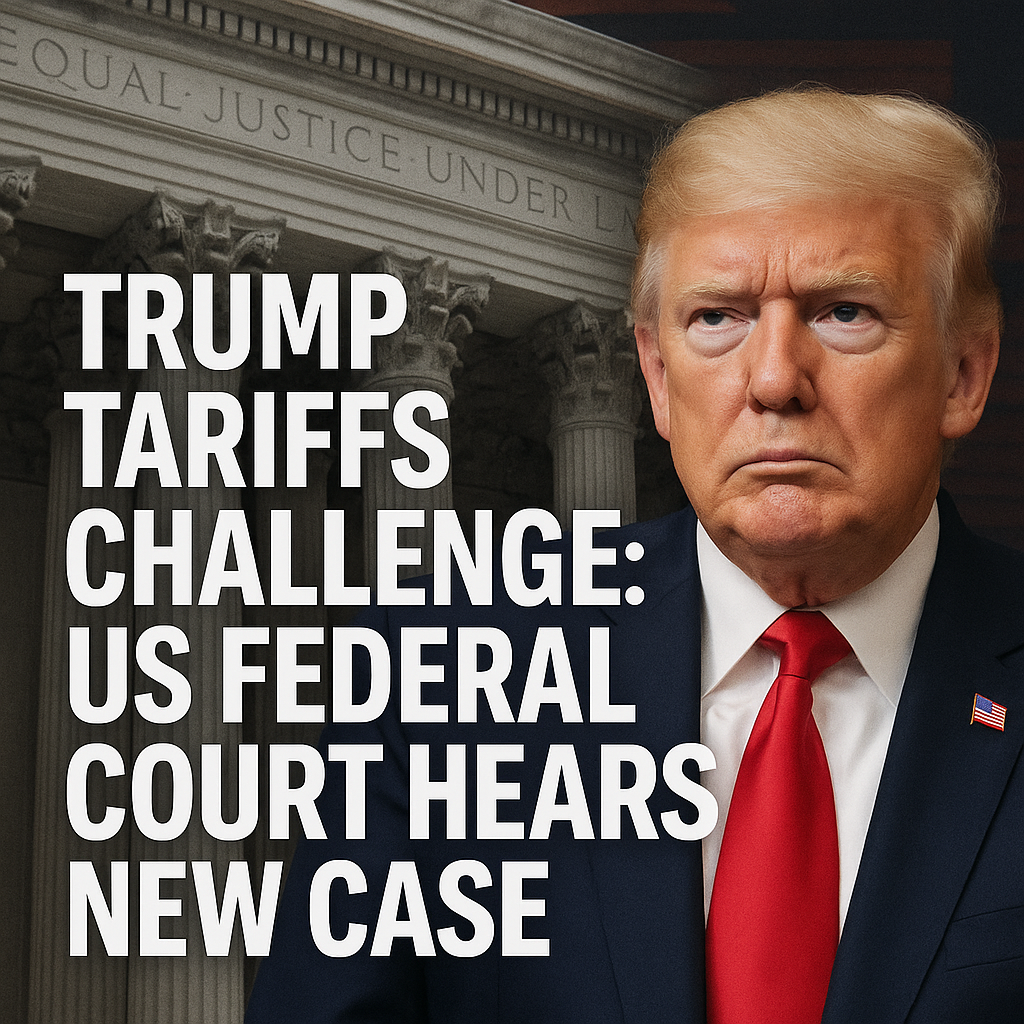
Trump Tariffs Challenge: US Federal Court Hears New Case

Trump Tariffs Challenge: US Federal Court Hears New Case
The recent hearings in a US federal court regarding tariffs initiated during the Trump administration present another chapter in the ongoing debate about trade policy and its economic ramifications. As arguments unfold, the complexities surrounding these tariffs and their impacts are becoming increasingly topical in financial and political discourse.

History of Trump’s Tariffs
The imposition of tariffs by the Trump administration aimed primarily at protecting American industries by taxing imported goods, particularly from China. This move was touted as part of a broader strategy to reduce the trade deficit and bolster domestic manufacturing. However, these tariffs also sparked a series of retaliatory measures from affected trading partners, which many argued led to higher prices for consumers and strained international relations.


According to Al Jazeera, the case in question challenges the legality of the tariffs, citing concern that they were implemented without proper congressional authorization. This reflects a significant contention in trade policy—the balance of power between the executive and legislative branches. Activists and some lawmakers argue that such trade barriers should have clear justification and oversight, rather than being unilaterally decided by the executive.


Economic Implications
Economically, tariffs can be a double-edged sword. Proponents, including some manufacturers, argue that tariffs are essential for protecting jobs within the US and ensuring fair competition. They cite instances where increased domestic production led to job retention in sectors traditionally threatened by cheaper imports. A recent piece from RT highlighted this perspective, noting that “many American workers depend on strong protections against unfair competition.”
On the other hand, critics assert that tariffs often lead to higher prices for consumers and increased costs for businesses relying on imported materials. Sky News reports that smaller businesses, in particular, have felt the pinch, struggling to absorb the cost increases or pass them on to their customers without suffering a loss in sales. This duality—protecting jobs versus fostering overall economic growth—creates a complex landscape that policymakers must navigate carefully.
Should the Tariffs Stay or Go?
As the court hears arguments, opinions about the necessity of retaining these tariffs differ significantly among stakeholders. Some economists advocate for a more open trade framework, suggesting that tariffs hinder long-term economic growth and the competitiveness of US businesses on a global scale. Notably, they argue that many allies of the US are also facing similar issues that culminated from these tariff policies.
Conversely, many in the manufacturing sector vigorously defend these tariffs, seeing them as instrumental in addressing longstanding grievances regarding unfair trade practices by countries like China. They attribute the increased product costs not solely to tariffs, but also to market dynamics that they feel are skewed against American interests.
The Road Ahead: Uncertainty in Trade Policy
As the courts deliberate, the broader implications of the case may extend beyond the tariffs themselves. Should the court rule against the tariffs, the decision could signal a shift toward more rigorous checks on the executive branch’s trade powers. Conversely, affirming the tariffs could provide the current administration with a broader mandate to use them as a tool for international trade negotiations.
Furthermore, given the polarized nature of American politics, the resolution of this case is more than just a legal matter; it reflects ongoing ideological divisions about national sovereignty, economic strategy, and America’s role in the global marketplace. The complexity of trade law, coupled with fluctuating global economic conditions, means that a simple solution is unlikely.
Conclusion
The case surrounding Trump’s tariffs encapsulates the intricate balance between protecting domestic industries and encouraging a competitive market environment. With divergent viewpoints on both the effectiveness of tariffs and their economic implications, the outcome of this federal court case may have far-reaching consequences.
As the debates continue, stakeholders on all sides of the issue must remain vigilant, considering not just immediate impacts but also the longer-term ramifications for both the economy and international trade relations. In this critical moment, the court’s decision could redefine trade policy in the US for years to come.















