
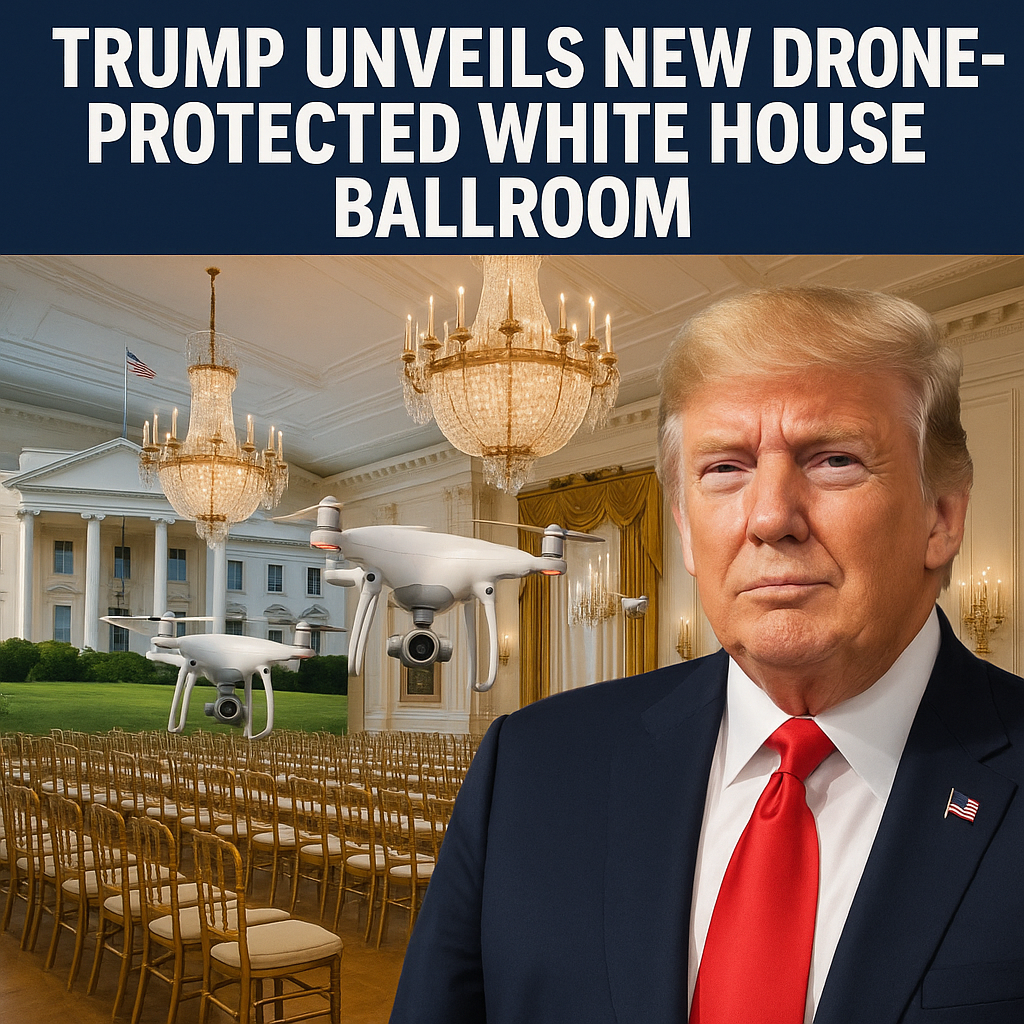
Trump Unveils New Drone-Protected White House Ballroom

Trump Unveils New Drone-Protected White House Ballroom
Former President Donald Trump recently introduced a high-tech enhancement to the White House: a drone-protected ballroom designed to enrich national security while offering an opulent setting for state functions. This innovative project has sparked a variety of reactions, reflecting the complex landscape of opinions surrounding the intersection of luxury, security, and technology in government spaces.

The Significance of Security Enhancements
In an era where urban safety and counter-terrorism are paramount, Trump’s announcement commands attention. The ballroom’s design incorporates advanced drone technology intended to bolster security during high-profile events. According to reports from Al Jazeera, the initiative aims to provide an extra layer of surveillance and protection from potential threats.


Proponents of this technology argue that in today’s geopolitical climate, high-profile figures must be safeguarded against an array of risks, from terrorism to espionage. The integration of drones is seen as a forward-thinking approach, aligning the traditional image of the White House with modern technological advancements.


However, critics raise concerns about the implications of such technologies in the spaces that are meant to symbolize democracy and openness. Security features that lean heavily on surveillance—especially drones—may contribute to public unease regarding privacy and the normalization of security over transparency.
The Aesthetic and Practical Aspects
Beyond security, the new ballroom aims to serve as a lavish venue for both domestic and international gatherings. Designed with not just function but aesthetic appeal in mind, the space has been described as a seamless fusion of elegance and modernity. It reflects the notion that while safety remains crucial, the essence of hospitality and representation as a nation should not be lost.
However, some media outlets, including RT, argue that such expenditures on luxury spaces in a time of economic upheaval raise questions about priorities. Is this a prudent investment of taxpayer dollars? Could funds allocated towards aesthetic enhancements instead be directed to pressing social issues, such as healthcare and education? The juxtaposition of glamour and necessity mirrors broader societal dilemmas facing American citizens.
The Broader Context of Technological Integration
The unveiling of the drone-protected ballroom is not happening in isolation. The discussion around advanced security measures touches on a broader trend within governmental institutions embracing new technologies. With the arrival of tools designed to monitor and safeguard public spaces, there is an underlying tension between public safety and individual freedom.
Different viewpoints reveal a clear divide in public sentiment. Supportive voices often cite the rapid advancement of drone technology and its efficacy in ensuring safety at large gatherings. They underscore the adaptability required in a world where threats can arise unpredictably. Critics, on the other hand, voice apprehensions regarding the potential overreach of surveillance technologies and the encroachment on civil liberties.
Finding Common Ground Amid Divisive Views
Despite the polarized opinions, a consensus exists on the need for a balanced approach. The introduction of advanced technology in high-security spaces like the White House ballroom must come with ethical considerations. Transparency in the operations of these technologies is essential to garner public trust.
Moreover, as this debate unfolds, it serves as an opportunity to discuss broader implications of drone technology—not only in government but across various sectors, including law enforcement and urban planning. Stakeholders must engage in more inclusive conversations that reflect the technological landscape’s complexities.
In summary, while Trump’s announcement regarding the drone-protected ballroom reflects an ongoing evolution of security measures within prestigious governmental spaces, it simultaneously raises important questions. How can technology serve to enhance safety without compromising privacy or public trust? The dialogue surrounding this initiative must continue as society navigates the balance between innovation and civil rights.















