
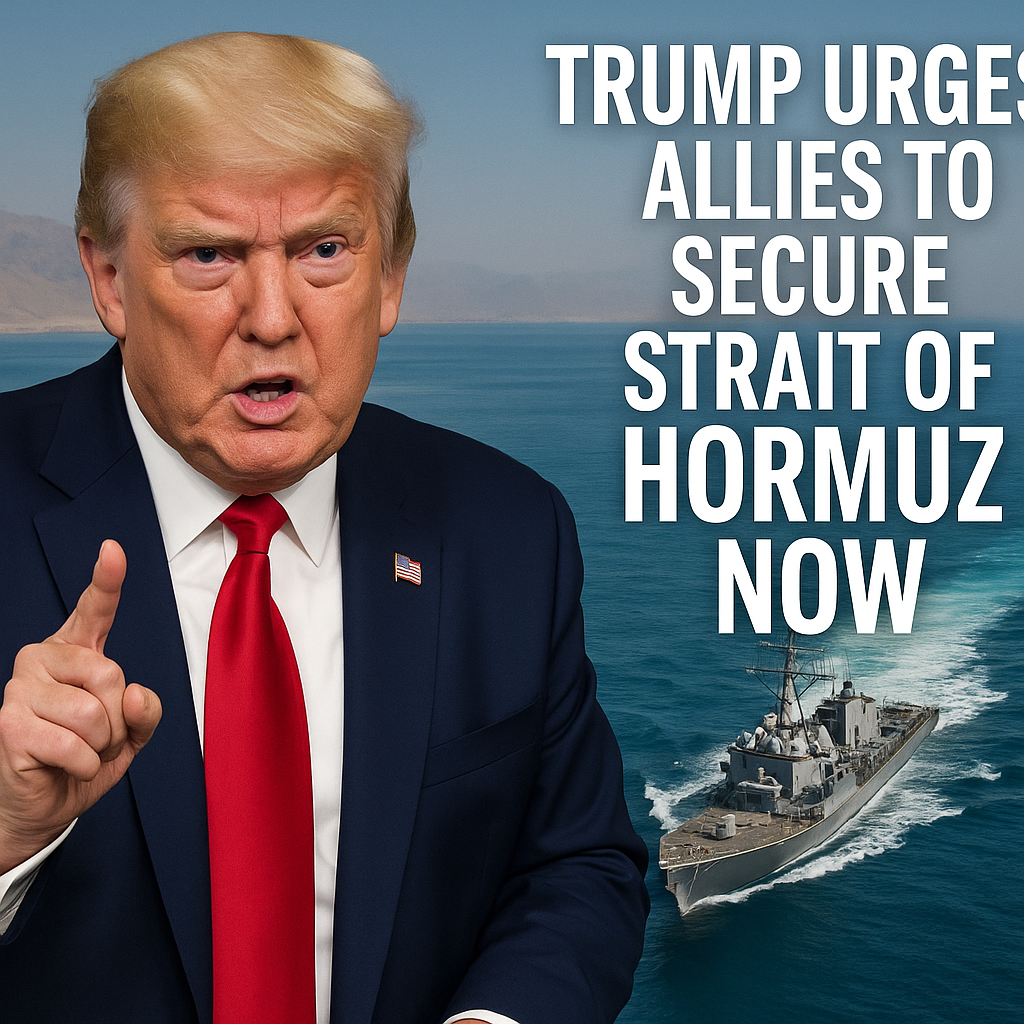
Trump Urges Allies to Secure Strait of Hormuz Now

Trump Urges Allies to Secure Strait of Hormuz Now
In a recent surge of geopolitical rhetoric, former President Donald Trump has urged allies to prioritize the security of the Strait of Hormuz. This pivotal maritime chokepoint, through which approximately one-fifth of the world’s oil supply passes, remains a focal point of international security discussions. Trump’s call has provoked diverse reactions from political experts, analysts, and allied nations, thereby highlighting the complexities surrounding maritime security and oil supply.

The Strategic Importance of the Strait of Hormuz
The Strait of Hormuz serves as a vital artery for global trade, connecting the Persian Gulf with the Arabian Sea. According to various reports, including one from RT, approximately 17 million barrels of oil transit the strait daily, making it a linchpin for energy security. Any disruption in this route could trigger not just regional instability but also a significant global economic impact.


In response to rising tensions with Iran, Trump’s assertion that allied nations must take a more proactive stance in securing the strait aligns with broader strategic objectives to counter perceived threats from Iranian influence. Experts argue that Iran’s military activities in the region pose a continuous risk to maritime shipping, necessitating a strong, united front among international partners.


Diverse Perspectives on Urgency and Implementation
The call to secure the Strait of Hormuz has elicited varied responses from analysts and foreign leaders. On one side, proponents underscore the necessity for a collective defense strategy. For example, Al Jazeera reports that recent incidents, including confrontations between Iranian forces and international vessels, underscore the imperative for enhanced security measures in the strait. The argument here rests on unity and proactive deterrence, suggesting that allies should not only bolster their naval presence but also engage in joint exercises aimed at enhancing regional stability.
Conversely, some analysts caution against a unilateral or overly aggressive military response, advocating for a balanced approach that emphasizes diplomacy in parallel with security. Critics argue that such a military posture could escalate tensions with Iran, pushing it towards more aggressive posturing or even conflict. Sky News notes that many nations are wary of increasing military involvement in the region, highlighting the intricate balance between securing trade routes and navigating complex diplomatic relations.
Maritime Security: Challenges and Collaborative Efforts
Ensuring maritime security in the Strait of Hormuz requires a multifaceted approach. Military presence is important, but so are diplomatic channels that can mitigate potential conflicts. Collaborative initiatives, such as including nations like Japan and EU states in security discussions, may help ease tensions. While Trump’s rhetoric may spur immediate action, the long-term solution lies in diplomatic engagement alongside any military preparations.
– Strengthening Naval Alliances: Countries such as the U.S., UK, and France could consider forming a multinational coalition that includes regional players to share the burden of securing these waterways.
– Investment in Surveillance Technologies: Advanced monitoring systems could provide a strategic advantage, facilitating early detection of any hostile actions in the strait.
– Promoting Dialogue with Iran: Continuing diplomatic engagement with Iran, perhaps through backchannel communications, could help diminish hostilities and secure a more stable environment for shipping.
Conclusion: A Complex Path Forward
Trump’s call to action regarding the Strait of Hormuz encapsulates the ongoing dialogue about regional security and global economic stability. While there is broad agreement on the need for heightened vigilance, the means of achieving that security through military or diplomatic channels remains a matter of debate. As tensions in the region fluctuate, it is evident that safety in critical maritime zones requires a careful, coordinated effort that balances strength with diplomacy.
The landscape of international relations concerning the Strait of Hormuz is fraught with challenges and opposing perspectives. Ultimately, the commitment to a secure and stable maritime environment will depend on the collaborative efforts of allies, taking into consideration the complexities of regional politics and the overarching goal of maintaining global energy security.















