
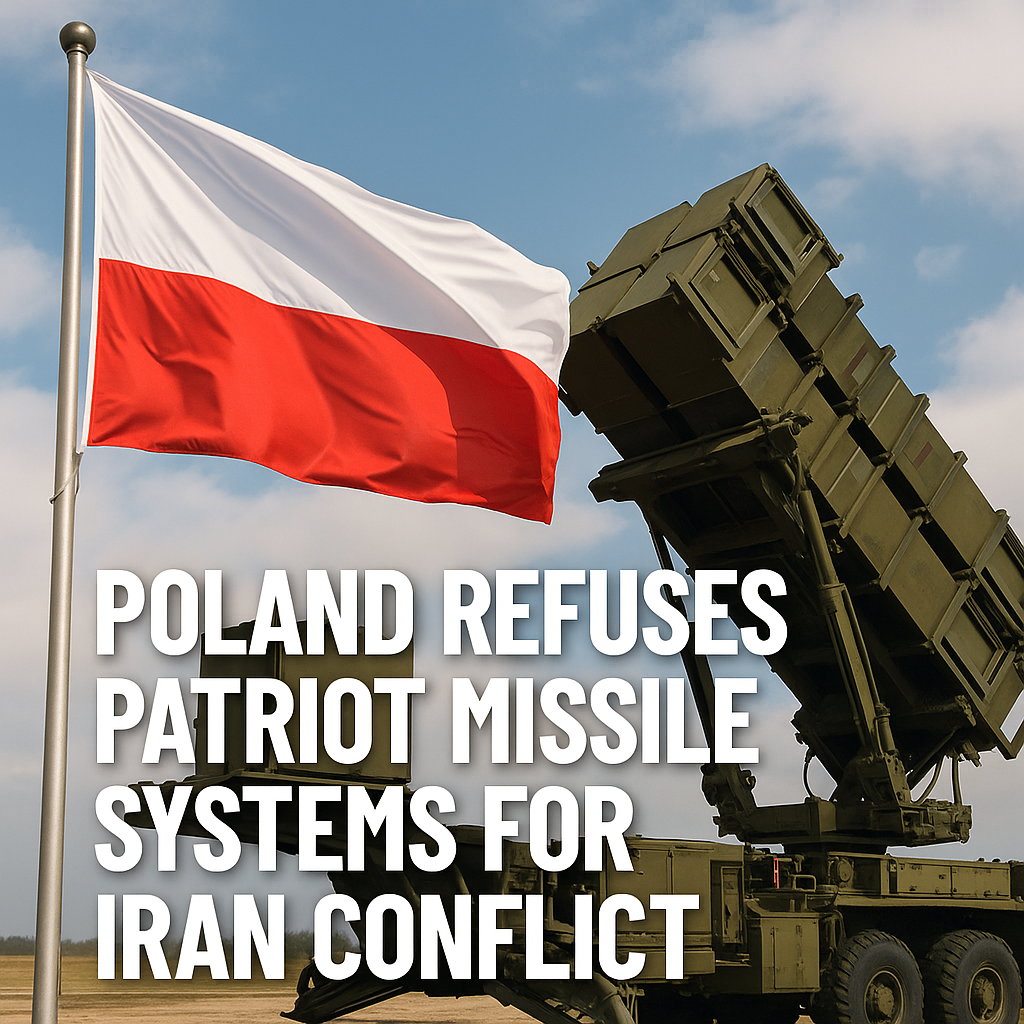
Poland Refuses Patriot Missile Systems for Iran Conflict

Poland Refuses Patriot Missile Systems: A Complex Standoff
Poland has recently made headlines by declining the United States’ request to send Patriot missile systems to aid in the ongoing conflict involving Iran. This decision underscores a nuanced geopolitical landscape shaped by alliances, security concerns, and historical context.

The Roots of Poland’s Decision
The backdrop for Poland’s refusal is intricate and multifaceted. As tensions escalate between the U.S. and Iran, American officials have sought to bolster defenses in strategically important regions by appealing to allies like Poland. The Patriot missile systems, known for their advanced capabilities in intercepting aerial threats, were seen as a vital asset in the deterrence strategy against potential Iranian aggression.


However, Poland’s government, led by the ruling Law and Justice Party (PiS), appears hesitant to provoke further escalation. The Polish Defense Minister, Mariusz Błaszczak, cited concerns over the implications of such a move on regional stability. In an official statement, he emphasized, “Poland maintains a stance that supports de-escalation of tensions in the Middle East, and our focus is on ensuring our own security and that of the NATO alliance.”


While many Western allies have rushed to express their cooperation with U.S. initiatives, Poland’s stance reflects a more cautious approach—a desire not to become embroiled in a conflict that does not directly threaten its national security.
Balancing Act: National Security and International Relations
Poland’s decision can also be viewed through the lens of its historical experiences with foreign intervention. The nation has endured invasions and occupations that have shaped its approach to international alliances. This historical memory informs its current diplomatic strategy, compelling Warsaw to weigh the risk of potential repercussions from Iran against the support it offers to the U.S.
Interestingly, Poland has been seeking to bolster its defense capabilities independently, focusing on homegrown initiatives and partnerships that align closely with its domestic interests. As it navigates its relationships with larger powers, including the U.S. and those in Europe, Poland attempts a careful balance: seeking to affirm its sovereignty while also fulfilling its obligations under NATO.
Some analysts contend that Poland’s refusal signals a profound shift in how regional politics are managed. “Countries are increasingly prioritizing their own security needs over traditional alliances,” noted Janusz Bugajski, a senior fellow at the Center for European Policy Analysis. This view posits that as global dynamics shift, nations may choose paths that reflect their unique priorities rather than casting their lot solely with historic allies.
Contending Perspectives on Regional Stability
The debate surrounding Poland’s decision is layered with contrasting viewpoints. On one hand, proponents of military aid and intervention argue that refusing to send the Patriot systems to the Middle East may embolden hostile actors like Iran. They contend that a robust defensive posture is critical for deterring aggression and ensuring the safety of allied nations. U.S. officials, in particular, have expressed disappointment, underscoring the expectation that allies would rally in support of shared threats.
Conversely, others maintain that Poland’s reluctance serves as an important reminder of the need for diplomacy and dialogue over military escalation. In this vein, analysts argue that military solutions often exacerbate tensions, highlighting the potential catastrophic outcomes of escalated conflict. Mike Turner, a U.S. Congressman, remarked, “We must remember that engagement, not aggression, should be our approach in resolving complicated international disputes.”
Crucially, Poland’s stance has evoked support from certain factions within Europe who argue for a less militaristic approach to foreign policy and question the efficacy of heavy infantry solutions in a complex geopolitical landscape. This growing sentiment may influence European Union foreign policy discussions, particularly as states seek to uphold stability while also safeguarding their autonomy.
Conclusion: Navigating an Uncertain Future
Poland’s decision to refuse the Patriot missile systems amidst the Iran conflict raises significant questions regarding international alliances and regional stability. As the geopolitical landscape continues to evolve, it becomes evident that local security needs often compete with broader political obligations.
While some may see Poland’s refusal as a step back from traditional alliances, it may also represent a strategic recalibration grounded in historical lessons and national priorities. As countries align their military strategies with a growing inclination towards sovereignty and self-determination, the future of international cooperation remains uncertain. The dialogue surrounding security, diplomacy, and national interests is bound to remain pivotal as we navigate an increasingly complex world stage.















