
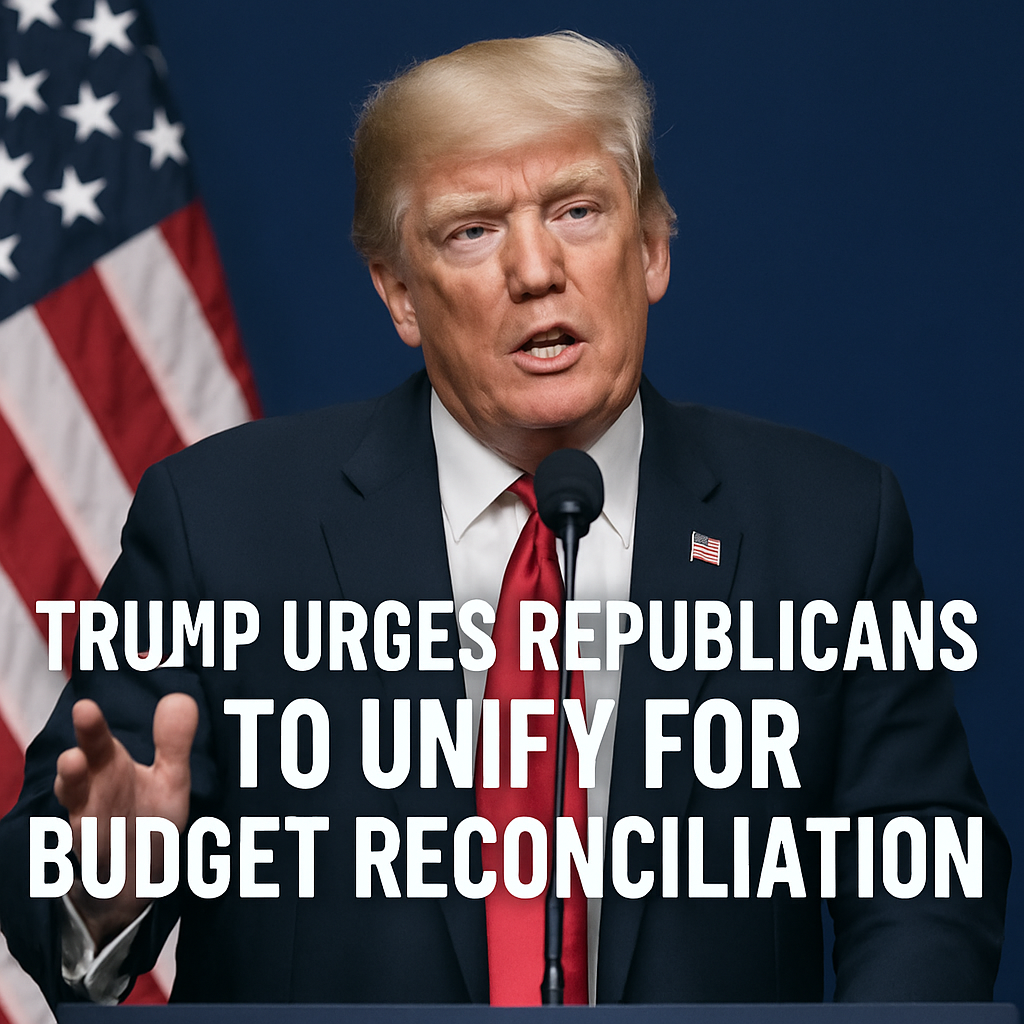
Trump Urges Republicans to Unify for Budget Reconciliation

Trump Urges Republicans to Unify for Budget Reconciliation
Donald Trump recently called for a unified Republican effort to push for budget reconciliation, especially as the United States faces mounting economic challenges. His appeal comes at a pivotal moment where the dynamics within the Republican Party are as diverse as ever, raising crucial questions about the potential for cohesion and shared priorities among party members.

The Urgency of Budget Reconciliation
Trump’s call for unity reflects the pressing need for the Republican Party to find consensus in addressing fiscal responsibilities. The looming possibility of government shutdowns and increasing national debt amplifies the importance of budget reconciliation—a process allowing expedited consideration of certain legislation related to budgetary matters. This mechanism could help streamline efforts toward fiscal responsibility and supportive measures for businesses and taxpayers.


In his statements, Trump emphasized that achieving a collective goal through budget reconciliation could bolster the party’s influence and showcase its commitment to responsible governance. Many Republicans recognize the necessity of addressing key issues such as inflation, economic stimulus, and job creation. However, the intra-party rift over priorities, strategies, and ideological divides raises concerns about the feasibility of cohesive action.


Diverse Perspectives Within the Republican Party
The Republican Party’s response to Trump’s rallying cry has been mixed. Some members back his vision, arguing that unified efforts are essential, especially as they face opposition from a Democratic-controlled Congress. This faction believes that a strong front will not only improve chances for successful negotiations but also reinvigorate the party’s standing with voters who prioritize economic stability.
Conversely, other factions within the party harbor skepticism. Some Republican leaders are wary of aligning too closely with Trump’s agenda, fearing that it may alienate moderate voters. For instance, voices from centrist Republicans highlight the need for compromise and bipartisan cooperation over blind loyalty to any single leadership style. They argue that the party can address budgetary needs while ensuring that the diverse voices within the GOP are still heard and represented.
The Challenges of Unification
Despite the apparent urgency for cohesive action, several factors complicate the process of unification among Republicans. The party is currently wrestling with differing priorities: while some members call for aggressive tax cuts and spending restrictions, others prioritize social programs that appeal to a broader electorate. This divergence can stall progress, particularly in a high-stakes environment where party unity is critical.
A notable example is the ongoing debate surrounding federal spending. Some Republicans want to maintain necessary funding for infrastructure and social safety nets, while others push for austerity measures that could potentially hinder these initiatives. The challenge lies not only in reconciling these viewpoints but also in presenting a united front that resonates with the electorate ahead of impending elections.
Trump’s influence remains a double-edged sword. His strong base steadfastly supports his vision for the party, but his controversial style and policies can be polarizing, which deters some potential voters. As part of their strategic planning, Republican leaders must weigh the benefits of Trump’s endorsement against the risk of alienating moderate constituents, all while navigating potential primary challenges that could surface from the right.
Moving Forward
In light of Trump’s call to action, Republican leaders have a crucial opportunity to assess their strategy moving forward. They must engage in frank discussions about priorities and find common ground to effectively tackle budget reconciliation. Whether they opt for a more aggressive or a balanced approach, the outcome will directly impact not only their legislative agenda but also their long-term reputation with the American public.
As the situation develops, it will be essential for Republicans to remain adaptive and responsive to the complexities within their ranks, rather than defaulting to a singular vision that may not reflect the multifaceted nature of their constituents’ needs. Only through meaningful deliberation can they hope to present a united front on issues that matter most to voters concerned about the nation’s financial future.
Ultimately, whether Trump’s call to unify serves as a rallying point or highlights the chasm of ideologies within the GOP remains to be seen. The ongoing conversation about budget reconciliation could serve as a litmus test for the party’s unity and direction in the months leading to the next election.















