
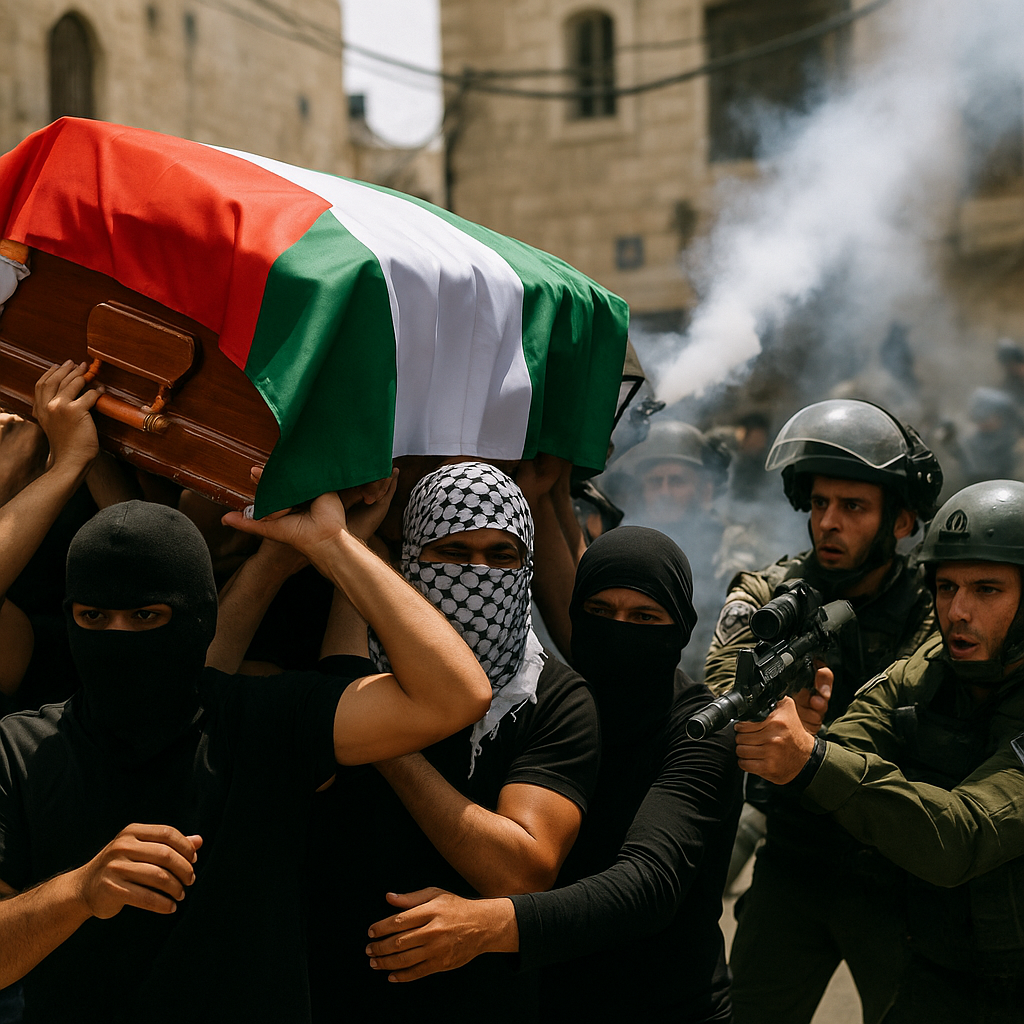
Israeli Forces Clash at Funeral of Palestinians Killed by Settlers

Israeli Forces Clash at Funeral of Palestinians Killed by Settlers
The recent clashes at a funeral in the West Bank illustrate the deepening tensions between Israeli forces and Palestinians. In an event marked by grief and anger, the conflict escalated when mourners paid their last respects to Palestinians fatally shot by Israeli settlers.

Context of Rising Tensions
The situation underlying these clashes is complex, rooted in decades of political, social, and territorial disputes. The funeral of the Palestinians, who were killed under troubling circumstances, became a flashpoint for broader frustrations among Palestinian communities. Clashes like these typically occur amidst ongoing Israeli-Palestinian tensions, exacerbated by a rise in violence related to settlement activities in disputed territories.


Reports from various sources indicate that the funeral was held in the village of Husan. Eyewitness accounts describe how Israeli forces reportedly fired tear gas and rubber bullets to disperse the crowd, resulting in further injuries and chaos. The presence of the Israeli military at such a sensitive event has raised questions about the use of force in civilian gatherings, especially during mourning.


This event has triggered an outcry from human rights advocates who argue that such military actions can inflame already high tensions between communities. Al Jazeera reported that the burial site became a site of confrontation, highlighting the pain and anger felt by the Palestinian community, particularly as mourning often serves as a significant communal ritual.
Differing Perspectives on the Engagement
Various media outlets have reported on the incident, yet many emphasize differing perspectives on the motivations behind the violence at the funeral.
Perspective of the Palestinian Community
For many Palestinians, the clashes at the funeral represent a broader narrative of oppression and violence perpetrated by Israeli forces. The loss of lives due to settler violence is seen as a tragedy compounded by the state’s response. Local leaders and residents have voiced anger, pointing to a history of discrimination and aggressions that have intensified over recent years.
Human rights organizations have condemned the Israeli military’s actions at the funeral, calling for accountability and expressing concern over the limits placed on the rights of Palestinians, especially during vulnerable times. Many see these actions as indicative of an alarming trend—one where military force overshadows the need for dialogue and understanding.
Israeli Government’s Justification
On the other hand, Israeli officials defend the military’s presence as necessary for maintaining order, particularly in volatile situations. They argue that given the ongoing security threats, the military is tasked with ensuring that such events do not escalate into broader violence.
Statements from Israeli sources suggest that the response during the funeral was meant to prevent potential riots that could emerge from the crowd. This viewpoint claims that the Israeli Defense Forces (IDF) serves to protect citizens and maintain peace, especially in regions where tensions regularly flare up.
The Reality of a Divided Narrative
Both perspectives reveal a highly polarized situation. The realities on the ground are complex, with evidence and sentiments supporting various beliefs about the legitimacy of actions taken. The challenge lies in addressing these long-standing grievances in a way that brings about sustainable peace rather than further conflict.
The Path Forward: Navigating a Fragile Situation
The tragic clashes at the funeral raise critical questions about the road ahead for both communities. Amidst the prevailing atmosphere of distrust, can dialogue and compassion find a place in this ongoing struggle? The situation reflects not only the immediate grievances but also the deep-seated fears and historical narratives that guide interactions.
Potential Solutions for De-escalation
1. Dialogue Initiatives: Establishing channels for communication between communities can foster understanding and perhaps lead to reconciliation efforts. Community leaders from both sides could engage in discussions aimed at addressing grievances directly.
2. International Involvement: Organizations such as the United Nations and various non-governmental entities could play a mediation role, facilitating safe spaces for dialogue and ensuring that human rights are prioritized.
3. Monitoring and Accountability: Increased scrutiny of military conduct during civilian gatherings could lessen tensions, ensuring that the rights of individuals are respected regardless of the broader political context.
Conclusion: Seeking Understanding Amidst Clashes
The clashes at the funeral of Palestinians killed by settlers starkly illustrate the urgent need for peace and understanding in a fragmented landscape of conflict. As deaths and violence continue to mar the lives of those in the region, it becomes clear that addressing the underlying issues with compassion and commitment is key to moving forward. The path is fraught with challenges, but through dialogue and wartime restraint, there may yet be hope for a more peaceful coexistence.















