
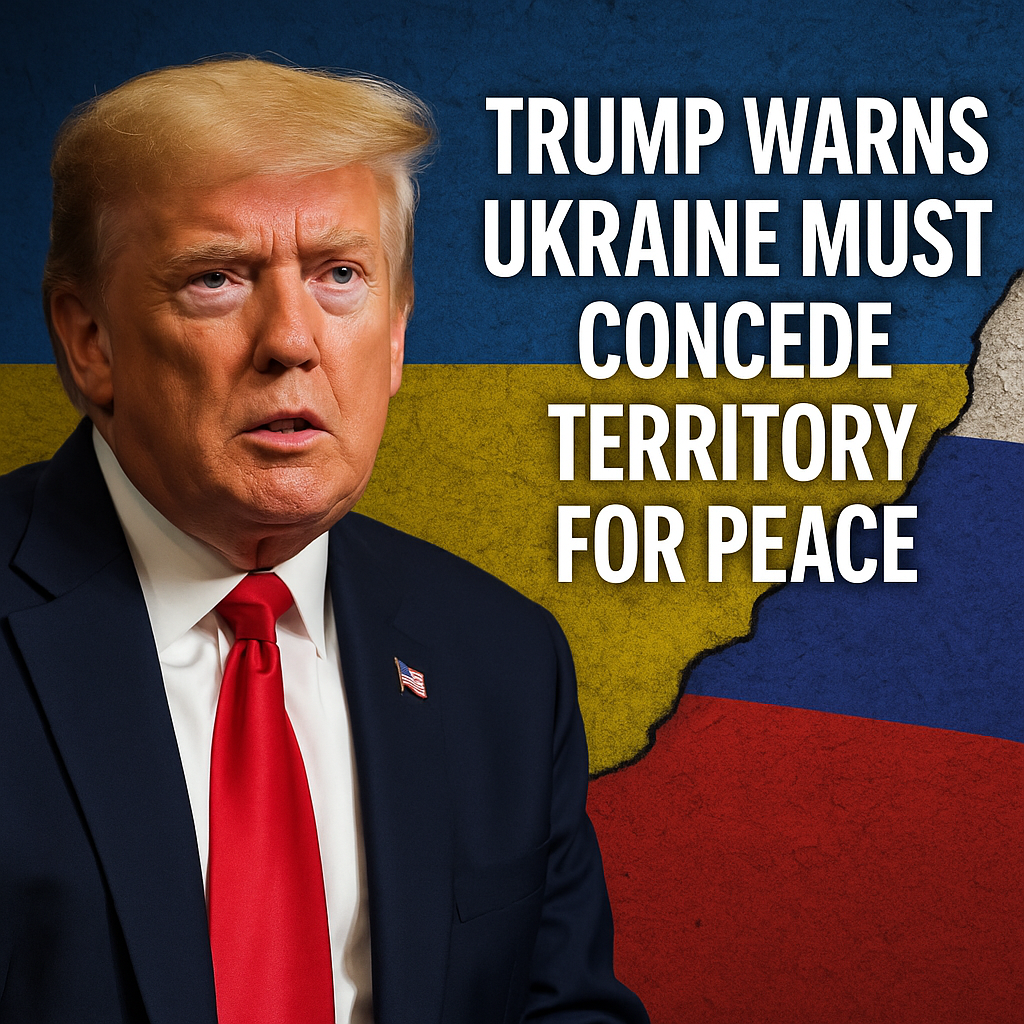
Trump Warns Ukraine Must Concede Territory for Peace

Trump Warns Ukraine Must Concede Territory for Peace
Former President Donald Trump has recently reignited the contentious debate surrounding the ongoing conflict in Ukraine by asserting that the country may need to concede territory to achieve peace. This assertion comes as various international stakeholders assess the complex situation that has persisted since Russia’s invasion in 2022. The implications of such a position are multi-faceted, provoking reactions across the political spectrum and raising questions about sovereignty, territorial integrity, and the feasibility of a peaceful resolution.

The Proponents of Territorial Concession
Trump’s remarks resonate with a segment of the political sphere and public opinion that suggests territorial concessions could pave the way for negotiations and eventual peace. Advocates of this perspective argue that an immediate cessation of hostilities is necessary to save lives and stabilize the region. They believe that territorial negotiations could facilitate a diplomatic resolution, allowing both sides to save face.


One key argument in favor of this approach is the historical precedent where territorial concessions have occasionally led to lasting peace agreements. For example, the 1978 Camp David Accords between Egypt and Israel involved significant territorial changes but ultimately contributed to a long-standing peace between the two nations.


Moreover, some analysts emphasize that as the war drags on, Ukraine’s economic and military resources may become increasingly strained. They caution that continued conflict without a diplomatic solution could lead to greater instability not only in Ukraine but also in Europe as a whole.
Concerns About Sovereignty and Long-Term Consequences
In stark contrast to Trump’s stance are those who argue vehemently against any territorial concessions. Ukrainian officials and many within the international community maintain that conceding territory would constitute a significant violation of Ukraine’s sovereignty. This viewpoint aligns with established international law, which upholds the idea that territorial integrity should be respected, particularly in cases of external aggression.
Furthermore, critics warn that allowing Russia to retain captured territories could embolden further aggression. Historian and political analyst Anne Applebaum argues, “Caving into territorial demands can set a dangerous precedent, encouraging other nations to pursue similar courses of action.” This sentiment reflects a broader concern that the international community, by accepting territorial changes imposed by force, risks undermining global norms regarding the respect for borders.
The Complexity of the Geopolitical Landscape
The debate over territorial concessions is not just a matter of morality or legality; it is deeply intertwined with geopolitical strategies. The Biden administration has emphasized ongoing support for Ukraine, providing military and humanitarian aid while engaging in diplomatic efforts to counter Russian aggression. This strategy reflects a commitment to not only defending Ukraine but also maintaining a global order that opposes territorial conquests.
However, the complexity of the situation is further amplified by the various motivations of international actors. Countries like China and India have remained ambiguous in their positions, often advocating for dialogue but avoiding direct confrontation with Russia. This lack of consensus among key global players complicates the potential for a unified approach toward achieving peace in Ukraine.
A Call for Nuanced Understanding
As the situation evolves, it is critical to approach the question of territorial concessions with nuance. Solutions must consider the legitimate aspirations of the Ukrainian people, the geopolitical landscape, and the potential ramifications of any agreements reached. A simplistic view that advocates for concessions as a path to peace risks undermining the context in which this conflict arose—one that is deeply rooted in historical grievances, nationalism, and international relations.
Moreover, any discussions involving territorial changes should prioritize the voices and agency of the Ukrainian people rather than being dictated solely by external political calculations. The importance of engaging local stakeholders in any negotiations cannot be overstated, as a true peace requires the buy-in and support of those most affected by the conflict.
The Path Forward
As Trump and others advocate for a potential compromise through territorial concessions, the question remains of how to balance the urgent need for peace with the principles of sovereignty and international law. The international community finds itself at a crossroads, with significant stakes involved in shaping the future of Ukraine, regional stability, and global order.
The debate about territorial concessions is reflective of wider concerns about the conditions under which peace can be achieved in conflicts worldwide. It challenges us to think critically about the principles we value and the strategies we employ. As discussions evolve, it is essential to weigh diverse viewpoints thoughtfully, striving for a resolution that respects human dignity, sovereignty, and the hope for a durable peace.















