
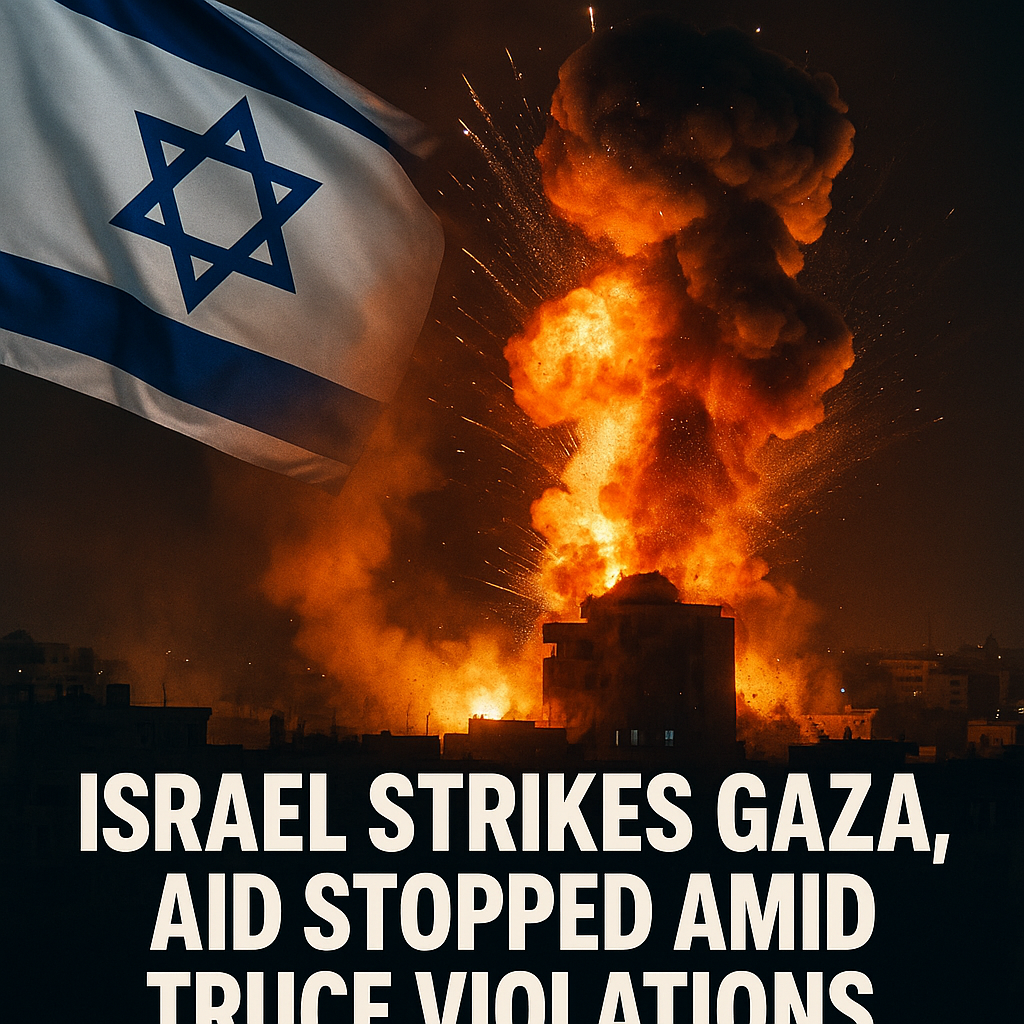
Israel Strikes Gaza, Aid Stopped Amid Truce Violations

Israel Strikes Gaza: Aid Stopped Amid Truce Violations
The recent escalation in violence, marked by Israeli strikes on Gaza and the suspension of humanitarian aid, has raised significant concerns about the fragile state of affairs in the region. Both Israel and Hamas claim that the other has violated the recent truce, prompting a cycle of retaliatory actions that complicate peace efforts.

A Retrospective on the Current Hostilities
The backdrop to the current conflict is a longstanding history of tension between Israel and Hamas. The recent hostilities increased sharply when reports surfaced that Israeli airstrikes resulted in multiple casualties in Gaza, including the loss of at least 15 lives, according to Al Jazeera. Eyewitness accounts and local medical sources suggest that residential areas were among those targeted, prompting fierce condemnation from Palestinian authorities who accuse Israel of indiscriminate attacks.


In contrast, Israeli officials contend that their military operations are a response to instigations from Hamas. They allege that Hamas has engaged in actions that breach the truce, prompting military retaliation. A spokesperson from the Israeli Defense Forces emphasized their commitment to national security while maintaining that civilian safety remains a priority. This statement underlines the complexity of the Israeli military’s operational narrative, which portrays the strikes as defensive rather than aggressive.


Humanitarian Crisis and Aid Suspension
As the violence escalates, the humanitarian situation in Gaza deteriorates. Aid organizations, including the United Nations, have noted that vital supplies are being cut off due to the ongoing hostilities. Sky News reports that organizations providing essential services and supplies face significant obstacles in delivering aid to those affected by the recent strikes. The suspension of aid not only exacerbates the dire living conditions in Gaza but also compounds the crisis for families already caught in the conflict.
Palestinian officials have condemned the withdrawal of aid, claiming that it contravenes humanitarian principles. Meanwhile, Israeli officials have expressed a belief that withholding aid may pressure Hamas to comply with ceasefire stipulations, a stance criticized by international observers who argue that the innocent civilian population should not bear the brunt of political maneuverings.
Weighing Different Perspectives
The reports on this situation vary widely, reflecting the complex realities on the ground. While both sides present their narratives with conviction, independent observers urge caution, noting that such claims can often be influenced by national biases. This divergence in interpretation leads to a broader discussion about the responsibilities of both parties in maintaining peace.
Analysts argue that long-lasting change will require more than isolated truces. The prevailing sentiment among peace advocates is that both Israel and Hamas must engage in meaningful dialogue to address the root causes of the conflict—namely, issues related to territory, governance, and recognition.
The Path Forward: What Lies Ahead?
Given the recent developments, the question arises: what steps can be taken to pave the way toward sustainable peace? Numerous analysts underscore the importance of resuming humanitarian aid and diplomatic dialogue. Reports from various sources, including RT, advocate for increased international mediation to ensure a balanced approach in addressing grievances from both sides.
Right now, the immediate focus for many global observers is the reinstatement of the truce. However, experts warn that merely stopping the violence may not suffice; a concerted effort must be made to create a framework that ensures the equitable distribution of resources and supports the rebuilding of trust.
Conclusion
The situation in Israel and Gaza continues to unfold with alarming unpredictability. Amid cries from both sides regarding breaches of the truce, the international community must advocate for an urgent end to hostilities while emphasizing the need for an organized humanitarian response. As evidence mounts from both viewpoints, the challenge remains immense: how can two sides, so deeply entrenched in conflict, find a pathway to peace that benefits not just the leaders, but the people caught in the middle? Only through sustained dialogue, empathy, and mutual understanding can the specter of violence be replaced by a lasting resolution.















