
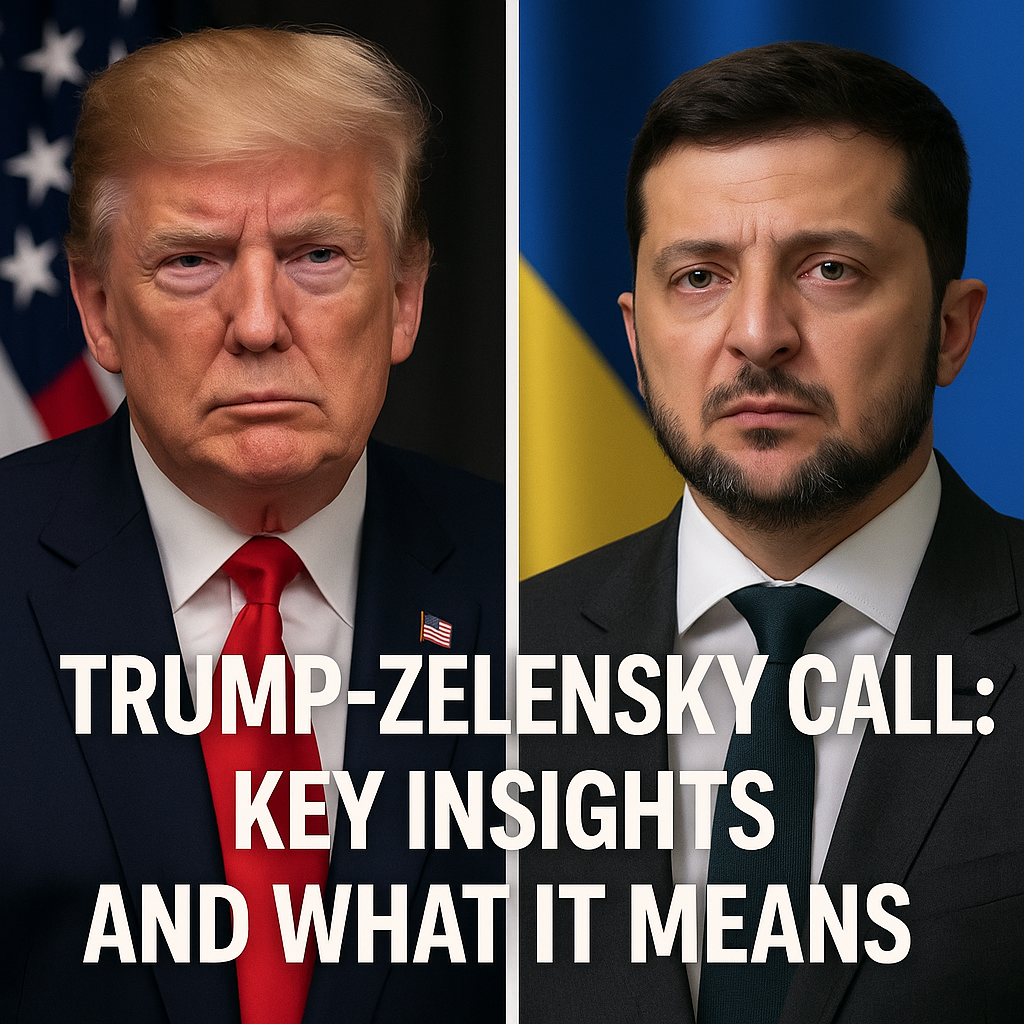
Trump Zelensky Call: Key Insights and What It Means

Trump-Zelensky Call: Key Insights and What It Means
The phone call between former President Donald Trump and Ukraine’s President Volodymyr Zelensky marked a pivotal moment in U.S.-Ukraine relations, stirring controversy and debate across political landscapes. This event, often referred to as a significant turning point in the American political arena, continues to spark discussions regarding its implications for diplomacy and governance.

The Context of the Call
In July 2019, the conversation between Trump and Zelensky took center stage, primarily due to the allegations surrounding Trump’s request for Zelensky to investigate Joe Biden’s son, Hunter Biden, in connection with his business dealings in Ukraine. Critics argued that this request exemplified an abuse of power, undermining the integrity of American democratic processes, while supporters contended that the call was merely an expression of concern for corruption in Ukraine.


Diverse Perspectives on the Call
The perspectives surrounding the Trump-Zelensky call reflect a broader polarization in American politics. According to Al Jazeera, the transcript of the call raised alarms in several quarters, suggesting that Trump’s overture to Zelensky could have been seen as leveraging U.S. foreign aid for political gain. This assertion aligns with viewpoints from various political analysts who emphasize that the call represented not just a diplomatic misstep, but a potential challenge to the rule of law in the U.S.


On the other hand, RT and other more supportive voices maintain that the controversy was largely manufactured by political adversaries. They argue that Trump’s inquiries were consistent with his administration’s broader stance against corruption and highlight his focus on prioritizing American interests globally. Proponents of this view assert that framing the call as a scandal oversimplifies a complex diplomatic relationship and ignores past efforts by U.S. administrations to scrutinize foreign aid distribution.
The Legal and Political Ramifications
One cannot discuss the Trump-Zelensky call without addressing its legal consequences. The fallout from the call led to Trump’s first impeachment by the House of Representatives in December 2019, where he was charged with abuse of power and obstruction of Congress. The impeachment became a focal point in the 2020 presidential election, polarizing voters and influencing public opinion on party lines.
Congressional Reactions and Public Sentiment
The impeachment process revealed stark divisions among lawmakers. Democrats largely viewed Trump’s actions as a breach of trust, while many Republicans rallied around him, framing the impeachment inquiry as politically motivated. As outlined by sources from Sky News, public reactions mirrored these divisions. Numerous polls conducted during and after the impeachment proceedings indicated that support for Trump remained strong among his base, while disapproval surged among Democrats and independents who viewed the actions as deeply troubling.
Interestingly, as time has passed, the political landscape has evolved, and some have begun to reflect on the call with a more nuanced perspective. While the controversy surrounding it was immediate and intense, ongoing discussions about the implications of U.S. foreign policy and the condition of democracy have added layers to how this event is perceived.
What the Call Means for U.S.-Ukraine Relations
The aftermath of the Trump-Zelensky call also sheds light on the broader context of U.S.-Ukraine relations, a topic that remains pertinent as Ukraine continues to navigate its security challenges amid tensions with Russia. Many experts argue that the incident may have had long-lasting implications on how future U.S. administrations engage with Ukraine and other Eastern European countries.
A Shifting Diplomatic Landscape
Since the call, Ukraine’s struggles have intensified, marked by ongoing conflicts and geopolitical ambivalence. The heightened focus on corruption and governance reform propelled by the political discourse surrounding the Trump-Zelensky call may have also influenced Ukraine’s efforts to solidify its relationship with the West.
Analysts stress that while the incident raised critical concerns about presidential conduct, it also spotlighted the necessity for clear, consistent foreign policy in the face of multifaceted threats. The ramifications of the call serve as a case study in both the importance of diplomacy and the potential hazards of intertwining domestic politics with international relations.
Conclusion: The Legacy of the Call
The Trump-Zelensky call continues to reverberate through American politics and international relations. Although it began as a seemingly straightforward diplomatic interaction, the implications have unfolded to reveal significant concerns about governance, transparency, and foreign influence in domestic affairs. The polarized reactions to the call underscore the complexity of evaluating historical events, as differing perspectives reflect deeper ideological divides.
As we move forward in understanding the nuances of U.S.-Ukraine relations, the lessons learned from this incident remain invaluable. Balancing the interests of democracy, international cooperation, and political integrity will be essential as future leaders navigate the interconnected realms of domestic and global policy. While the debate surrounding the call may continue, its impact on American political discourse and foreign policy will undoubtedly linger for years to come.















