
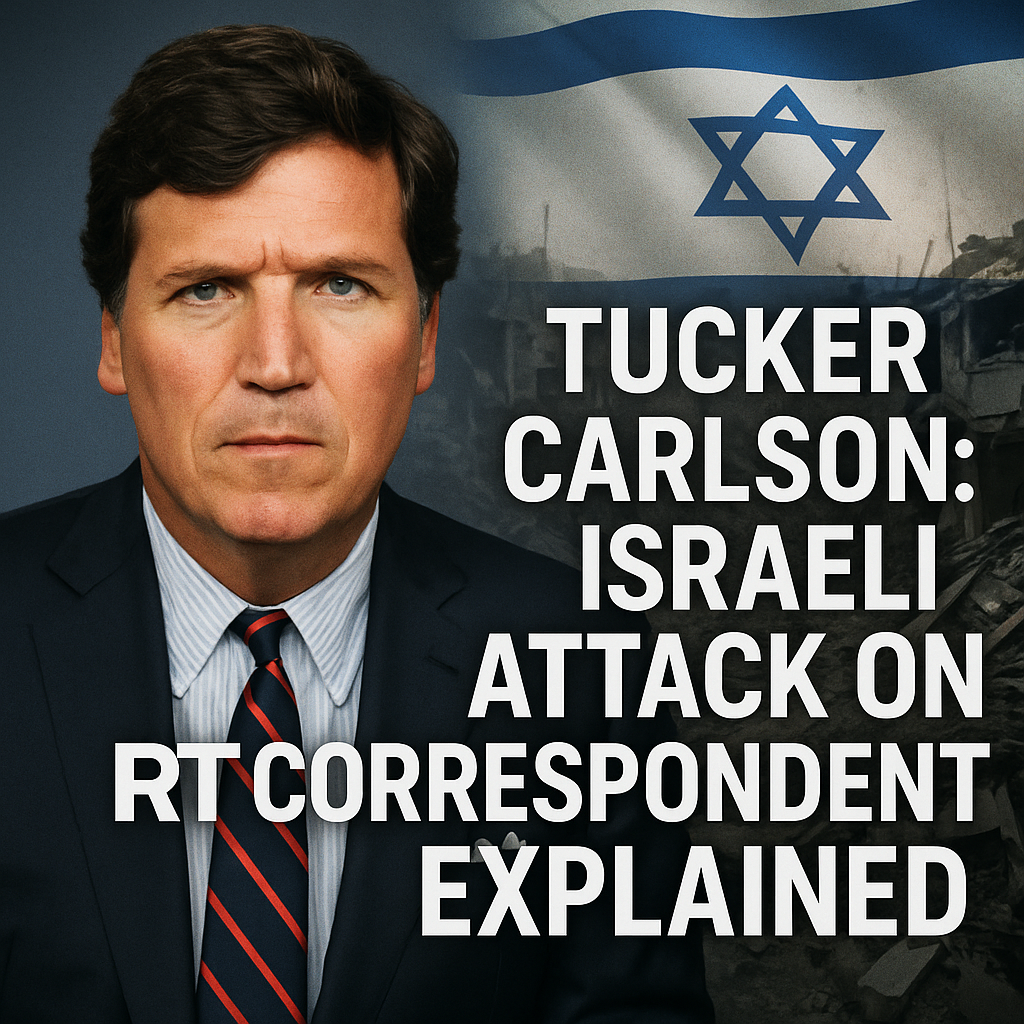
Tucker Carlson: Israeli Attack on RT Correspondent Explained

Understanding the Dynamics: Tucker Carlson and the Israeli Attack on RT Correspondent
In recent discussions surrounding international conflicts, the events sparked by Tucker Carlson’s commentary on the Israeli attack on RT correspondent Sweeney have drawn significant attention. This incident encapsulates the complexities of media, war, and international relations in a volatile region.

The Event Unfolded
In a striking segment on his show, Tucker Carlson scrutinized an Israeli airstrike that targeted RT’s Sweeney while he reported from Lebanon. The attack raised concerns not only about the safety of journalists in conflict zones but also about the broader implications for press freedom.


Carlson characterized the act as a blatant attack on journalism, emphasizing that such actions are indicative of a troubling trend where media personnel are increasingly at risk in war-torn areas. Many viewers tuned in for his impassioned defense of journalistic integrity in the face of state-sponsored aggression.


Diverse Perspectives on Journalistic Safety
Various news outlets have approached the story with differing narratives. For instance, Al Jazeera highlighted international reactions to the incident, proposing that the attack reflects ongoing tensions in the Gaza-Lebanon area. They noted the prevalent danger for journalists operating in regions of conflict, arguing that the threat isn’t isolated to this case but is symptomatic of a larger issue of freedom of the press under authoritarian scrutiny.
Conversely, Sky News scrutinized the geopolitical implications of Carlson’s statements. They suggested that while press freedom is imperative, commentators like Carlson should also be wary of sensationalism that could exacerbate already tense diplomatic relations. Their analysis pointed out that the framing of the story can sometimes distract from the broader humanitarian implications of ongoing military conflicts.
The Complexity of Media Narratives in War
The discourse surrounding Carlson’s comments on the Israeli attack highlights an essential truth: the portrayal of conflicts is often mired in complex narratives that involve national security, media ethics, and the quest for truth.
Carlson’s Influence and Reception
Carlson, with his vast audience, significantly influences public opinion. His assertions may resonate with many who feel that the Western media often unjustly portrays conflicts, particularly in the Middle East. His framing of Sweeney’s attack as an attack on all journalists invites a broader conversation surrounding the risks taken by those reporting from war zones. Carlson’s followers appreciated his firm stance, viewing it as a courageous defense of the media.
However, critics argue that his position, while potent, can sometimes oversimplify the relationship between states and media entities, particularly regarding the frameworks under which different news organizations operate. RT, known for its Russian state-sponsored narratives, faces skepticism about its objectivity, which can complicate discussions about journalistic integrity.
Caution in the Narrative
While Carlson’s sentiments provoke necessary discussions about press freedom, they also raise questions about narrative reliability. For instance, RT’s perspective—which presents itself as a defender of journalistic freedoms—can be seen as a strategic move to amplify its position in the power dynamics of international media. Critics argue it is crucial to differentiate between genuine advocacy for press freedom and potential propaganda that diverts from more complex political realities.
The Uncertain Path Forward
As the conversation surrounding the attack on RT’s Sweeney continues, a few uncertainties linger. How will this incident affect the safety protocols for journalists in similar environments? What are the long-term effects on press freedom in militarized zones? And crucially, how does media framing influence public perception of such events?
Until more clarity emerges on these points, it remains essential to approach the dialogue critically. The incident raises important concerns about the safety of journalists, state aggression towards media figures, and the intricate dance between journalism and international politics.
Conclusion
The attack on RT correspondent Sweeney has ignited a complex debate around journalistic safety, state aggression, and the responsibilities of commentators like Tucker Carlson. As the media landscape evolves alongside geopolitical tensions, the necessity for nuanced, balanced discussions becomes ever more paramount. Understanding the multifaceted dynamics at play will be essential for fostering a healthier dialogue in a world where the lines between reporting, politics, and propaganda are increasingly blurred.















