
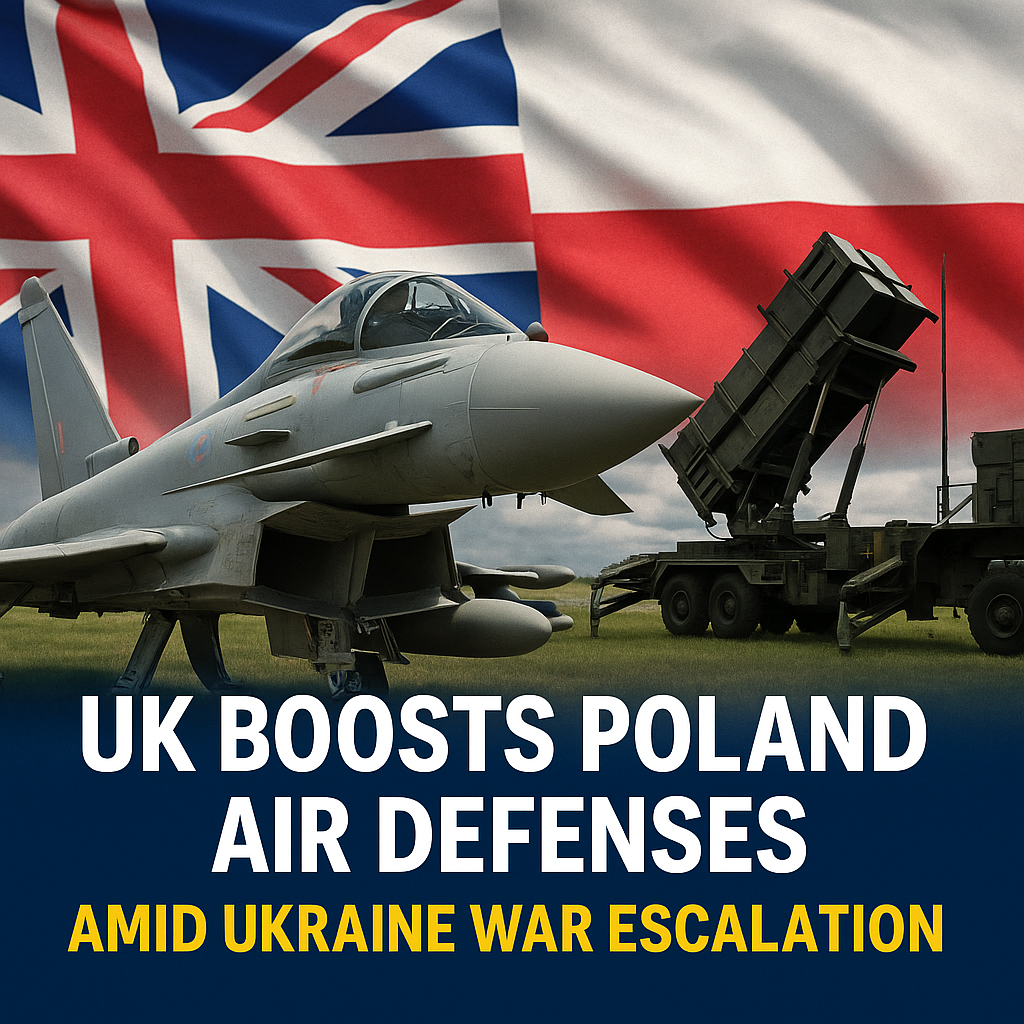
UK Boosts Poland Air Defenses Amid Ukraine War Escalation

UK Boosts Poland Air Defenses Amid Ukraine War Escalation
In a noteworthy move reflecting the heightened tensions surrounding the Ukraine war, the UK is set to reinforce Poland’s air defenses. This decision comes as Europe grapples with the increasing volatility of the conflict and the broader implications for regional security.

The Context of Escalation
The war in Ukraine has not only led to significant humanitarian crises but has also sparked renewed fears of broader military conflicts in Europe. Recent reports indicate an escalation in hostilities, prompting various European nations to reconsider their security strategies. According to a diplomat quoted by Sky News, the conflict “is escalating” and necessitates a robust response from neighboring countries.


Poland, being on the EU’s eastern flank, has expressed concerns about potential spillover effects from the war, particularly regarding Russian military maneuvers near its borders. This has resulted in increased collaboration between Poland and NATO allies, aiming to fortify the region against potential threats.


The UK’s Strategic Response
The UK’s initiative to augment Poland’s air defense capabilities signifies not just bilateral cooperation but also a larger commitment to NATO’s collective security principle. The enhanced defense systems, which include advanced missile and radar technologies, aim to provide Poland with a more robust shield against aerial threats.
This move aligns with the growing consensus among NATO members about the need for greater preparedness. Recent statements from high-ranking military officials across Europe echo the sentiment that the current geopolitical landscape demands a stronger, united front against potential aggressors.
However, the UK’s actions are not without controversy. Some analysts caution that while the reinforcement of defenses may bolster deterrence, it could also provoke further hostilities from Russia. A fine balance must be struck between showing solidarity and avoiding escalation.
Diverse Perspectives on Regional Security
Support for Increased Defense
Many analysts and policymakers advocate for reinforced military presence in Eastern Europe, viewing it as a necessary step in response to aggressive Russian tactics. They argue that enhancing air defenses for Poland serves a dual purpose: it secures Poland and acts as a deterrent against potential Russian advances.
Moreover, this alignment with Poland’s defense needs is seen as vital to maintaining the integrity of NATO. An Al Jazeera report highlighted how Poland’s geographical position renders its security a top priority in NATO’s strategic calculus. Leaders believe that a stronger Polish defense will not only protect its borders but will also contribute to a unified European defense strategy.
Concerns Around Provocation
On the flip side, some factions express concern over the implications of intensified military support. Critics argue that bolstering Poland’s defenses could be interpreted as an aggressive stance by NATO, potentially provoking Russia to escalate its military response. This was echoed in an RT piece that emphasized the need for diplomatic pathways over military buildup in addressing conflicts.
Furthermore, public sentiment within some European nations reflects apprehension about the long-term consequences of escalating military engagements. Citizens of these nations worry about the economic burden and the risk of entanglement in a protracted conflict.
Weighing the Evidence
In balancing these viewpoints, it’s critical to evaluate the underlying evidence and sentiments. The strategic rationale for increased defense capabilities is compelling, especially when viewed through the lens of historical Russian aggression in the region. Yet, caution is warranted to ensure that these measures do not inadvertently escalate tensions into outright conflict.
Furthermore, while NATO’s collaborative response is essential, it’s clear that diplomatic efforts must run parallel to military enhancements. The goal should be to maintain peace and stability in Europe while ensuring that allies feel secure.
Conclusion: Navigating the Future
The UK’s decision to boost Poland’s air defenses amidst the Ukraine war escalation reflects a crucial moment in European geopolitics. As nations grapple with the complexities of security dynamics, the emphasis must remain not only on military preparedness but also on sustained diplomatic engagement.
The future of security in Eastern Europe is certainly uncertain, and while military readiness is vital, fostering dialogues that seek to reduce tensions may ultimately lead to a more stable and peaceful resolution to this ongoing conflict. As this situation continues to unfold, all eyes remain on how the balance between defense and diplomacy will shape the region’s future.















