
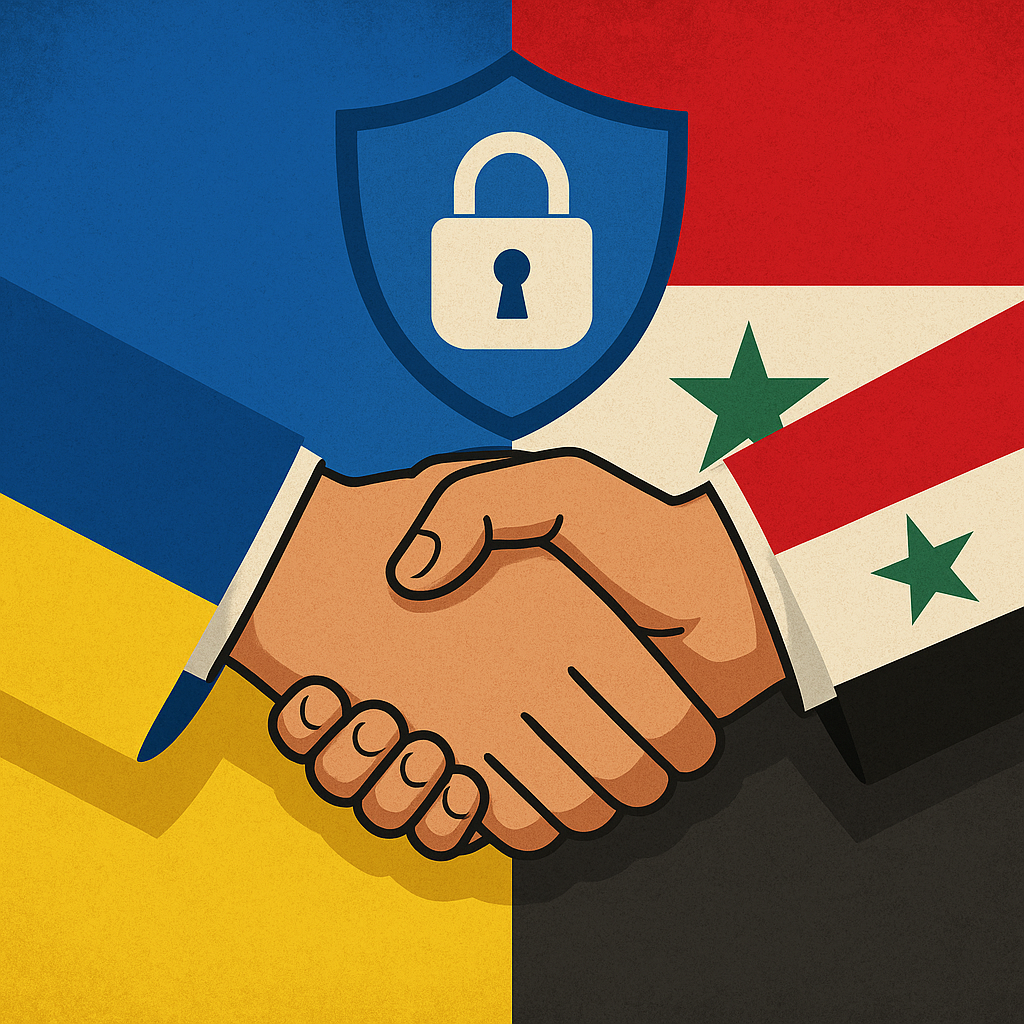
Ukraine and Syria Unite for Enhanced Security Cooperation

Ukraine and Syria Unite for Enhanced Security Cooperation
In a surprising turn of events, Ukraine and Syria have formalized an agreement to enhance their military and security cooperation. This move reflects a shared interest to improve national defense strategies amidst challenging geopolitical climates.

Motivations Behind the Cooperation
Both countries are navigating unique security challenges that have prompted this alliance. For Ukraine, ongoing tension with Russia has necessitated stronger defense initiatives. Meanwhile, Syria, still grappling with the aftermath of a long civil war and ongoing insurgency threats, seeks to bolster its security apparatus.


According to Al Jazeera, the agreement establishes a platform for exchanging military experience and intelligence, with officials from both nations underscoring the need for collaboration to tackle common threats. This partnership could provide Ukraine with valuable insights from Syria’s experience in counter-terrorism, while Syria may benefit from Ukraine’s advancements in modern warfare strategies.


Diverging Perspectives
However, this burgeoning alliance has garnered mixed reactions on the global stage. Proponents of the agreement argue that such collaborations are vital for countries facing existential threats. The unity could provide both nations with strategic advantages in countering shared adversaries, according to sources from Sky News.
Conversely, critics express concern that this partnership may further complicate already volatile regional dynamics. RT highlights the potential for increased militarization, warning that such alliances could exacerbate conflicts, especially considering the historical complexities of both countries. The skepticism is fueled by the fear that enhancing military connections may lead to an arms escalation in the region.
Implications for Global Security Dynamics
The implications of this partnership extend beyond the immediate borders of Ukraine and Syria. Multiple experts suggest that the cooperation could attract the attention of global powers, especially given the context of ongoing conflicts in both regions. As countries like the United States, Russia, and Turkey continue to exert influence in Ukraine and Syria, the emerging alliance may prompt a reevaluation of foreign policies towards the two nations.
For instance, the U.S. has long been concerned about Russia’s presence in Syria and its implications for Israel’s security. Should Ukraine’s military trends begin to align more closely with Syrian strategies, this could create friction in the existing geopolitical balance. Conversely, if this cooperation helps stabilize either country, it could ease tensions in the region, reflecting a more collaborative international approach.
The Road Ahead
Moving forward, the success of this cooperation will hinge on how effectively both nations can operationalize their agreement. Key areas to watch include:
– Military Exchanges: The implementation of training programs or joint military exercises could reveal the depth of their collaboration.
– Intelligence Sharing: Any developments in intelligence-sharing protocols may not only influence domestic security but could also impact relations with neighboring countries.
– International Response: The reactions from other nations, particularly those in direct conflict with either country’s interests, will determine how this partnership evolves.
As Ukraine and Syria move forward with their plans for enhanced security cooperation, the international community is left to weigh the potential benefits against the risks. While it is too early to draw definitive conclusions, this partnership has undoubtedly added another layer to the complex tapestry of global security challenges.
In summary, the union between Ukraine and Syria could bring forth new opportunities for collaboration in defense strategies, yet it carries both potential benefits and risks that warrant careful observation. The world will be watching closely as this alliance unfolds amidst geopolitical tensions that demand nuanced understanding and strategic foresight.















