
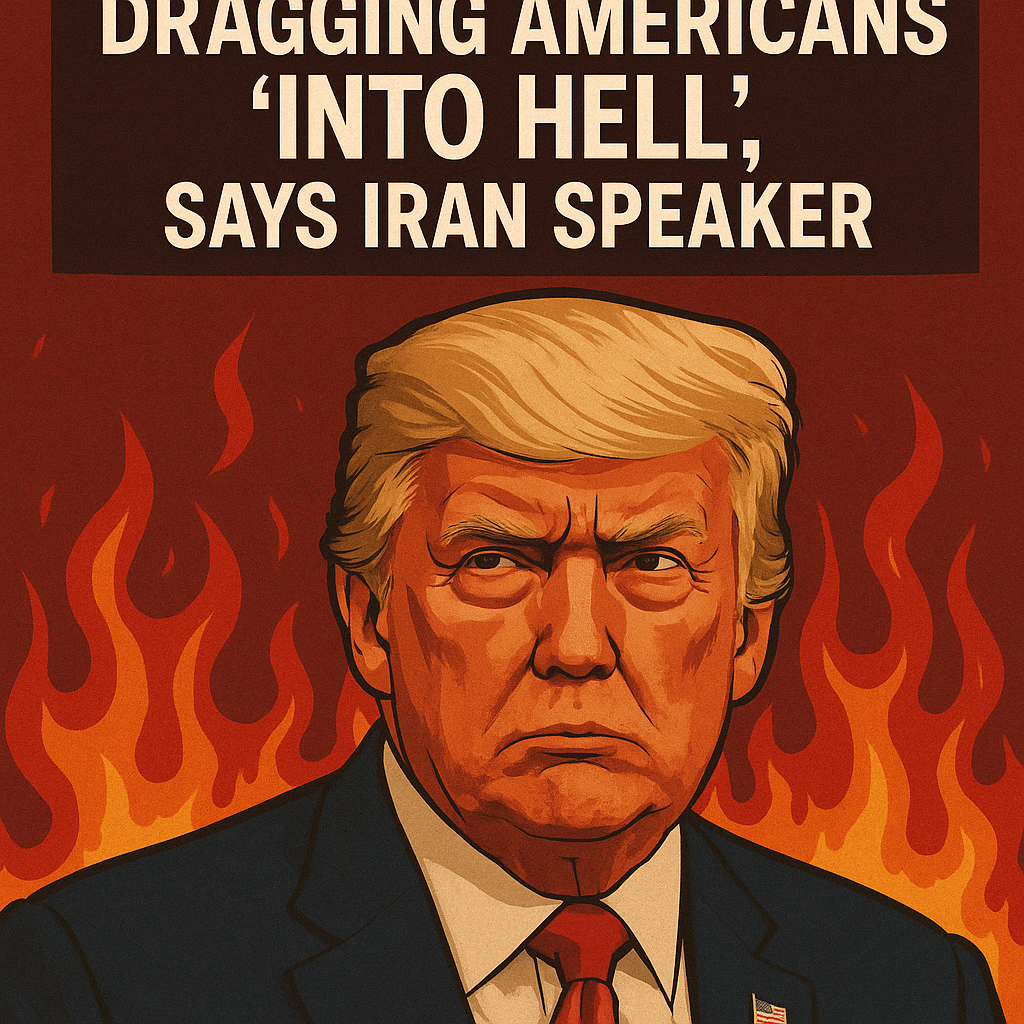
Trump’s Actions Dragging Americans ‘Into Hell’, Says Iran Speaker

Trump’s Actions Dragging Americans ‘Into Hell’, Says Iran Speaker
Recent headlines have ignited discussions about the implications of former President Donald Trump’s actions, with Iranian parliamentary speaker Mohammad Bagher Ghalibaf describing them as dragging Americans “into hell.” This stark characterization reflects a sentiment that extends beyond the borders of the United States, prompting a complex dialogue about foreign policy, national security, and domestic ramifications.

The Context of the Charges
Ghalibaf’s claims stem from a backdrop of escalating tensions between the U.S. and Iran. Following the U.S. withdrawal from the Joint Comprehensive Plan of Action (JCPOA) in 2018, relations have been fraught with hostility. Trump’s policies, particularly his “maximum pressure” campaign against Tehran, have been criticized for exacerbating instability in the Middle East. This sentiment is echoed by several analysts who argue that such measures not only harm Iranian citizens but also jeopardize American interests abroad.


Diverging Perspectives on American Policy
While Ghalibaf’s assertion seemingly represents the Iranian narrative, American commentators offer a more nuanced perspective.


National Security Advocates: Some argue that Trump’s actions have been crucial for U.S. national security. Supporters of his administration note that hardline policies were intended to deter Iranian aggression in the region, including its nuclear ambitions and support for proxy groups across the Middle East. They claim that standing firm against Iran may ultimately safeguard American interests and allies.
Critics of Militaristic Policies: Conversely, critics assert that such aggressive policies have led to greater instability. They suggest that Trump’s approach has alienated potential diplomatic allies and further entrenched adversarial relations. International relations expert Zbigniew Brzezinski once remarked, “When the U.S. sneezes, the world catches a cold,” emphasizing the global repercussions of American foreign policy decisions.
Economic Implications and Domestic Fallout
Trump’s policies have also sparked fierce debates concerning their economic aftermath. The sanctions imposed on Iran are often viewed through a dual lens:
1. Economic Pressure on Iran: Supporters argue that sanctions are essential for crippling the Iranian regime’s military funding and nuclear development capabilities.
2. Unintended Consequences: However, critics highlight the fallout on American households, noting that sanctions can lead to skyrocketing fuel prices and broader economic instability, tasks that average Americans inadvertently bear.
Furthermore, with ongoing inflation impacting many sectors within the U.S., some economists warn that international tensions could hinder economic recovery post-pandemic. This highlights the interconnectedness of foreign policy decisions and domestic economic conditions.
Navigating the Complexities Ahead
As Americans navigate these complexities, it becomes evident that Trump’s actions are not merely a binary issue of support or opposition. From Iran’s perspective, the ramifications of U.S. policies have been clearly articulated by government officials, who paint a picture of American decision-making as detrimental to global stability. They emphasize the need for de-escalation and dialogue—points that align with several voices from the global community advocating for diplomatic solutions.
Balancing National Security with Diplomatic Engagement
Moving forward, a critical examination of Trump’s policies can reveal lessons for future administrations. The path ahead may well involve balancing national security interests with elements of diplomacy and engagement.
The discourse surrounding Trump’s impact on U.S.-Iran relations also prompts broader questions: How should America reconcile its role on the global stage against the backdrop of domestic adversity? Can future administrations learn from the polarized outcomes of previous policies?
While some may wholeheartedly agree with Ghalibaf’s sweeping statements, others urge a more tempered approach that considers both the aspirations and security concerns of nations involved. In the dynamic realm of geopolitics, simplifications may often lead to misunderstandings, reinforcing the need for comprehensive analysis and critical discourse.
In conclusion, the assertion that Trump’s actions are “dragging Americans into hell” encapsulates a charged political atmosphere rife with divergent views. Amidst a backdrop of complex international relations, Americans must grapple with not just the consequences of past actions but also the pathways available for future cooperation and understanding. Balancing clarity and compassion remains paramount in navigating the complexities of both domestic and international spheres.















