
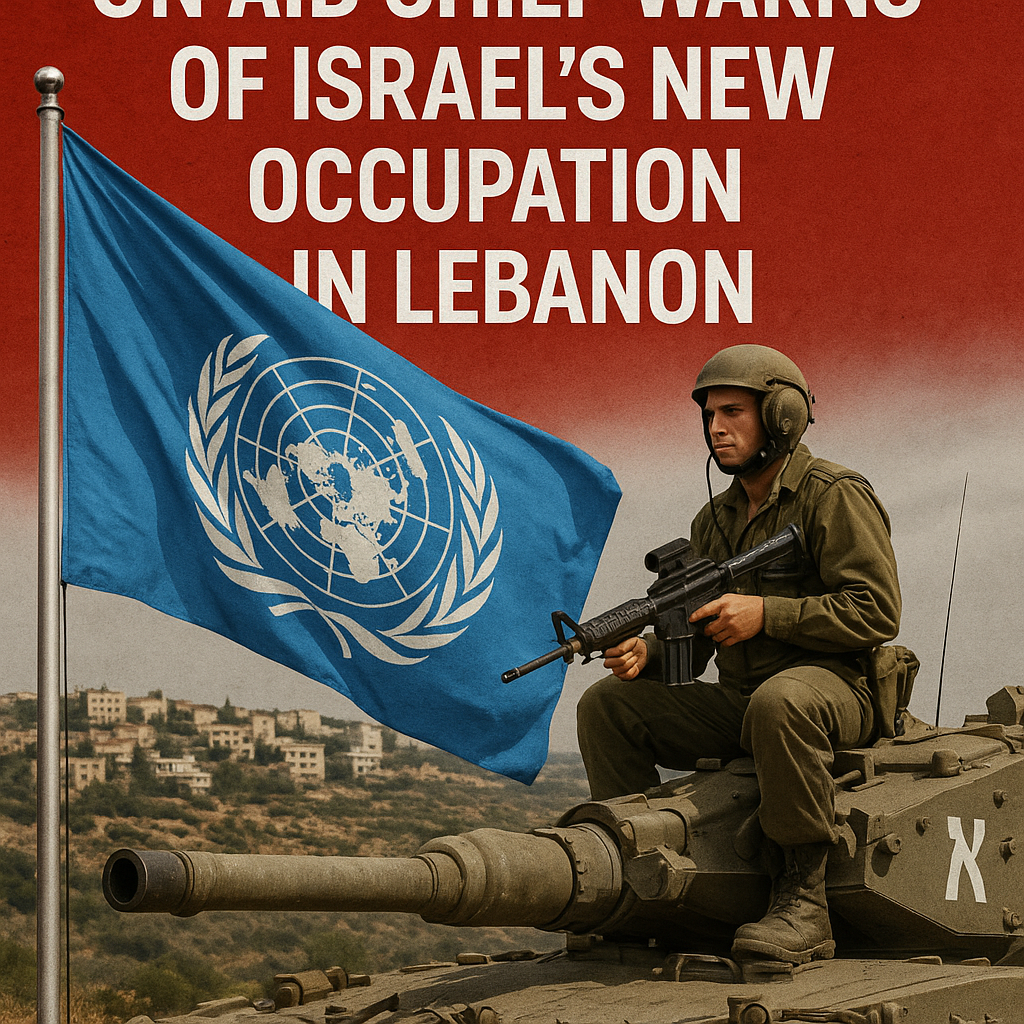
UN Aid Chief Warns of Israel’s New Occupation in Lebanon

UN Aid Chief Warns of Israel’s New Occupation in Lebanon
The ongoing tensions surrounding the Israel-Lebanon border have taken a critical turn, with the UN Aid Chief recently warning of a potential new Israeli occupation in southern Lebanon. This escalating situation raises significant concerns about the humanitarian implications for the region, highlighting the complex interplay between territorial disputes, military actions, and the civilian population’s plight.

The Current Landscape
As outlined in various reports, including coverage from Al Jazeera, the situation in southern Lebanon is marked by increasing military presence and hostilities. The UN Aid Chief, Martin Griffiths, indicated that Israel’s military activities are intensifying, with new operations that could lead to a broader occupation. Notably, these developments come against a backdrop of existing tensions between Israel and militant groups within Lebanon, particularly Hezbollah.


Humanitarian Concerns
Griffiths emphasized the urgent humanitarian consequences that a new occupation could precipitate. Historically, military occupations have resulted in significant civilian suffering, and there are fears that similar outcomes could unfold should Israel deepen its involvement in southern Lebanon. According to RT, the ongoing conflict has already resulted in casualties and displacement, with civilians finding themselves caught in the crossfire of military actions.


Reports note that the humanitarian infrastructure in the region is already strained. Aid organizations are voicing concerns about the availability of essential services such as healthcare, education, and food supplies. As tensions rise, these services could become even more compromised, exacerbating an already challenging situation for the Lebanese populace. Griffiths called for a de-escalation of hostilities and a renewed commitment to humanitarian aid, emphasizing the necessity of protecting civilians in conflict zones.
Divergent Perspectives
While the UN’s perspective highlights the need for humanitarian intervention and peace, other narratives present a more security-oriented viewpoint. Proponents of Israel’s military actions argue that such measures are necessary to counter threats, especially from Hezbollah, which is often described as a destabilizing force in the region. Sky News reported that Israeli officials assert their military engagements are responses to destabilizing actions from bordering territories.
This divergence is reflective of the broader complexities within the Israeli-Lebanese relationship. On one side, there is a focus on security and defense; on the other, there is a clear humanitarian concern that urges reconsideration of military strategies. As tensions escalate, one crucial question persists: How can security be maintained without compromising humanitarian principles?
The Role of International Diplomacy
The international community faces the challenge of addressing this duality of needs—security and humanitarian assistance. Griffiths called for a concerted effort from global leaders to prioritize dialogue and diplomacy over military responses. Yet, achieving a consensus in diplomacy is often easier said than done, as regional dynamics and historical grievances complicate negotiations.
Global diplomacy tools, such as sanctions, peace talks, and international aid, must be wielded judiciously. However, the effectiveness of these measures relies heavily on the willingness of both Israel and Lebanon, alongside international stakeholders, to engage in meaningful dialogue.
The Need for Balanced Reporting
In discussing the Israeli occupation and its potential ramifications, it is essential that media coverage reflects a balanced view. Sensationalism can exacerbate tensions, while nuanced reporting can pave the way for understanding and solutions. Journalists and analysts must strive to encompass diverse voices—those of the civilians who bear the burden of conflict, the affected communities, and policymakers working towards resolution.
Conclusion: Navigating Uncertain Waters
The UN Aid Chief’s warnings about a possible new occupation in Lebanon highlight the fragile nature of peace in the region. As military activities increase, so too do the stakes for civilians caught amidst these intensifying conflicts. While security measures may remain a priority for some, the humanitarian narrative underscores the urgent need for a comprehensive approach that places human dignity and safety at its core.
Moving forward, the international community must pay close attention to the evolving situation, fostering dialogue and understanding in an increasingly polarized environment. The complexities of the Israeli-Lebanese conflict require sensitive handling, as the consequences of inaction—or miscalculation—could be dire for the region’s civilians. As nations navigate these uncertain waters, the hope remains that peace can prevail through collaborative efforts and mutual respect.















