
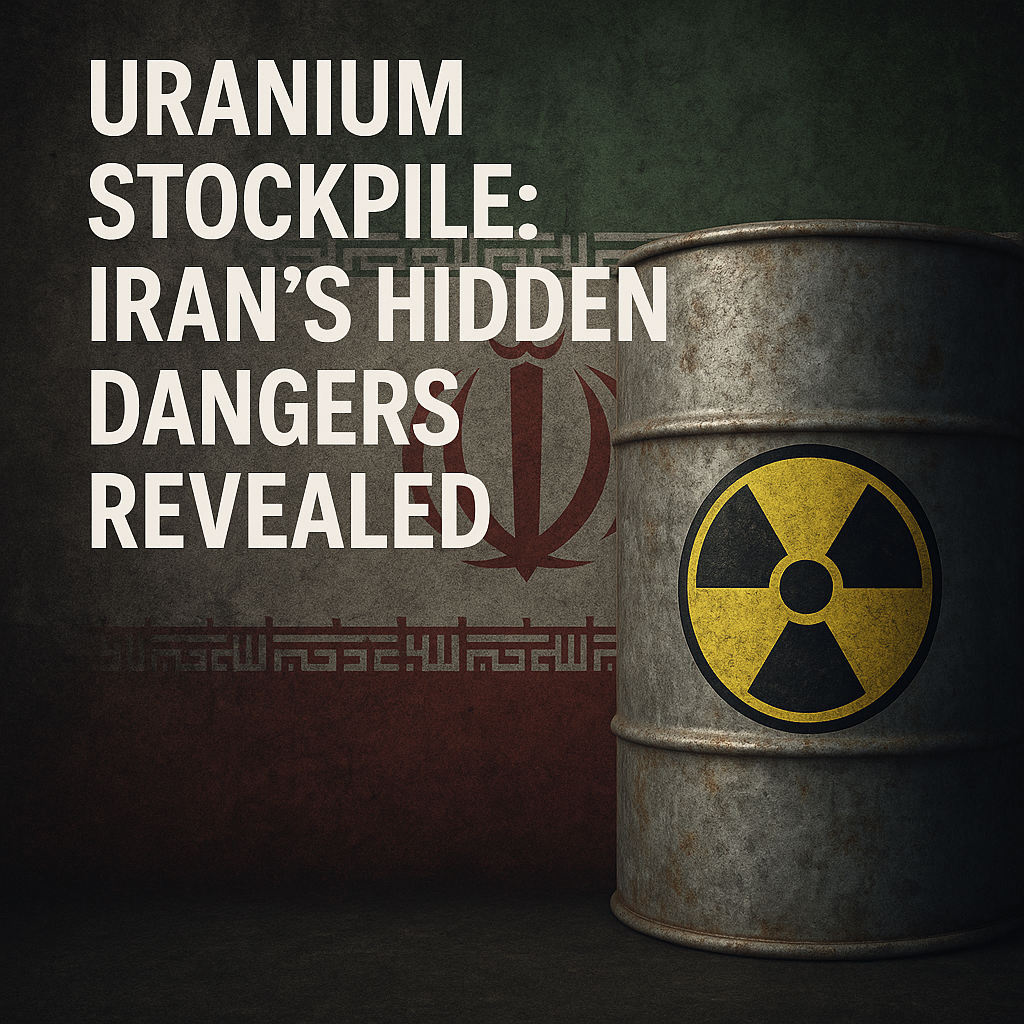
Uranium Stockpile: Iran’s Hidden Dangers Revealed

Uranium Stockpile: Iran’s Hidden Dangers Revealed
Iran’s uranium stockpile has become a focal point in international discussions regarding nuclear proliferation and regional stability. As countries worldwide grapple with the implications of this stockpile, it’s crucial to understand the complexities surrounding Iran’s nuclear ambitions, the responses from global powers, and the potential consequences if these dangers are not addressed.

The Current State of Iran’s Uranium Stockpile
Recent reports indicate that Iran’s uranium enrichment activities have intensified, raising concerns from various quarters. According to an article from RT, Iran is reportedly sitting on a stash of enriched uranium that exceeds the limits set by the Joint Comprehensive Plan of Action (JCPOA), which aimed to curtail its nuclear program. This accumulation could enable Iran to approach weapons-grade levels rapidly if it decides to shift its focus toward developing nuclear weapons.


In parallel, Al Jazeera highlights that Iran has been transparent about its increased stockpiles, asserting that its activities are within its rights as a signatory of the Nuclear Non-Proliferation Treaty (NPT). Iran’s government has argued that its nuclear ambitions are peaceful, aimed primarily at energy production and medical applications. This contention, however, is met with skepticism from many in the international community, who view the stockpile as a potential threat to regional stability.


International Reactions: A Divided Front
The divisions among global powers regarding Iran’s nuclear stockpile are evident in the differing strategies employed to address the issue. The United States, along with its allies, has generally leaned toward tightening sanctions to deter Iran from pursuing further enrichment. An article from Sky News reports that diplomatic efforts have stalled, leading to increased tensions and sporadic military posturing in the region.
On the other hand, Iran has found allies in some less co-operative international members. China’s support for Iran’s right to peaceful nuclear energy production has reinforced the Asian state’s position, complicating Western efforts to isolate Iran diplomatically. This split complicates the diplomatic landscape and raises questions about the effectiveness of a unified strategy to manage Iran’s nuclear activities.
The Question of Transparency
One of the most concerning aspects of Iran’s uranium stockpile is the country’s level of transparency. Critics argue that Iran’s failure to comply with the International Atomic Energy Agency (IAEA) regulations raises red flags about its nuclear intentions. While Iran states its commitment to peaceful nuclear activity, its lack of full disclosure leads to distrust. According to reports from both RT and Sky News, the ambiguity surrounding Iran’s facilities and their potential dual-use nature significantly undermines international confidence in its nuclear disclosures.
Moreover, the tightened scrutiny on Iran’s nuclear facilities has prompted discussions about whether a more transparent approach could alleviate some of these global tensions. Calling for enhanced inspections and monitoring could serve as a compromise, paving the way for renewed negotiations.
Navigating the Future: Diplomatic Solutions or Military Action?
The potential for either diplomatic solutions or military action looms large over the discourse surrounding Iran’s uranium stockpile. Many analysts argue that a military approach would likely escalate into a broader conflict, further destabilizing the Middle East. Reports highlight the catastrophic repercussions of military confrontation, suggesting that a more diplomatic path may be the only viable long-term solution.
Additionally, continued sanctions could push Iran further out of the diplomatic fold, causing the country to double down on its nuclear ambitions in a bid for national pride and self-sufficiency. This irony underscores the complexities involved in crafting a strategy to manage Iran’s nuclear ambitions effectively.
The Role of Regional Powers
Furthermore, regional players such as Israel and Saudi Arabia are significantly impacted by Iran’s nuclear ambitions. Israel, in particular, views a nuclear-capable Iran as an existential threat, advocating for preemptive strikes to mitigate this danger. Meanwhile, Saudi Arabia’s potential pursuit of its nuclear capabilities would further intensify a nuclear arms race in the already volatile region, complicating the matter considerably.
As found in analyses from both Al Jazeera and RT, regional stability hinges on a collective agreement to address the concerns related to Iran’s uranium stockpile and overall nuclear activities. However, achieving this requires a united front, which seems increasingly elusive given the geopolitical rifts.
Conclusion: A Complex Path Forward
As the world watches Iran’s uranium stockpile grow, the need for a careful, balanced approach is more urgent than ever. The intertwined threads of diplomacy, regional power dynamics, and national security imperatives create a complex tapestry requiring meticulous navigation.
While the path forward may be fraught with challenges, renewed dialogue, transparency, and a commitment to verification measures could pave the way for a more peaceful resolution. As history has shown, neglecting such intricate situations often leads to unforeseen consequences. Thus, the international community must tread thoughtfully as it addresses the hidden dangers posed by Iran’s uranium stockpile.















