
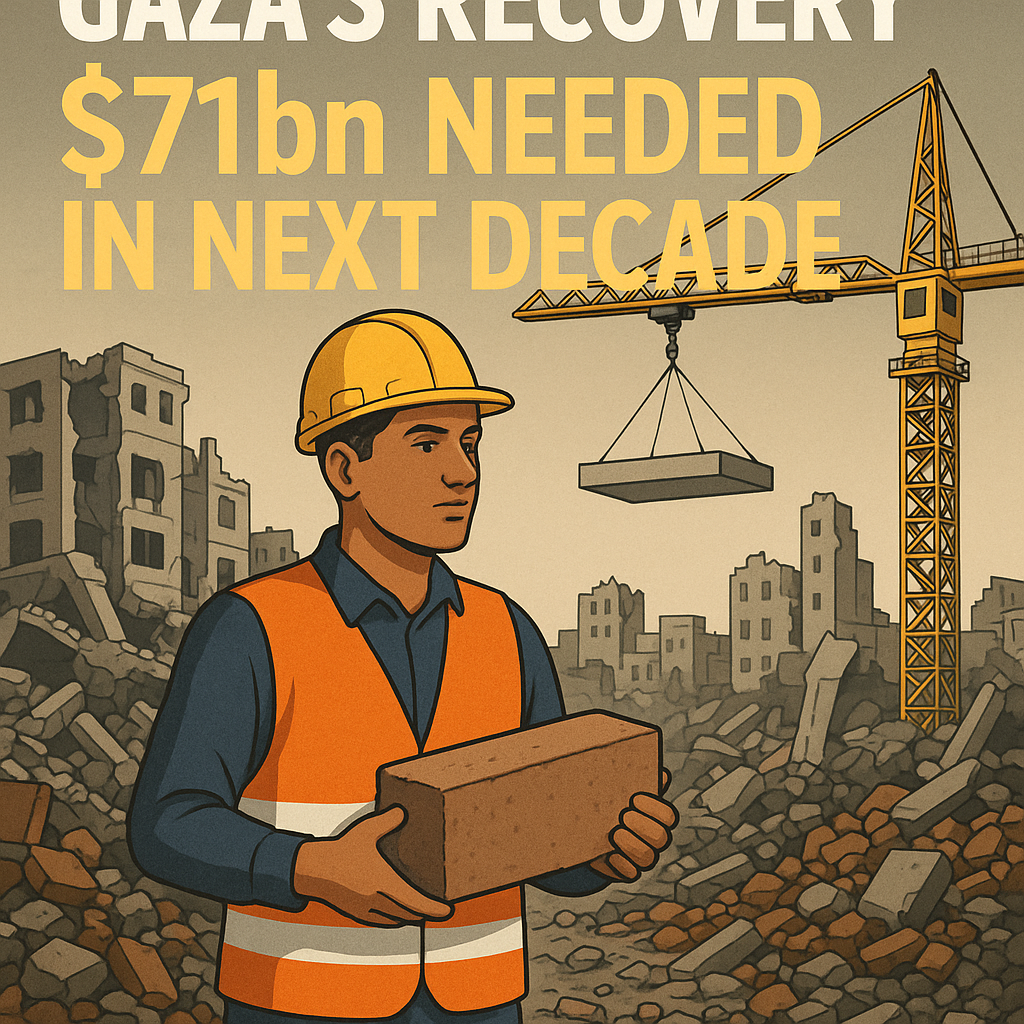
Gaza’s Recovery: $71bn Needed in Next Decade

Gaza’s Recovery: A $71 Billion Challenge in the Next Decade
Gaza’s recovery requires a staggering investment of $71 billion over the next ten years. This figure, outlined in a recent report, highlights the complexity and urgency of rebuilding the enclave after years of conflict and economic hardship. Various perspectives shed light on the multifaceted challenges and potential pathways towards recovery, emphasizing the need for international cooperation and strategic planning.

Understanding the Scale of the Recovery Effort
The $71 billion estimate is not just a number; it reflects the extensive damage Gaza has experienced. According to a report released by the United Nations and supported by various NGOs, this amount spans infrastructure repair, healthcare rehabilitation, and economic development initiatives. The economic fallout from repeated conflicts, including the recent escalation in violence, has left profound scars on Gaza’s already fragile economy.


Key Areas of Focus
– Infrastructure: Roads, hospitals, and schools—key infrastructures have suffered extensive damage. The current state of disarray calls for immediate restoration efforts, as access to essential services is crucial for any recovery plan.


– Healthcare: The sector has been particularly hit hard, with shortages in medical supplies and personnel. Rebuilding healthcare facilities is essential to tackle immediate health crises but also to prevent future ones.
– Economic Development: Long-term sustainability is tied to economic revitalization. Investment in job creation and economic activities can help foster resilience within the community.
Diverse Viewpoints on Recovery Strategies
While the need for $71 billion is crystal clear, opinions diverge on how to realize this goal effectively. Some experts advocate for increased international aid, while others call for a strategy that encourages local governance and participation.
The Aid Perspective
Several analysts highlight the necessity of international assistance as an integral part of Gaza’s recovery. According to an article from Al Jazeera, leveraging aid can provide immediate relief and facilitate reconstruction. The World Bank and international donors play key roles in this effort, with previous programs demonstrating the potential for impact when funds are directed efficiently.
However, a reliance on aid raises questions regarding sustainability. Critics argue that ongoing dependency hampers local initiative, limiting the population’s ability to influence the recovery process actively.
The Local Governance Argument
Conversely, some commentators urge for a strategy that prioritizes local governance. A report from Sky News emphasizes the significance of empowering local leaders and communities to take charge of the recovery. This approach not only fosters ownership but also increases accountability.
Moreover, involving local stakeholders can ensure that reconstruction efforts are tailored to the specific needs of the population. Advocates suggest that this could mitigate issues related to corrupt practices often associated with external aid distribution.
The Complexity of Political Realities
Political dynamics further complicate Gaza’s recovery. The relationship between Hamas, the governing authority in Gaza, and the Israeli government is fraught with tension. RT News highlights how political barriers can obstruct both financial aid and reconstruction efforts.
Different factions can manipulate the aid process, which can potentially exacerbate the crisis rather than alleviate it. The lack of a unified Palestinian political front complicates negotiations for international aid, often leading to mistrust among donors.
The Road Ahead
Moving forward, clarity and cooperation may be vital. There needs to be a collaborative approach that includes international bodies, local governance, and civil society. Donors must develop a framework that supports both immediate needs and long-term developments while ensuring transparency and good governance.
However, the uncertainty remains palpable. The difficulty in reaching a consensus among stakeholders raises concerns about the feasibility of executing the proposed recovery strategies.
Conclusion: A Collective Responsibility
The roadmap for Gaza’s recovery will require robust international engagement paired with local empowerment. The $71 billion needed over the next decade is not merely a financial target but a call to action. A successful recovery will necessitate a delicate balance between dependency on external aid and fostering local initiative.
The challenges ahead are significant, but with a unified and strategic approach involving all parties, there is hope that Gaza can emerge from its cycle of conflict and despair into a period of healing and rebuilding. The path may be fraught with challenges, but the commitment to recovery is a shared responsibility that must not be overlooked.















