
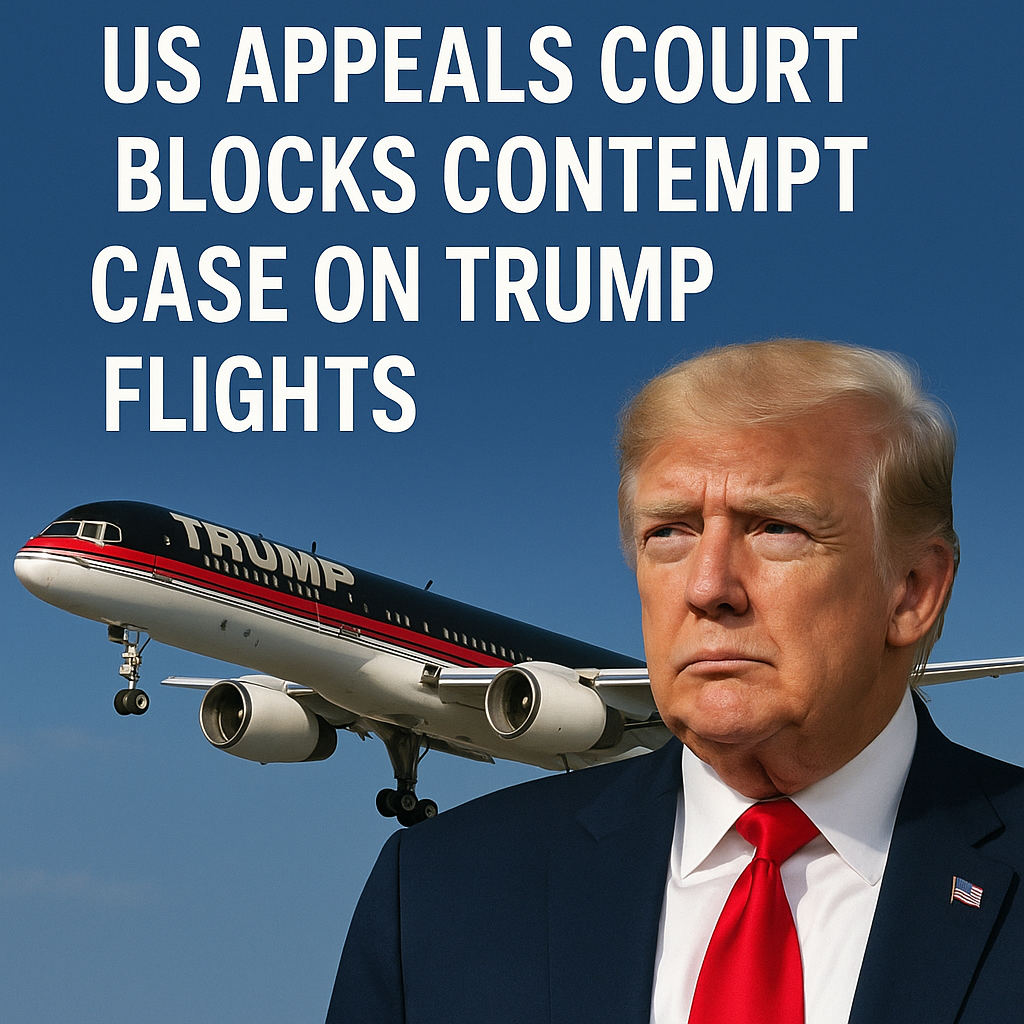
US Appeals Court Blocks Contempt Case on Trump Flights

US Appeals Court Blocks Contempt Case on Trump Flights
The recent decision by a US appeals court to block a contempt case concerning Trump flights has ignited discussions across various sectors. This ruling, which impacts the broader conversation surrounding immigration policy and executive accountability, has emerged from ongoing legal battles that intertwine with the former president’s controversial deportation practices.

Background on the Contempt Case
The contempt case had its origins in allegations against the Trump administration regarding deportation flights. Critics argued that the administration operated in contempt of earlier court orders, which sought to limit the expediting of deportations under certain circumstances. According to a report from Al Jazeera, these flights were intended to remove undocumented immigrants from the country swiftly, a key part of Trump’s hardline immigration policy.


The Block’s appeal emerged after a lower court found that the administration had not fully complied with the stipulated judicial guidelines. Legal arguments presented by the plaintiffs highlighted significant concerns about due process and the treatment of detainees. The court’s ruling to block the contempt charge has sparked varied reactions concerning its implications for accountability and immigration law.


Varied Perspectives on the Ruling
Reactions to the US appeals court’s ruling vary drastically among political analysts, legal experts, and advocacy organizations.
1. Support for the Ruling: Some commentators view the ruling as a necessary protection of executive powers. They argue that the courts should refrain from encroaching on the executive branch’s capacity to make swift decisions regarding immigration and national security. Proponents of this view assert that the legal system should support the government’s authority, especially in matters requiring immediate action.
2. Criticism of the Ruling: Conversely, opponents of the decision view it as a dangerous precedent that undermines judicial oversight. Civil rights groups argue that this ruling effectively allows the Trump administration, or any future administration, to operate without accountability regarding policy decisions that directly affect individuals’ lives. Critics emphasize that this lack of oversight can lead to abuses of power and violations of human rights.
The juxtaposition of these perspectives illustrates a significant divide in public sentiment regarding executive authority and individual rights.
Implications for Immigration Policy
The implications of the court’s decision extend beyond legal circles and into public policy. The ruling appears to signal a judicial unwillingness to scrutinize executive actions in the immigration sphere, raising concerns about the future handling of deportation cases.
– Impact on Immigrants: Immigrant rights activists are concerned this ruling may embolden future administrations to implement aggressive deportation policies without adequate oversight. They stress that effective immigration reform requires consistent judicial clarity and accountability.
– Political Ramifications: Politically, the case may have ramifications for candidates and parties heading into future elections. As immigration continues to be a hot-button topic, how this decision resonates with voters could shape campaign strategies significantly.
The Road Ahead
As the legal landscape evolves, the broader implications of the appeals court’s decision warrant careful observation. There remains considerable uncertainty regarding how future cases involving immigration and executive power will unfold. The court’s ruling sparked discussions about balancing national security needs with the protection of individual rights, a core element of the American legal framework.
Furthermore, the case reflects a dichotomy within the current public discourse—one that points to a nation grappling with its identity, values, and approaches to governance.
Conclusion
The US appeals court’s decision to block the contempt case on Trump flights highlights complex issues surrounding executive power and immigration policies. As opinions diverge on the ruling’s appropriateness and implications, it further complicates an already polarized atmosphere. The outcome signals not just a legal win for the Trump administration but portrays the ongoing tensions between authority and accountability in American governance.
As the legal battles continue, the focus remains squarely on how these judicial decisions will impact the rights of immigrants and the integrity of the legal system as a whole. The path forward may ultimately depend on public engagement and advocacy efforts that call for transparency and justice in immigration practices.















