
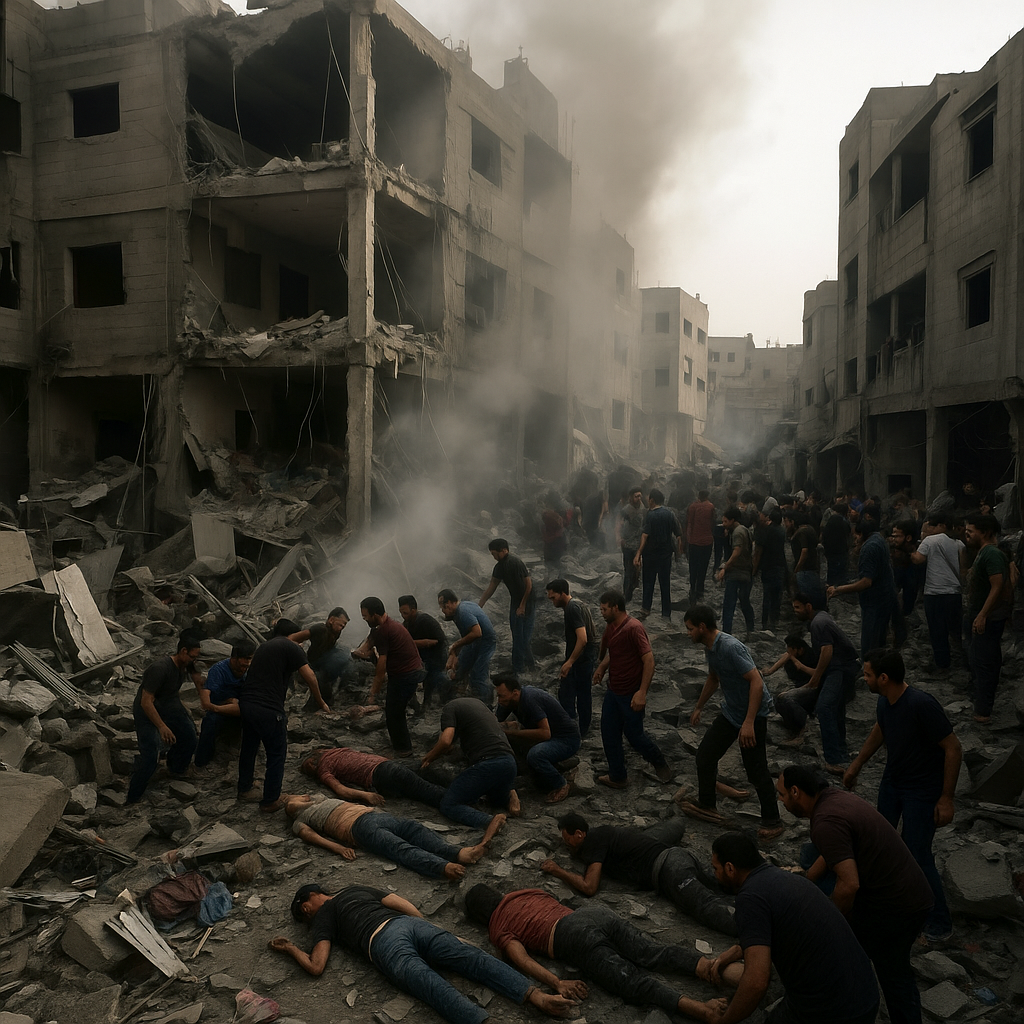
Israeli Attack Targets Gaza Refugee Camp, Several Dead

Israeli Attack Targets Gaza Refugee Camp, Several Dead
The recent Israeli military operation that targeted a Gaza refugee camp has once again thrust the Israeli-Palestinian conflict into the spotlight, invoking outrage and condemnation from various quarters while stirring varying opinions on the underlying causes and reactions to such attacks.

The Incident: Facts and Initial Reactions
On a recent day in April, airstrikes carried out by Israeli forces resulted in multiple casualties at a Gaza refugee camp, as reported by major news outlets. The attack is significant not only for the loss of life but also for its implications on an already fraught humanitarian situation in the region. Eyewitnesses described scenes of chaos and destruction, with debris strewn across the camp, suggesting a high level of violence.


Al Jazeera reported that the strikes left a number of civilians dead, including women and children. Eyewitness accounts highlighted the intensity of the airstrikes and the immediate aftermath, where rescuers struggled to evacuate those trapped under the rubble. The attack has drawn widespread condemnation from local Palestinian leaders and human rights organizations, who argue that such military actions disproportionately affect civilians and exacerbate the ongoing humanitarian crisis in Gaza.


In contrast, Israeli officials defended the military operation as a necessary measure to combat militant activities. They claimed the strikes were aimed at terrorist infrastructure believed to be utilized by armed groups linked to Hamas. Their stance reflects a long-held belief that military actions are justified when national security is perceived to be at risk.
Humanitarian Concerns Amid Military Justifications
The civilian toll resulting from the Israeli strikes has reignited discussions about the ethics and legality of military actions in densely populated areas like Gaza. Various human rights organizations have criticized Israel’s tactics, arguing that international law mandates the protection of civilians during warfare. They contend that the ongoing military operations have resulted in significant civilian casualties, raising ethical questions regarding the proportionality and necessity of such force.
Moreover, the situation is complicated by the broader context of the Israeli-Palestinian conflict, a multifaceted issue rooted in decades of political, territorial, and social disputes. The ongoing blockade of Gaza, combined with periodic escalations of violence, has left the region in a state of chronic humanitarian crisis. Many in the international community stress that the violence only deepens existing grievances, making a peaceful resolution increasingly elusive.
On the flip side, supporters of the Israeli government argue that while civilian casualties are tragic, they are often a consequence of Hamas using civilian areas to launch attacks against Israel. The narrative from this perspective focuses on self-defense rather than aggression, positing that Israel has the right to act decisively against perceived threats.
Perspectives from the Ground
Voices from the ground in Gaza provide a sobering view of the realities faced by ordinary citizens. Many residents express feelings of despair and abandonment, caught in the crossfire of a conflict that seems perpetually mired in cycles of violence. Amid the chaos, humanitarian organizations have been struggling to provide essential services, facing severe restrictions and logistical challenges.
In response to the airstrikes and rising casualties, there have been calls for renewed diplomatic efforts aimed at addressing the fundamental issues at the heart of the conflict. Peace advocates argue that long-term stability can only be achieved through dialogue and mutual recognition of rights, rather than military might.
Simultaneously, the international community has been urged to put pressure on both sides to halt the violence and prioritize humanitarian concerns. However, the effectiveness of such interventions is often hampered by geopolitical interests and the complexities of the conflict.
Moving Forward: Questions and Uncertainties
As the situation evolves, several questions remain paramount. Will the international community respond decisively to the humanitarian crisis in Gaza? Can diplomatic efforts break the cycle of violence that seems unending? It is clear that the immediate aftermath of this attack has once again reignited debates over the moral and practical implications of military operations in urban environments.
Moreover, while narratives from both sides present compelling arguments, the reality is marked by tragedy and loss. For families caught in the crossfire, the fear and instability engendered by such attacks often overshadow the political rhetoric that surrounds them.
In conclusion, the recent Israeli attack on a Gaza refugee camp serves as a grim reminder of the complexities and human costs inherent in the ongoing Israeli-Palestinian conflict. No side can claim moral ground unconditionally, as the repercussions of military actions cast long shadows over the path to peace. Moving forward, a commitment to dialogue and humanitarian consideration will be essential to breaking the damaging cycles of conflict and securing a more hopeful future for all involved.















