
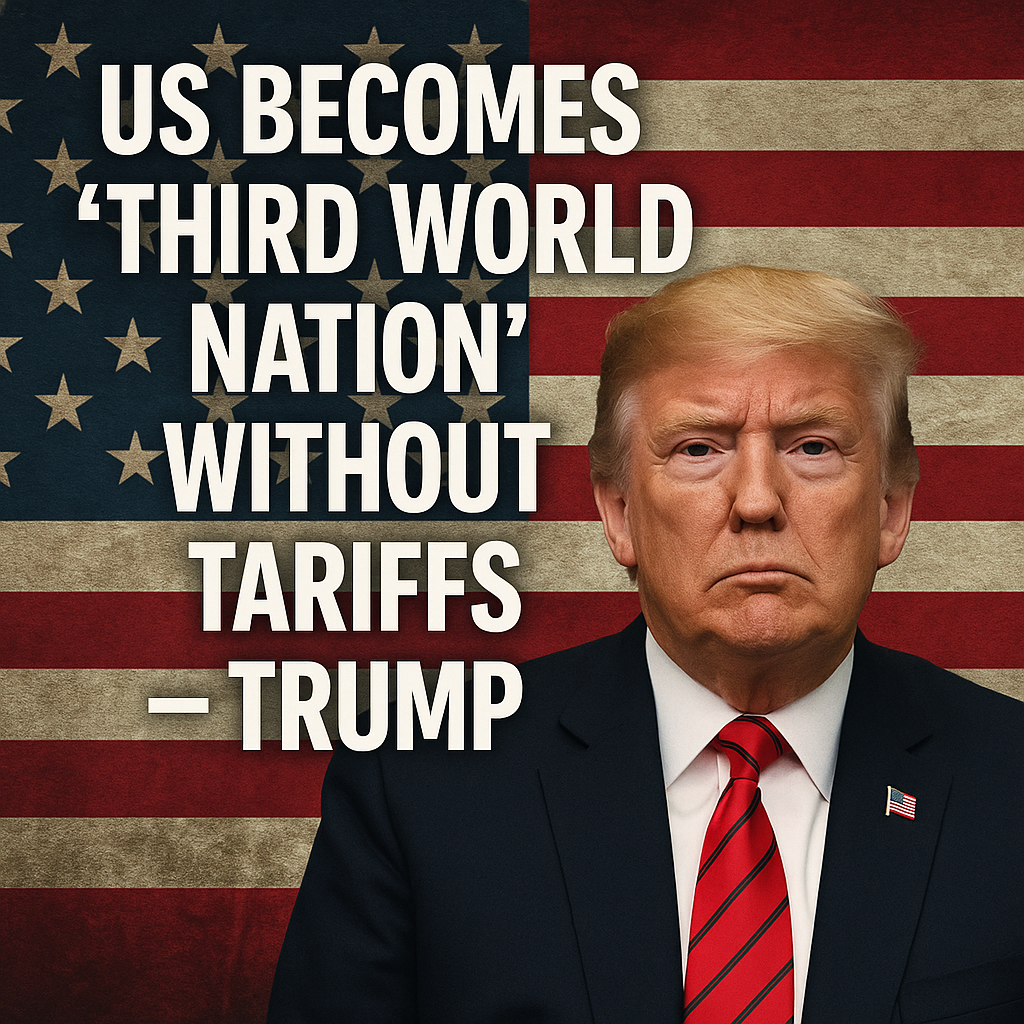
US Becomes ‘Third World Nation’ Without Tariffs – Trump

The Health of America’s Economy: Reevaluating Tariffs and National Status
Former President Donald Trump recently sparked a heated debate by declaring that the United States risks becoming a “Third World nation” without protective tariffs on imports. This bold assertion necessitates a deeper examination of tariffs’ potential impacts on the economy and how they relate to the long-term health of the nation. With varied opinions from experts and contrasting viewpoints among news sources, the conversation about tariffs is as multifaceted as the economy itself.

The Tariff Debate: Economic Protectionism vs. Free Trade
In recent discussions, Trump highlighted that without tariffs, American industries could falter against international competition, jeopardizing jobs and economic stability. Supporters of tariffs argue that these protective measures can stimulate domestic industries by leveling the playing field against countries that may not abide by fair labor or environmental standards.


As noted in an article from RT, Trump’s argument centers around the idea that tariffs are essential to maintaining a robust manufacturing base in the U.S., which he believes is key to national identity and security. According to his perspective, tariffs would help ensure that the economic benefits of production and employment remain within America’s borders.


Conversely, critics argue that tariffs can lead to escalation in trade wars, resulting in increased costs for consumers and exporters alike. An analysis by Al Jazeera posits that while protective tariffs might provide short-term relief for specific industries, they can also provoke retaliation from trading partners, adversely affecting America’s overall economic standing.
The Impact on Everyday Americans
Delving into the implications of tariffs, it’s crucial to consider how these policies affect the average American. Proponents contend that tariffs encourage consumers to buy American-made products, potentially leading to job creation in struggling sectors. However, opponents caution that America is deeply integrated into a global supply chain; tariffs on imports may raise prices on goods and services, thereby impacting lower-income households disproportionately.
Recent economic reports suggest that while some sectors, such as steel and aluminum, may benefit from tariffs, the broader economy might suffer from increased costs that trickle down to consumers. For instance, a hike in steel prices due to tariffs could lead manufacturers to pass those costs onto consumers, resulting in higher prices for everyday items.
A Nuanced Perspective on Globalization and National Identity
The current tariff conversation also touches on the broader themes of globalization and national identity. Proponents of Trump’s viewpoint contend that America is losing its competitive edge due to unfair trade practices from countries like China, which they claim benefits from a lack of reciprocity in trade policies. From this perspective, implementing tariffs is a necessary step to reclaiming economic sovereignty.
However, the Al Jazeera report emphasizes the risks involved with adopting a protectionist stance. In an interconnected world, shutting out foreign goods can be detrimental not only to consumers but also to relationships with international allies. Balancing the need for domestic stability with the advantages of global trade is a complex, nuanced issue that requires careful consideration.
The Uncertain Future: Are Tariffs the Answer?
While Trump’s alarmist rhetoric about America becoming a “Third World nation” signals a broader concern regarding economic health, the reality is more complex. The variables at play—global supply chains, consumer behavior, and international relations—add layers of uncertainty to any discussion about the efficacy of tariffs.
Experts in economic policy remain divided; some believe targeted tariffs could serve as a strategic safeguard in specific industries, while others warn against the long-term implications of such a strategy. In an ever-globalizing world, the risks associated with shunning free trade warrant gradual and thoughtful approaches rather than sweeping policy changes.
Conclusion: Navigating Economic Recovery
Ultimately, as discussions unfold regarding tariffs and America’s economic future, it’s imperative to approach the topic with both caution and open-mindedness. Tariffs may offer certain benefits, but their potential repercussions—particularly on consumers and international relations—should not be underestimated.
To prevent becoming a “Third World nation,” the focus could be better directed toward innovative policies that foster growth within American industries while simultaneously engaging constructively on the global stage. The key lies in finding that delicate balance between protectionism and globalization—one that not only secures economic stability but also enhances America’s standing in the world.
In an economy as complex and dynamic as the U.S., the most effective solutions may not lie in a singular focus but rather in a multifaceted approach that considers the needs of both domestic industries and global interdependencies.















