
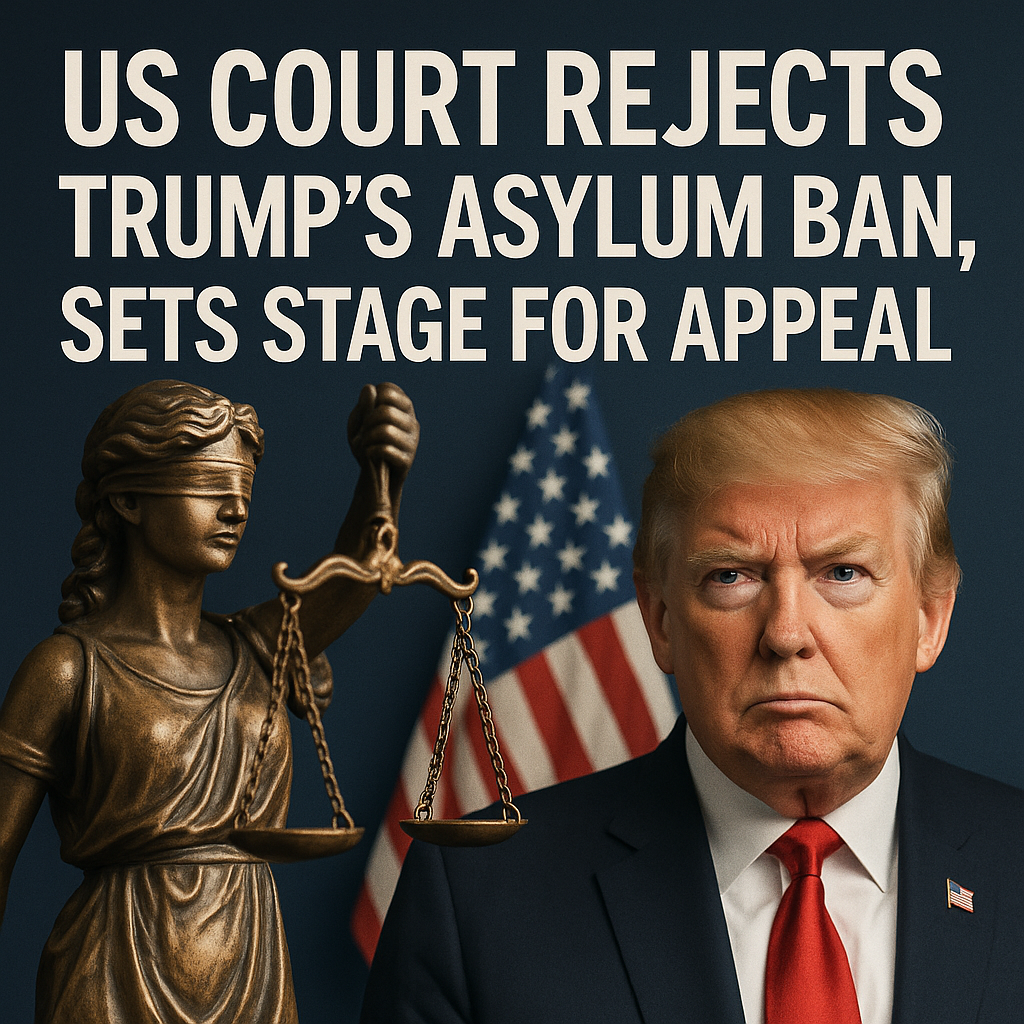
US Court Rejects Trump’s Asylum Ban, Sets Stage for Appeal

US Court Rejects Trump’s Asylum Ban, Sets Stage for Appeal
The recent decision by a U.S. court to reject former President Donald Trump’s asylum ban has reignited discussions surrounding immigration policy and judicial authority. This ruling not only impacts the legal landscape surrounding asylum seekers but also sets the stage for a potential appeal, sparking diverse opinions and analyses.

Background of the Asylum Ban
The asylum ban imposed by the Trump administration aimed to significantly limit the number of individuals eligible for asylum in the United States. Specifically, it restricted protections for those who did not apply for asylum in a third country before reaching the U.S. border. Supporters of the policy argued that it was necessary to curb illegal immigration and to protect national security. They claimed that the influx of asylum seekers was overwhelming the immigration system, leading to strains on resources and public services.


Conversely, opponents viewed the ban as a severe violation of human rights. Many advocates and legal experts pointed out that asylum seekers often fled dire situations where their safety was at risk, making it unrealistic to expect them to apply for asylum in another country first. They argued that the U.S. has a legal and moral obligation to provide refuge to those in need.


The Court’s Ruling: Key Points
The recent ruling from a U.S. court determined that the ban imposed by Trump was unconstitutional, thereby paving the way for a more equitable approach to asylum applications. According to a report from Al Jazeera, judges emphasized the importance of upholding U.S. asylum laws that are grounded in international human rights agreements. This decision reflects a judicial commitment to maintaining protections for vulnerable populations.
Implications for Asylum Seekers
The rejection of the asylum ban carries significant implications for individuals seeking refuge in the U.S. With this ruling, applicants can once again navigate the asylum process without facing additional barriers that were previously set by the Trump administration. This means a potential increase in the number of asylum cases that will be processed as well as a more humane approach to immigration policy.
However, the implications of this decision are not universally positive. Critics from the opposing camp argue that relaxing asylum requirements may lead to a surge in claims, which could overwhelm an already strained immigration system.
The Appeal Process: What Lies Ahead
Following this ruling, the potential for an appeal looms large. Legal experts, as noted by various sources, indicate that the case may soon find its way to the Supreme Court, where the final verdict may hinge on interpretations of both constitutional law and international obligations.
This prospect of an appeal is fraught with uncertainty. Different courts have rendered varying opinions regarding immigration policies over the years, leading to inconsistencies in how laws are applied. Given the volatile political landscape, it remains to be seen how the Supreme Court will rule on such a contentious issue.
Diverse Opinions on the Ruling
Responses to the court’s decision reveal a tapestry of views. Supporters of the ruling celebrate it as a significant victory for human rights and justice. Advocates for asylum seekers contend that it reinstates the foundational values of the U.S. as a refuge for the oppressed. They argue that the previous ban only served to deepen the injustices faced by those fleeing violence and persecution.
Conversely, critics of the decision express concerns about potential unintended consequences. Some argue that the ruling could inadvertently encourage more people to attempt dangerous journeys to the U.S. in the hope of gaining asylum, potentially exacerbating humanitarian crises at the border. They call for a more comprehensive reform of the immigration system that addresses both humanitarian needs and logistical challenges.
Conclusion: A Complex Landscape Ahead
As the legal landscape continues to evolve surrounding U.S. immigration policy, the court’s rejection of Trump’s asylum ban marks a pivotal moment worth monitoring closely. With a likely appeal on the horizon, the upcoming judicial decisions may further shape the future of asylum in the U.S. It is important for the discourse around this issue to remain nuanced and balanced, recognizing both the need for a humane response to those seeking refuge and the challenges involved in managing immigration effectively.
For now, individuals, policymakers, and advocates will continue to engage in dialogue, reflecting the complexity of a topic that involves legal, ethical, and logistical dimensions. The journey ahead remains uncertain, but the resolution of these issues will undoubtedly have lasting consequences for America’s approach to asylum seekers and immigration at large.















