
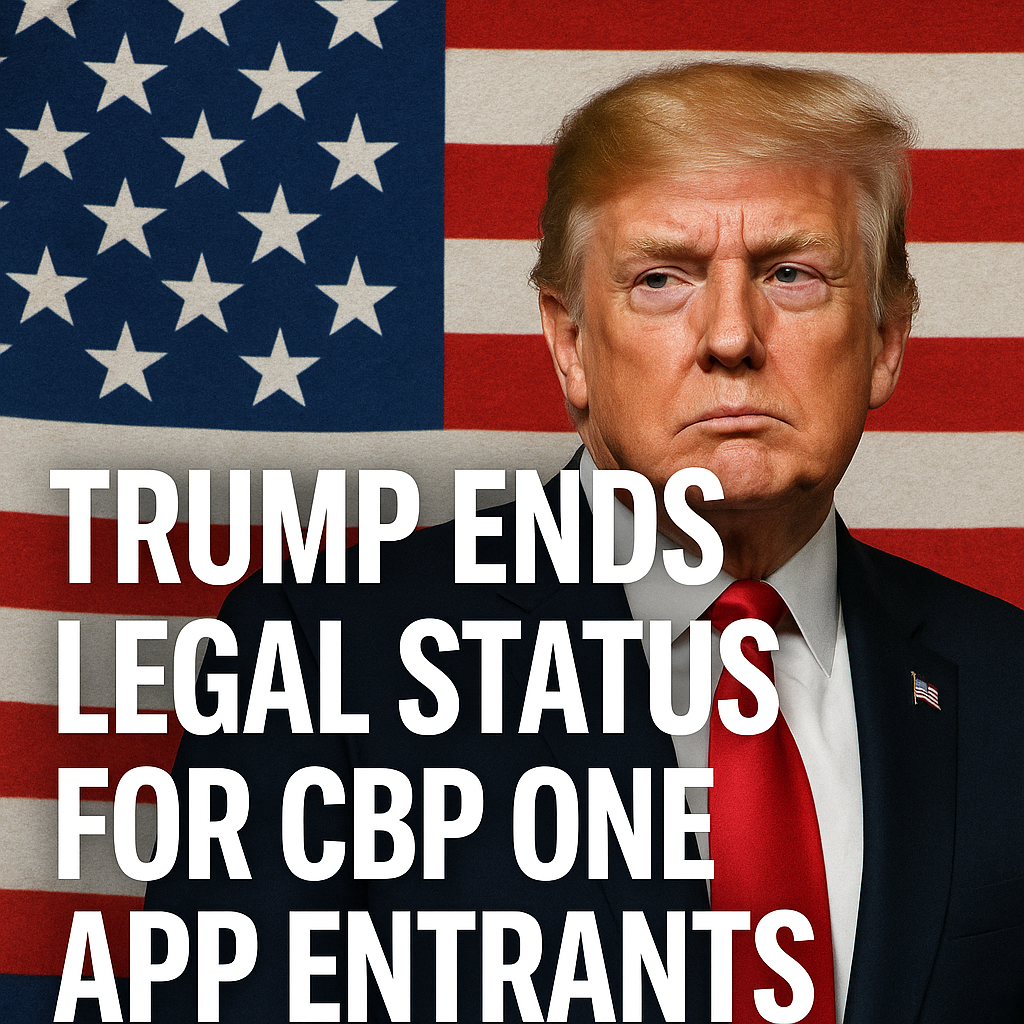
Trump Ends Legal Status for CBP One App Entrants

Trump Ends Legal Status for CBP One App Entrants
In a significant policy move, former President Donald Trump has announced an end to the legal status for individuals who entered the United States using the CBP One app. This decision raises complex questions about immigration protocols and the implications for those who sought asylum through this digital entry process.

Understanding the CBP One App
The CBP One app was introduced as a streamlined approach for processing asylum seekers at the U.S.-Mexico border. Initially, it allowed individuals to schedule appointments, thus reducing overcrowding and wait times at entry points. However, Trump’s recent announcement reopens debates about its efficacy and the broader implications for immigration policy.


Reactions from Various Stakeholders
The reaction to Trump’s decision has been mixed.


Support for the Policy Change: Advocates of stricter immigration controls argue that this move is essential for national security, contending that it would prevent individuals from taking advantage of lenient processes. Supporters maintain a belief in prioritizing legal entries and safeguarding borders.
Concerns from Human Rights Groups: On the other hand, numerous human rights organizations have voiced concerns over the implications for vulnerable populations seeking asylum. They assert that removing the legal status for those who relied on the app brings uncertainty and fear to those attempting to escape violence or persecution. Many critics deem this decision a setback in protecting human rights and providing sanctuary to those in need.
A spokesperson from a prominent immigrant advocacy group stated, “Ending legal status for these individuals not only jeopardizes their safety but undermines the very principles our nation was built on—providing refuge for those fleeing harm.”
The Broader Impact on Immigration Policies
This decision by Trump does not exist in isolation; it reflects broader immigration strategies that prioritize regulation and control.
Political Ramifications
As the U.S. gears up for the next presidential election, immigration policy will likely be a pivotal topic. Trump’s decision may resonate with his base, emphasizing a tough stance on immigration. However, it also risks alienating moderate voters who are increasingly concerned about the humanitarian aspects of immigration.
This is particularly relevant in a political landscape where public sentiment about immigration is nuanced. While there remains significant support for border security, a growing number of voters express the need for humane immigration reforms. As noted in a recent poll, many Americans are torn; while they want to see secure borders, they also believe in compassion and assistance for those seeking asylum.
Long-term Consequences
The implications of Trump’s latest policy might extend beyond immediate voter responses. Experts warn of potential long-term consequences for U.S. relations with other countries, especially those from which many asylum seekers originate. If individuals feel that they have no safe pathway to enter the U.S., the pressures at the border may worsen, leading to dangerous situations for many.
Additionally, the lack of clear pathways for legal entry may lead to increased risks of human trafficking and exploitation, as desperate individuals might turn to unsafe and unlawful methods to cross borders.
A Complex Landscape Ahead
Trump’s decision to end the legal status for CBP One App entrants has ignited new discussions about immigration policy complexities. It highlights the intersection of safety, legality, and humanity in U.S. immigration practices.
The current landscape is fraught with uncertainties, as various stakeholders grapple with the repercussions of this decision. A balanced approach is essential and will likely require the involvement of both political leaders and civil society to address both security concerns and humanitarian needs effectively.
In conclusion, while Trump’s move targets a specific regulatory aspect, the broader dialogue around immigration, its challenges, and its perceived moral implications will continue to evolve. The need for comprehensive immigration reform that respects human dignity, ensures security, and is both effective and compassionate remains more pressing than ever.















