
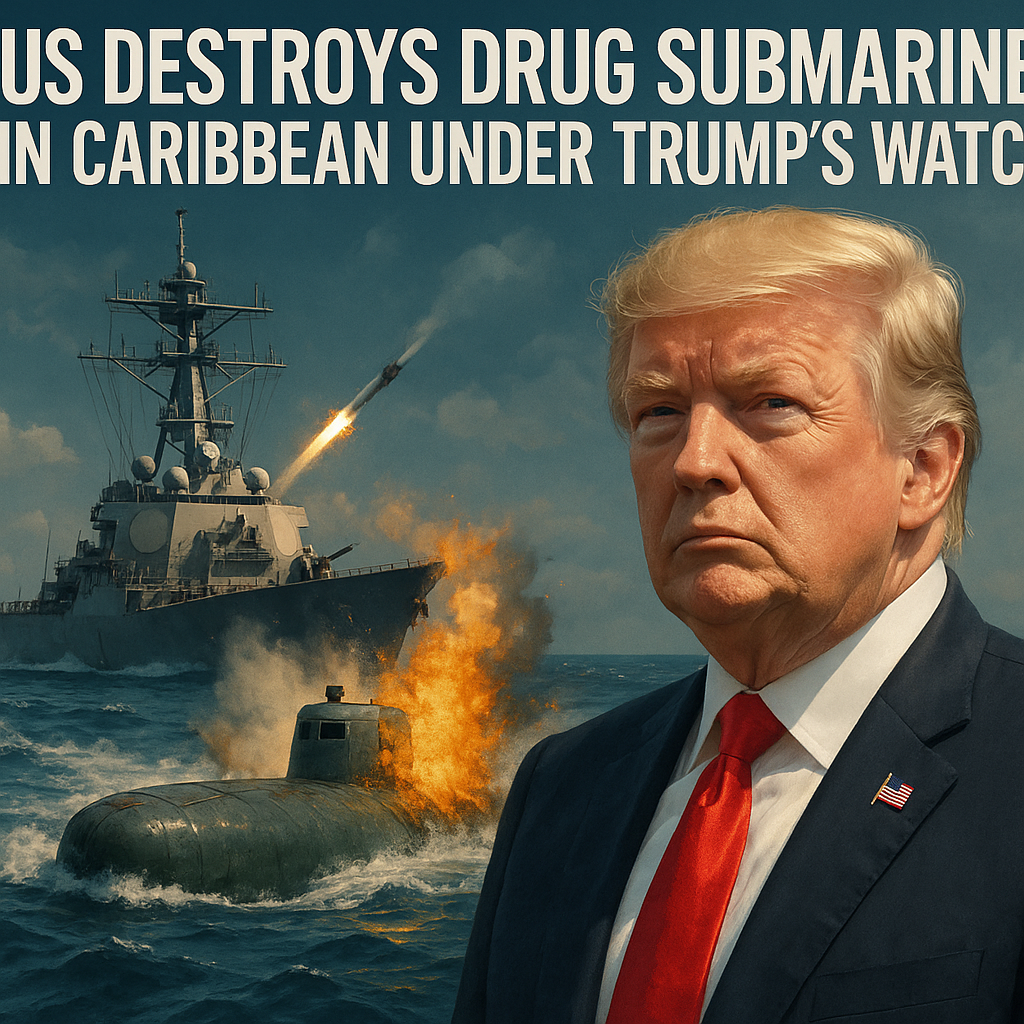
US Destroys Drug Submarine in Caribbean Under Trump’s Watch

U.S. Destroys Drug Submarine in the Caribbean Under Trump’s Watch
The U.S. recently took decisive action by destroying a drug submarine in the Caribbean, a move linked to broader efforts to combat narcotics trafficking, particularly from Venezuela. This incident, which occurred during Donald Trump’s administration, sheds light on multifaceted issues surrounding national security, drug trafficking, and international relations.

Context of the Operation
The drug submarine, reportedly used by Venezuelan traffickers, was targeted as part of a larger strategy to disrupt the flow of illegal narcotics into the United States. U.S. Southern Command stated that this operation exemplifies its commitment to countering transnational organized crime and enhancing regional security. Trump’s administration notably intensified efforts to combat drug trafficking, citing significant rises in drug overdose deaths during this period.


Reports from RT highlight that the operation was a response to longstanding concerns regarding Venezuela’s role in global drug trafficking networks. The submarine had been discovered during surveillance operations, and its destruction underscores the administration’s approach to tackling complexities in South American geopolitics.


Diverging Perspectives
However, interpretations of this operation differ among news outlets. According to Al Jazeera, some experts argue that military responses may not address the root causes of drug trafficking and could exacerbate tensions in the region. They cite that the U.S. engagement often overlooks the socioeconomic factors driving drug trade involvement in Venezuela and other neighboring countries. Critics emphasize the need for a comprehensive plan that incorporates socio-economic aid alongside military interventions.
Conversely, Sky News noted that the U.S. government’s actions may resonate well with its domestic audience, who expect robust measures against drug trafficking. The military action can serve as a deterrent to traffickers and bolster the narrative of Trump’s hardline stance on crime, a pivotal aspect of his political platform.
The Broader Implications
The repercussions of this operation extend beyond immediate drug enforcement. The destruction of the submarine also highlights the deteriorating U.S.-Venezuela relationship, particularly under Trump’s presidency, marked by sanctions and political pressure against Nicolás Maduro’s government. This hostile dynamic raises questions about whether aggressive military actions can genuinely reform or disrupt entrenched drug networks, which often thrive amid political instability.
Simultaneously, authorities are tasked with managing public perception regarding national security. The rise in fentanyl crises and related deaths in the U.S. has put pressure on law enforcement agencies and the military alike to take assertive measures. Some analysts contend that, while military efforts may achieve short-term disruption, a long-term solution requires diplomatic engagement and economic development initiatives aimed at alternative livelihoods for those involved in drug trade.
Conclusion: A Complex Web of Interactions
The destruction of the drug submarine is emblematic of the multifaceted challenges facing the U.S. in combating drug trafficking. While the military operation may yield immediate results, it also raises larger questions about the effectiveness of such measures as standalone solutions. A balanced approach that merges military readiness with efforts towards economic development and diplomatic engagement might be essential for eradicating the underlying issues that fuel drug trafficking in the region.
As this situation continues to unfold, the actions taken by the U.S. must navigate the intricate implications of national security, regional geopolitics, and the ongoing drug crisis at home. The responses to the operation underscore debates about the necessity and appropriateness of military intervention, which ultimately remains a controversial point in international relations and domestic policy dynamics.















