
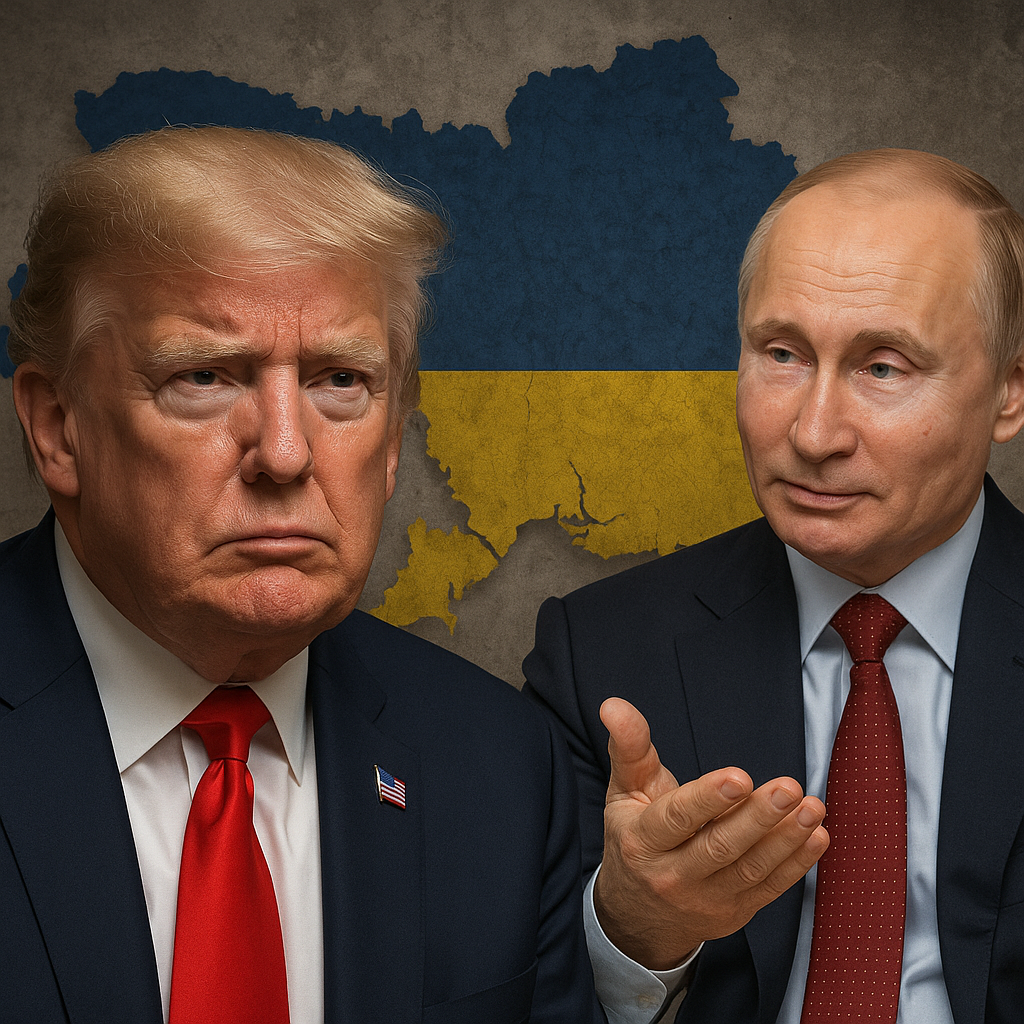
Trump Admits Possible Manipulation by Putin on Ukraine

Trump Admits Possible Manipulation by Putin on Ukraine
Former President Donald Trump recently raised eyebrows with his candid admission regarding Vladimir Putin’s influence on U.S. perceptions of the Ukraine conflict. In a statement, Trump openly acknowledged the potential for manipulation, a moment that carries significant implications amidst an already polarized national discourse around foreign policy and the ongoing war in Ukraine.

The Context of Trump’s Admission
Trump’s remarks came during an interview where he discussed his views on the Ukraine crisis, suggesting that he might be influenced by Russian narratives. “It’s possible I’m being played,” he stated, hinting at the complexity of international relations and the influence of disinformation. This statement sparked various interpretations, particularly among pundits and analysts who are closely monitoring both Trump’s evolving stance and the broader geopolitical landscape.


Reports from multiple sources illustrate a divided opinion on Trump’s acknowledgment. According to Sky News, analysts interpret Trump’s comments as a rare moment of self-reflection for the former president, who has often been characterized as unwavering in his alignments. Conversely, Al Jazeera highlighted concerns that such statements could embolden adversaries like Putin, indicating a potential vulnerability in U.S. leadership. This duality showcases the nuanced perspectives within the realm of U.S. foreign policy.


The Implications of Accepting Manipulation
The admission could fundamentally reshape how the public and political analysts perceive Trump’s foreign policy strategies. Some commentators argue that acknowledging potential manipulation is a step toward greater transparency and awareness, particularly in dealing with adversarial powers. Trump’s position appears to suggest a cautionary approach toward narratives that frame the conflict solely through a binary lens of good versus evil.
However, others take a more critical view, seeing this as a reflection of Trump’s inconsistent foreign policy posture, which has previously included both praise for and skepticism toward Putin. This inconsistency may undermine U.S. credibility in international negotiations and weaken the overall resolve against Russian aggression. Analysts have pointed out that such statements could provide a calculated distraction, shifting responsibilities for strategic failures onto external entities rather than addressing domestic policy shortcomings.
Diverse Perspectives on Trump’s Remarks
The divergent responses to Trump’s admission reveal a broader discourse about the nature of international relations, particularly regarding U.S.-Russia dynamics. Advocates for a more cautious foreign policy, aligned with traditional Republican values, may find a semblance of alignment with his recent comments, arguing that strategic engagement with Russia requires discernment. They believe that a rigid stance could lead to unintended escalation or miscalculations.
On the other hand, more progressive voices, such as those featured in Al Jazeera, warn that acknowledging manipulation could inadvertently give rise to conspiratorial thinking that diminishes trust in institutional frameworks. They assert that U.S. policy should remain robust in supporting Ukraine’s sovereignty without reservation, arguing that working within an established legislative context is crucial to maintaining global stability.
What Lies Ahead for U.S. Foreign Policy?
Trump’s candidness breeds questions about the future of U.S. foreign policy as the Biden administration emphasizes a strong stance on supporting Ukraine. The ongoing conflict presents numerous challenges, including humanitarian crises and geopolitical instability. Discrepancies in the leadership approach could pose significant impediments to bipartisan support for Ukraine.
As both sides of the political aisle digest Trump’s remarks, it is evident that there remains a significant division regarding perceptions of international relations and the media’s role in crafting narratives around sensitive topics like national security. While some proponents argue that skepticism is crucial in a complex global landscape, others contend that a united front is essential to deter further aggression.
Overall, Trump’s admission serves as a reminder of the intricacies of global politics and the necessity for clear communication, transparency, and strategic integrity within presidential discourse. As the conflict in Ukraine continues, the U.S. must navigate these complexities carefully—balancing national interests with global responsibilities while ensuring that political rhetoric does not compromise foundational alliances.
The potential for misinformation and manipulation should serve as a wake-up call for both policymakers and the general public, urging them to remain vigilant against narratives that could disrupt objective dialogues. In navigating the future of U.S. foreign policy, a cohesive approach that prioritizes factual accuracy and principled engagement will be crucial in shaping effective outcomes in an ever-evolving geopolitical landscape.















