
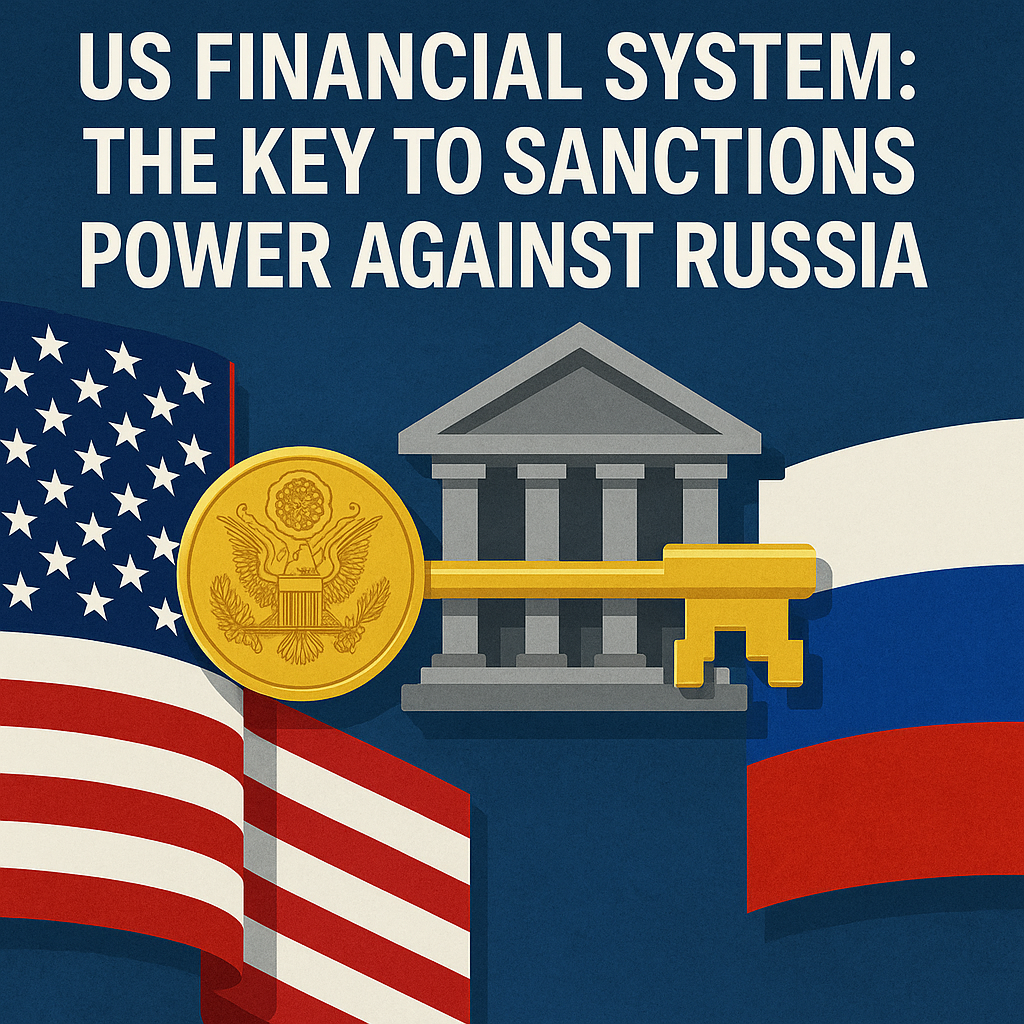
US Financial System: The Key to Sanctions Power Against Russia

The US Financial System: The Key to Sanctions Power Against Russia
The effectiveness of sanctions against Russia heavily relies on the intricate mechanisms of the US financial system. As tensions between the West and Russia escalate, understanding the confluence of finance and foreign policy becomes paramount for both policymakers and observers.

How Sanctions Work Within the US Financial Framework
Sanctions are tools of foreign policy aimed at exerting economic pressure to achieve diplomatic objectives. They often include asset freezes, trade restrictions, and prohibiting certain financial transactions. The US, armed with a dominant financial system and global currency, has proven adept at utilizing these tactics.


The Dollar’s Dominance
The US dollar’s status as the world’s primary reserve currency offers a unique leverage that fuels much of America’s sanctions power. According to a report from Sky News, any country that conducts international trade with the US or its allies significantly risks exclusion from the dollar-based financial system. This means that a large portion of global transactions must pass through American banks, which can be compelled to enforce sanctions legislated by Congress.


Moreover, the access to US markets becomes a compelling deterrent for nations considering maintaining trade ties with Russia. Countries that choose to sidestep US sanctions often face severe repercussions, including being cut off from crucial trade routes and facing domestic economic downturns. As a result, the strength of sanctions against Russia is in part due to the country’s reliance on international financial systems that are dominated by US principles and laws.
Diverging Perspectives on Sanction Effectiveness
While there is broad agreement that US financial sanctions significantly affect Russia, opinions diverge on their overall effectiveness. Some analysts assert that sanctions are pivotal in debilitation of Russia’s economy. For instance, Al Jazeera cites data showing that the ruble has faced immense pressure, and inflation has surged since the introduction of international sanctions. These economic hardships could theoretically compel the Kremlin to reconsider its strategies, including military engagement.
Conversely, voices on Russian media, such as RT, argue that the country has undertaken measures to mitigate the impact of these sanctions. Initiatives may include fostering partnerships with non-Western countries and developing alternative financial systems that reduce dependence on the US-dominated financial framework. Additionally, claims from Russian officials suggest that the nation is adapting to the new realities, often framing the sanctions as a means to achieve greater sovereignty and self-sufficiency.
Complications and Uncertainties
Despite the apparent advantages of US sanctions, the landscape is fraught with complexities. One issue is the potential for sanctions to inadvertently strengthen nationalist sentiments within Russia. If citizens view the sanctions as an assault on their sovereignty, they may rally around governmental actions, thereby counteracting intended psychological effects.
Economic Ramifications
While some Russian economic sectors are undoubtedly suffering, emerging markets in Asia, Europe, and the Middle East might offer alternative avenues to mitigate sanctions’ impact. This positions countries like China as key players in the evolving financial landscape. Financial interdependence among these nations could provide Russia a lifeline, making the enforcement of sanctions less effective than initially hoped.
Moreover, some scholars caution that over-reliance on financial sanctions can backfire, prompting countries targeted by sanctions to diversify their economic relations with other allies, thus eroding American influence. From this perspective, the US financial system, while powerful, must be wielded judiciously.
Real-World Consequences
As the geopolitical situation evolves, the implications of these financial strategies extend beyond economics to global political alliances. For example, while the aim is to isolate Russia, sanctions may inadvertently encourage deeper cooperation among non-Western states. Furthermore, the long-term sustainability of this sanctions-based strategy poses questions about the US’s credibility and reliability as an ally. Countries that rely heavily on American financial systems may find themselves reconsidering their positions if sanctions become a recurring tool of foreign policy.
Conclusion: A Double-Edged Sword
The US financial system undoubtedly plays a critical role in executing sanctions against Russia, leveraging the power of the dollar to exert diplomatic influence. However, varying perspectives on sanction efficacy illustrate the need for a nuanced understanding of their impacts. As Russia adapts and seeks new partnerships, the ability of the US to maintain its sanctions power may come under increasing scrutiny.
Thus, while the US financial system is a key instrument for exerting economic pressure, its effectiveness can be hampered by unexpected geopolitical shifts and the resilience of the countries that face these sanctions. The world watches closely, aware that decisions made today will shape the landscape of international relations for years to come.















