
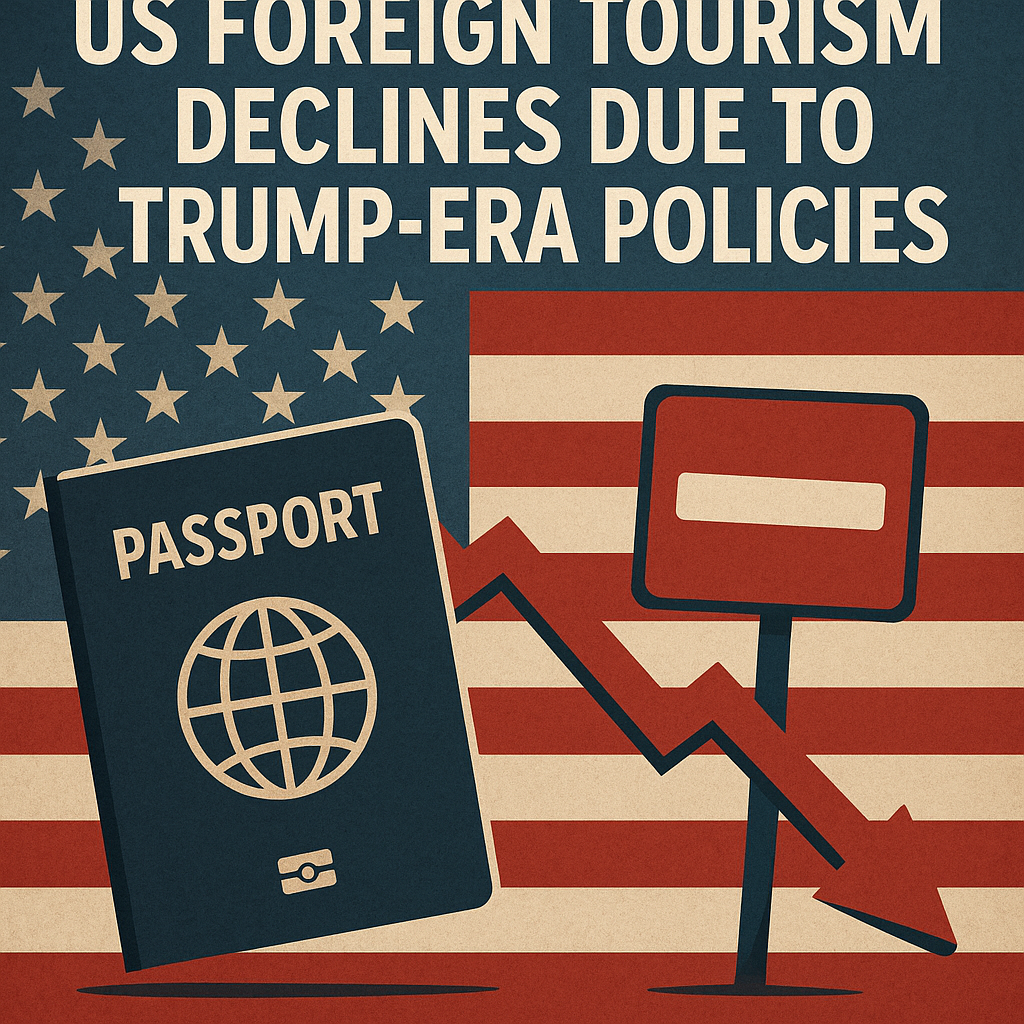
US Foreign Tourism Declines Due to Trump-Era Policies

The Decline of Foreign Tourism in the U.S.: A Legacy of Trump-Era Policies
Foreign tourism to the United States has seen a marked decline, a situation many experts attribute to policies enacted during the Trump administration. These policies, which ranged from stricter immigration controls to a perceived hostility toward certain countries, have contributed to a complex web of factors affecting international travelers’ decisions.

Impact of Policy Changes on Tourism
The Trump era introduced a series of travel bans and restrictive immigration policies aimed at enhancing national security. For instance, the 2017 travel ban targeted several predominantly Muslim countries, creating an environment of uncertainty and concern among potential tourists. According to multiple sources, including Al Jazeera, these policies had an immediate chilling effect on travel sentiment. Many foreign visitors began to view the U.S. as less welcoming, resulting in decreased tourism numbers.


Data Trends and Statistics
Recent data shows that from 2016 to 2024, foreign tourists visiting the U.S. fell significantly. Statistics reveal that tourist arrivals were down by nearly 20% compared to pre-Trump levels. In 2019 alone, the U.S. welcomed about 79 million international visitors; by 2023, that number dropped to approximately 64 million, illustrating a noticeable decline.


A report from RT highlights that European and Middle Eastern visitors, in particular, became wary of traveling to America, citing fears of possible discrimination or aggressive border checks. This shift has not only impacted the overall economy but has also affected industries reliant on foreign tourism—hospitality, retail, and entertainment sectors have seen diminished revenues as a result.
Perceptions vs. Reality: A Deeper Look
While policy changes are crucial to understanding the decline in foreign tourism, perceptions also play a significant role. Tourists often share stories and experiences through social media, propagating an image of the U.S. that can deter others from visiting. Sky News reports that international sentiments toward the United States grew increasingly negative during this period, which perhaps led to a ripple effect in travel decisions.
A Balanced Perspective
However, it’s important to note that the decline in tourism cannot be solely attributed to Trump-era policies. Factors such as the COVID-19 pandemic, which led to global travel restrictions, have also contributed significantly to reduced visitor numbers. Some industry experts argue that even without the pandemic, the political climate and associated travel policies would have deterred tourism, but the pandemic exacerbated these issues.
In contrast, some travelers still maintain that many aspects of American culture and hospitality remain inviting, attracted by experiences unique to the U.S. Some reports indicate a gradual rebound in tourist interest from specific regions, especially post-pandemic, signaling that while the effects of Trump-era policies were significant, they might not represent an insurmountable barrier.
Looking Ahead: What Can Be Done?
Reviving foreign tourism to the U.S. will require a multi-faceted approach. Experts suggest that addressing the perceptions created during the Trump era, coupled with policy reforms, could help bridge the gap. Initiatives to promote cultural exchanges, streamline visa processes, and present a more welcoming image could be effective strategies for recovery.
Additionally, enhancing global communications and marketing to counter negative perceptions can help rebuild trust. Organizations involved in tourism are likely to advocate for collaborative policies that aim not only to attract foreign visitors but also to foster a sense of inclusivity.
In conclusion, while Trump-era policies undeniably impacted foreign tourism to the U.S., the crisis was influenced by multiple factors, including the global pandemic. To foster a revival in this critical sector, concerted efforts will be necessary, emphasizing diplomacy, cultural understanding, and the unique allure the U.S. has to offer. Embracing a more welcoming approach may pave the way for international travelers to see America not just as a destination, but as a place they are eager to explore.















