
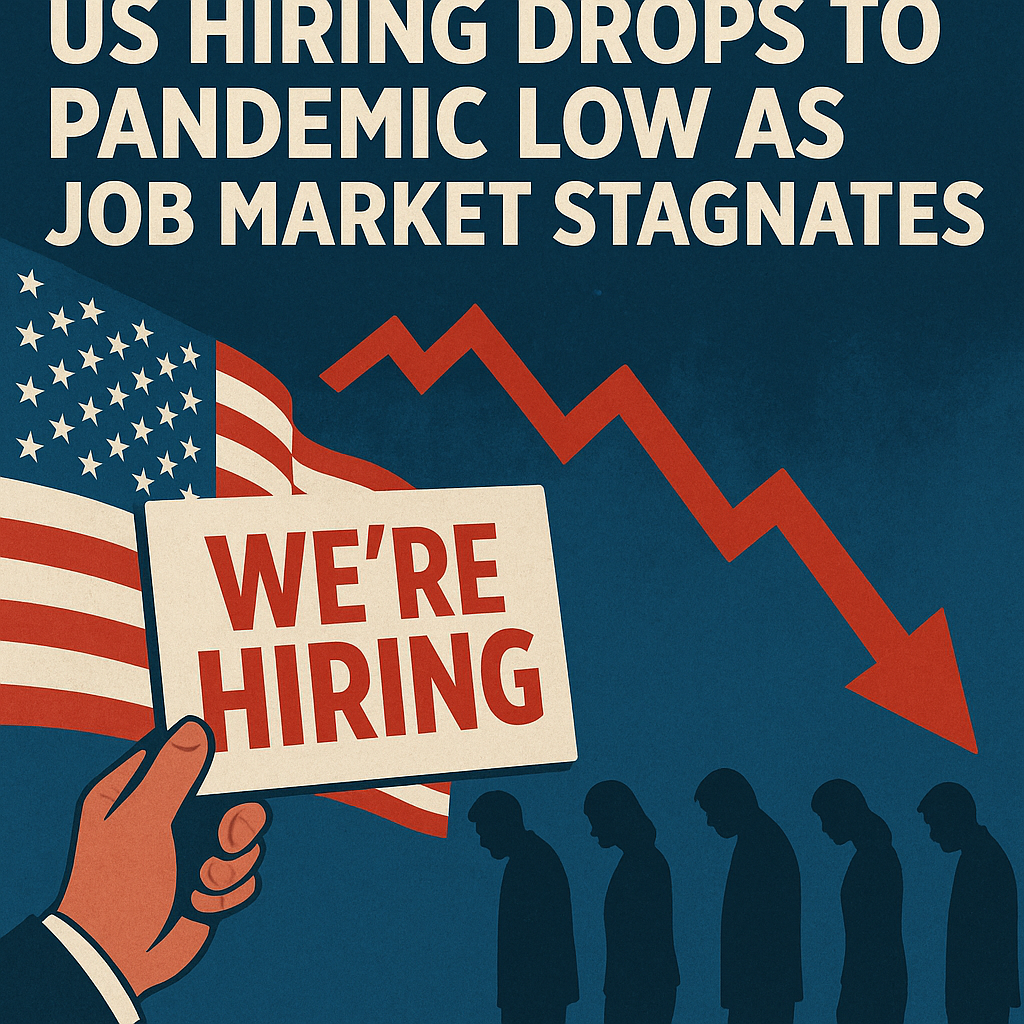
US Hiring Drops to Pandemic Low as Job Market Stagnates

US Hiring Drops to Pandemic Low as Job Market Stagnates
The latest data indicate a concerning trend in the American job market—hiring has fallen to levels not seen since the pandemic’s peak. As the economy adjusts to ongoing challenges and shifts, this stagnation reflects broader uncertainties that could impact various sectors and the workforce at large.

Analyzing the Current Job Landscape
Recent reports indicate that job creation in the United States has hit a standstill, with hiring rates dropping significantly. Notably, the Labor Department’s recent figures show that the economy added a mere 180,000 jobs last month, the lowest monthly total since the initial months of the pandemic. This data raises questions about the broader economic recovery and the sustainability of the current labor market.


Experts attribute this decline to a combination of factors. A significant contributor is the continuing labor shortages that many industries face, which are complicated by a fluctuating interest from potential job seekers. Some analysts argue that widespread resignation rates—largely dubbed the “Great Resignation”—are still in play. Many workers are opting for different career paths, leaving employers scrambling to fill positions.


Additionally, there is growing concern about inflation and economic uncertainty. As Al Jazeera highlights, these factors contribute to hesitancy among both job seekers and employers. With costs rising across the board, from housing to consumer goods, many potential employees are being strategic about their job moves, waiting for more favorable conditions before stepping into a new role.
Diverging Perspectives on the Economic Shift
Opinions about the implications of the stagnating job market are divided among economists and journalists alike. On one hand, some experts assert that the slowdown may signal an impending recession, driven by increasing interest rates and decreased consumer spending. Financial analysts from various outlets suggest that sustained stagnation could lead to severe repercussions, including a higher unemployment rate as businesses scale back hiring efforts or initiate layoffs.
Conversely, others argue that this could simply represent a natural ebb and flow of the labor market. For instance, significant employment growth is often followed by periods of adjustment as industries recalibrate after tumultuous times, such as the COVID-19 pandemic. Furthermore, with the current emphasis on remote work and the gig economy, some economists posit that the decline in traditional hiring may not necessarily equate to an overall economic downturn.
This dichotomy reflects a broader debate about the future of work in the United States. As reported by Sky News, some industries, particularly tech and e-commerce, continue to expand opportunities even amid broader hiring declines, suggesting that the labor market is in the midst of a transition rather than an outright collapse.
Future Outlook: Uncertainty Prevails
The future of the U.S. job market remains unclear, as consecutive dips in hiring raise pressing questions. While some analysts predict a swift recovery, bolstered by adjustments in worker supply and demand dynamics, others caution that external factors—such as geopolitical tensions and domestic policy decisions—could create further barriers.
One key aspect to watch is how policymakers respond to this slowdown. As noted in various streams of coverage, potential government interventions could play a crucial role in revitalizing confidence among consumers and businesses alike. Should measures such as stimulus packages or changes in interest rates be enacted?
In the ongoing discourse surrounding the job market, it’s essential to weigh these diverse perspectives. Striking a balance between optimism and caution could be critical for decision-makers as they navigate this complex landscape.
While the current state of hiring certainly poses challenges, it also sparks critical conversations about the future of work, economic resilience, and workforce adaptability. As the landscape continues to shift, remaining informed and engaged will be vital for both employers and job seekers navigating these uncertain waters.
Conclusion
In conclusion, the stagnation of hiring in the U.S. signals a need for strategic responses from businesses, workers, and policymakers. The interplay of economic factors, labor market dynamics, and future workforce trends will ultimately shape the forthcoming chapters of the American job market. As we digest these developments, it will be essential to remain mindful of the complexity and multifaceted nature of this evolving situation.















