
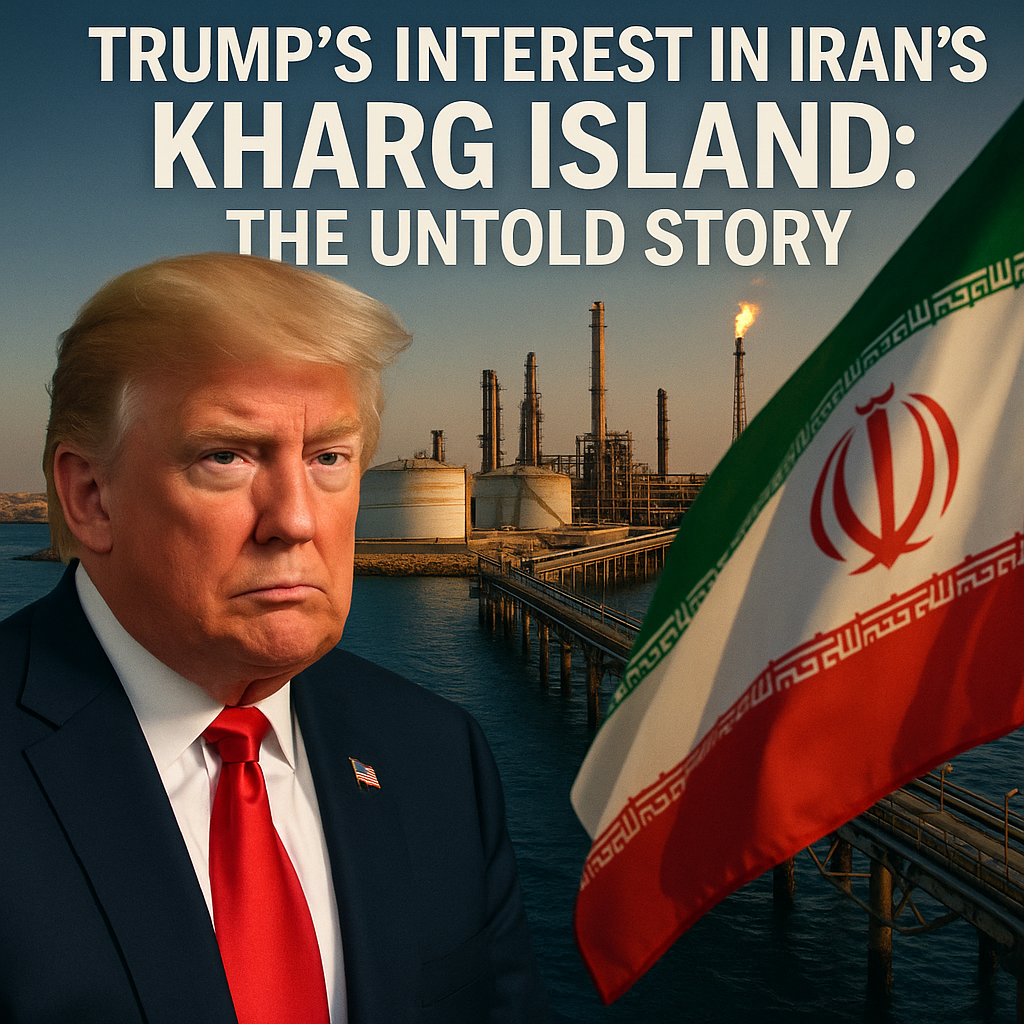
Trump’s Interest in Iran’s Kharg Island: The Untold Story

Trump’s Interest in Iran’s Kharg Island: The Untold Story
Donald Trump’s interest in strategic locations like Iran’s Kharg Island has sparked discussions that traverse geopolitics and economic motives. While many have speculated about the former president’s implications regarding Iran and its nuclear ambitions, this article aims to shed light on the multifaceted reasons behind his focus on this particular island.

Kharg Island: A Beacon of Strategic Significance
Kharg Island, situated in the Persian Gulf, is Iran’s primary oil export terminal and serves as a logistical hub for the nation’s oil exports. With its approximately 50% contribution to Iran’s overall oil exports, control over Kharg Island offers immense strategic value not just to Iran, but to global energy markets.


Economic Interests and Potential Motivations
Trump’s interest in Kharg Island may not purely stem from political agendas but also economic considerations that extend to U.S. energy independence. Reports from various sources indicate that Trump has often expressed a desire for the United States to capitalize on natural resources, particularly oil. His administration’s policies leaned heavily on promoting American energy dominance, which advocates for reducing reliance on foreign oil sources.


Furthermore, Kharg Island’s position provides a vantage point for monitoring oil shipping routes in the region, thereby heightened its geopolitical significance. Analysts argue that Trump’s focus on such locations reflects a broader strategy to negotiate better terms concerning oil production and export.
Interestingly, some reports from Al Jazeera emphasize that Trump’s interest is not just limited to economic gains but is intrinsically linked to his domestic political maneuvers. The former president’s messaging often aimed to shore up support among his base, where pro-Israel rhetoric also aligns with a tougher stance on Iran.
Geopolitical Overlays and Complexities
However, the situation becomes increasingly complicated when one considers the existing tensions between the United States and Iran. The period surrounding Trump’s presidency was marked by a significant escalation in hostilities, including the U.S. withdrawal from the Joint Comprehensive Plan of Action (JCPOA). This move placed bilateral relations between the two nations on a knife-edge and elucidates why analysts view Trump’s interests in Kharg Island with skepticism.
Some experts argue that Trump’s focus on such a strategically vital location could be perceived as a means of exerting psychological pressure on Iran. The island represents a point of vulnerability. By highlighting his interest, Trump might aim to signal to Tehran that U.S. influence remains unwavering.
Conversely, reports on RT present a more skeptical viewpoint, stressing that such strategies could escalate confrontations, potentially leading to military entanglements that neither side desires. The delicate balance of power in the region makes the pursuit of any unilateral interests potentially hazardous.
Diverging Perspectives: A Balancing Act
In synthesizing diverse viewpoints, it’s crucial to delve into the differing narratives surrounding Trump’s motivations for targeting Kharg Island. On one hand, proponents of a hardline U.S. approach argue that confronting Iran’s power centers, like Kharg Island, is essential for maintaining regional stability. They assert that the U.S. must leverage its oil independence and diplomatic relations to counter Iran’s influence.
On the other hand, critics caution against a confrontational strategy. They argue that it could provoke unnecessary escalation and destabilize the region further. A consensus is still elusive; while some advocate for bold actions based on perceived threats, others implore that diplomacy, rather than intimidation, may yield better outcomes for all parties involved.
The Uncertain Future of U.S.-Iran Relations
As geopolitical dynamics continue to evolve, Trump’s legacy regarding Iran remains contentious. His focus on Kharg Island may well symbolize broader U.S. interests—but it also offers a stark reminder of the fragility of international relationships and the necessity for careful, nuanced approaches in foreign policy.
In conclusion, while the complexities surrounding Trump’s interest in Kharg Island evoke both economic and geopolitical considerations, they underscore the ongoing need for dialogue and understanding among nations. The tug-of-war between advocacy for hardline stances and calls for diplomacy illustrates that no single approach can dominate the narrative. The untold story of Kharg Island is not just one of Trump’s ambitions, but rather a testament to the intricate web of international politics, economics, and cultural dynamics that defines our global landscape.
As the situation develops, it remains essential to monitor how these interests correlate with shifting alliances and potential negotiations, as the stakes continue to rise in the ever-challenging domain of Middle Eastern geopolitics.















