
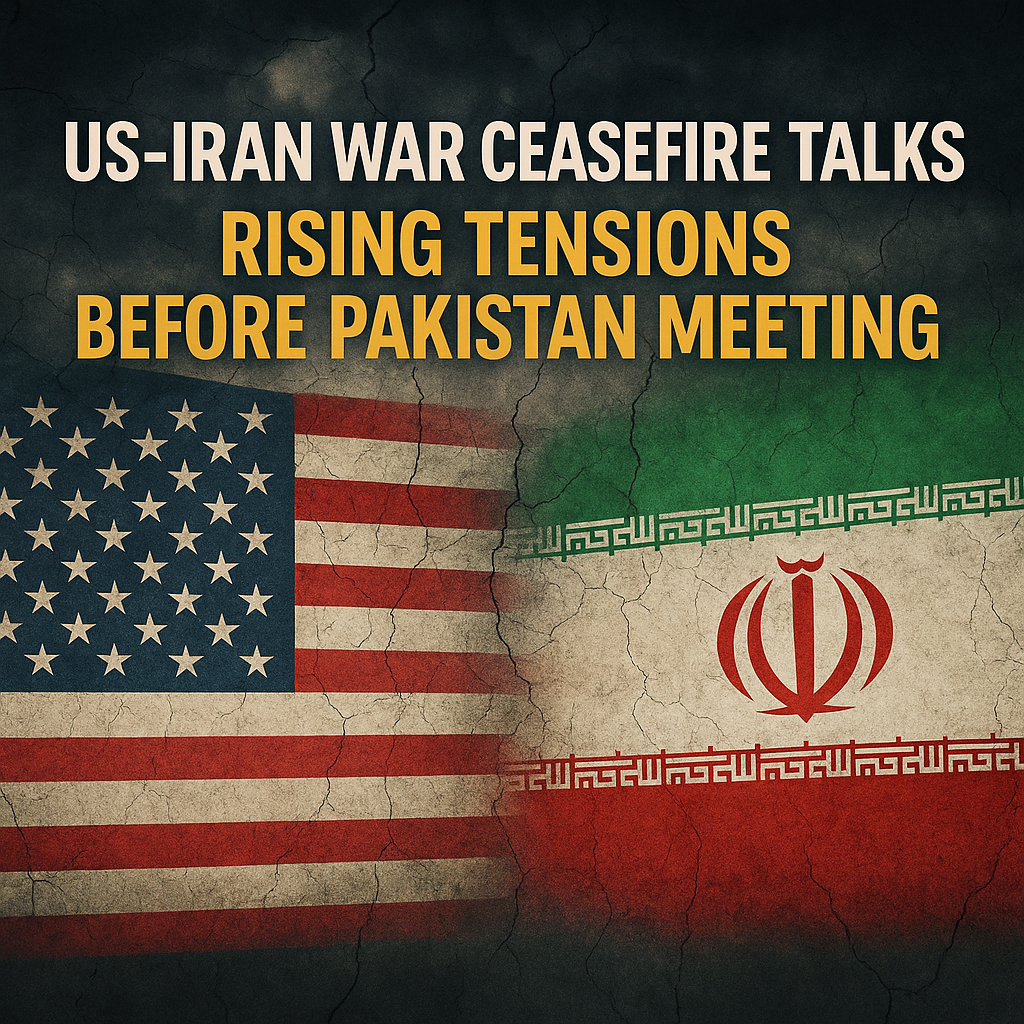
US-Iran War Ceasefire Talks: Rising Tensions Before Pakistan Meeting

US-Iran War Ceasefire Talks: Rising Tensions Before Pakistan Meeting
The recent escalation in tensions between the United States and Iran has brought renewed urgency to ceasefire talks, particularly in the context of upcoming discussions scheduled to take place in Pakistan. As stakeholders from both nations prepare for negotiations, the complexities of the geopolitical landscape have made it increasingly vital to analyze the underlying factors driving their interactions.

The Context of Tensions
A backdrop of mutual mistrust has characterized US-Iran relations for decades, but the delicate balance has become even more precarious in recent months. According to reports from Al Jazeera and Sky News, the situation escalated following a series of incidents in the Gulf region involving military maneuvers and hostile rhetoric from both sides.


Military Maneuvers and Their Implications
The US has ramped up its military presence in the region, citing deterrent measures against potential Iranian aggression. Recent military exercises and the dispatch of naval vessels have raised alarms in Tehran, prompting Iranian officials to perceive these actions as provocations. RT News reports that Iran has responded by conducting its own military drills, asserting its regional influence and showcasing its deterrent capabilities.


This armed posturing has not only inflamed tensions but also complicated the upcoming ceasefire discussions. For many analysts, including those cited in various reports, the likelihood of achieving a sustainable peace agreement remains uncertain as long as both nations continue to engage in confrontational tactics.
Diverging Views on Ceasefire Prospects
The upcoming meeting in Pakistan has sparked contrasting expectations among experts and policymakers. On one hand, some analysts express cautious optimism that the two nations may find common ground. Sources from Al Jazeera emphasize that back-channel dialogues have been taking place, indicating a willingness on both sides to engage in direct discussions despite lingering animosities.
Conversely, other experts paint a more somber picture. Reporting from Sky News underscores the lack of trust that has historically complicated negotiations, suggesting that even if talks proceed, significant hurdles remain. Issues such as sanctions, nuclear capabilities, and regional conflicts further compound the complexity of the discussions.
The Role of Regional Dynamics
The involvement of Pakistan as a neutral venue adds another layer of complexity. Pakistan has historically maintained a relationship with both the US and Iran, making it a unique player in the dialogue. However, some analysts question whether Pakistan can effectively mediate or facilitate meaningful negotiations, given its own geopolitical challenges.
Public sentiment in both the US and Iran may also impact the outcome of the meetings. In the US, there is a growing segment of the population that advocates for increased diplomatic engagement rather than military confrontation. In contrast, hardline factions in Iran may resist any form of compromise, fearing that concessions could be seen as a weakness.
Diverse Strategies Moving Forward
As the talks approach, various strategies are being considered to facilitate a possible breakthrough:
– Incremental Confidence-Building Measures: Experts suggest starting with smaller, less contentious issues to build trust before addressing more significant challenges, such as nuclear proliferation.
– Third-Party Mediation: The involvement of neutral parties, such as Pakistani diplomats, could help navigate the complexities and provide fresh perspectives on longstanding grievances.
– Diplomatic Incentives: Offering economic aid or relief from sanctions in exchange for compliance with ceasefire agreements may provide the necessary motivation for both parties to compromise.
Conclusion: A Fragile Path to Peace
The upcoming ceasefire talks in Pakistan represent a crucial juncture for US-Iran relations. While there is a sliver of hope that dialogue could lead to de-escalation, substantial obstacles remain. As military tensions continue to simmer, the commitment to genuine diplomacy will be tested. Whether the parties can move past decades of antagonism to foster a tangible peace agreement remains to be seen.
The situation underscores the complexity of modern geopolitical engagements, where national interests, public sentiment, and historical grievances often collide. As observers of this intricate dance between two nations, it’s essential to remain both hopeful and cautious, understanding that while talks have the potential to lead to peace, the road to that peace is fraught with peril.















