
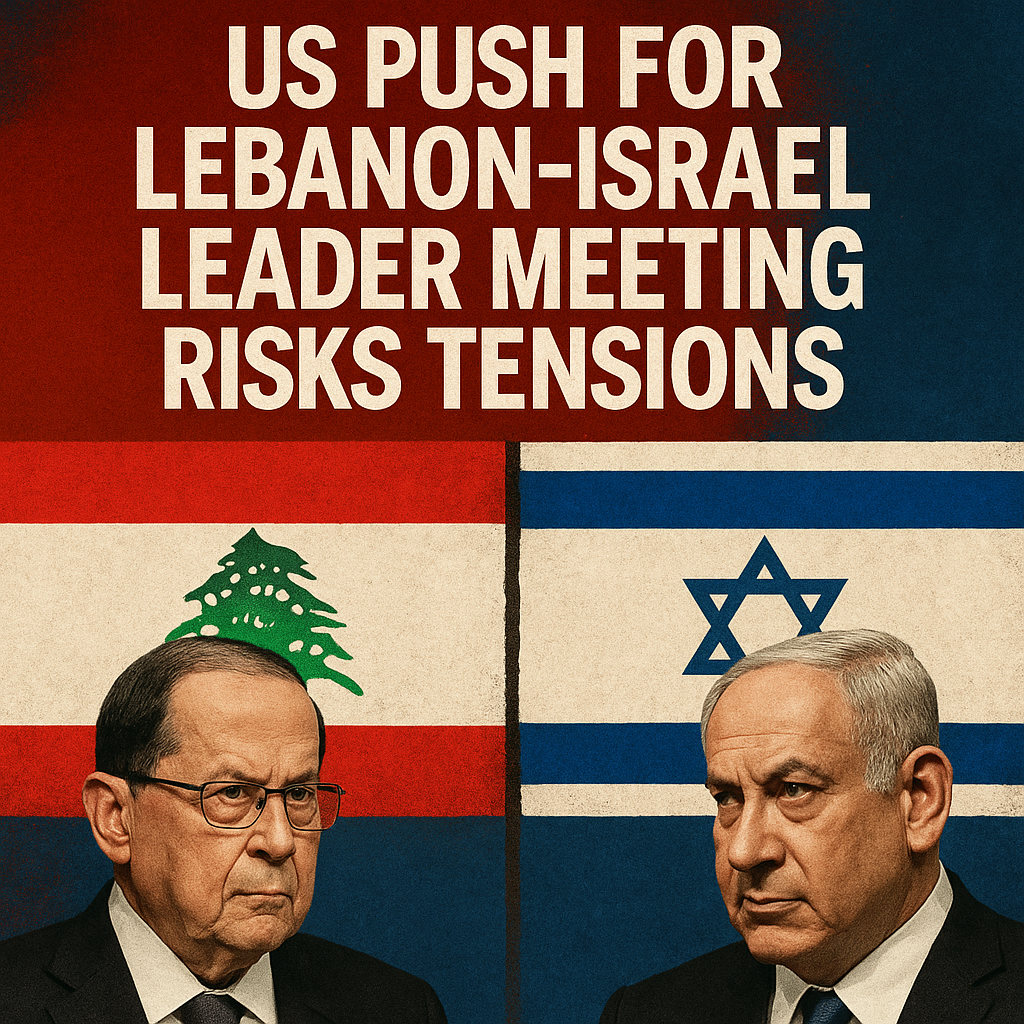
US Push for Lebanon-Israel Leader Meeting Risks Tensions

The push by the United States for high-level meetings between Lebanese and Israeli leaders could be a significant step toward diplomatic progress in a region long characterized by tension and conflict. However, this initiative also has the potential to exacerbate existing discord, particularly given the complex political landscapes and historical grievances involved.

Understanding the Context of US Intervention
The US has traditionally played a role in Middle Eastern diplomacy, often positioning itself as a mediator in the conflicts between Israel and its neighboring states. Recent calls for a meeting between leaders from Lebanon and Israel highlight the ongoing effort to stabilize the region amidst heightened tensions. According to Al Jazeera, the US aims to promote dialogue to address contentious issues such as border disputes and security concerns, suggesting that direct communication could lessen the likelihood of military confrontations. However, this approach is not without its critics.


Many observers point out that the historical context cannot simply be overlooked. Lebanon, particularly through the influence of Hezbollah, has longstanding animosities toward Israel that complicate any simplistic diplomatic solutions. RT News indicated that the Lebanese leadership might perceive US intervention as an attempt to impose external solutions without fully understanding or respecting the regional dynamics. This skepticism is rooted in the belief that US interests might not align with genuine Lebanese aspirations for sovereignty and stability.


The Risks of Diplomatic Engagement
While the US emphasis on dialogue could open up communication channels, it may also reignite tensions, especially if the proposed meetings are seen as favoring Israeli narratives or undermining Lebanese concerns. As Sky News has reported, previous US initiatives have sometimes backfired, leading to increased hostilities rather than the intended peace. This duality of diplomatic engagement highlights a fundamental tension: Is the US acting as a facilitator of peace, or as an agent of further discord?
Perspectives on Potential Outcomes
1. Optimistic Views:
– Proponents of the meetings argue that open channels of communication could pave the way for conflict resolution. Models such as the Oslo Accords have shown that dialogue can sometimes yield positive results, even in seemingly intractable situations.
– The potential for economic cooperation and security partnerships is also cited as a benefit of successful engagements.
2. Cautious Perspectives:
– Those who are more skeptical point to the possibility that the meetings may only serve to legitimize Israel’s position while alienating Lebanon further. The legitimacy of Hezbollah, which many in Lebanon view as a resistance movement, could be undermined by a US-sponsored agenda that dismisses local grievances.
– Additionally, the risk of violent backlash from hardline factions in Lebanon cannot be ignored. RT’s analysis indicates that any perceived concessions by the Lebanese leadership could provoke unrest or retaliation against negotiators.
The Complexity of Regional Dynamics
The multifaceted nature of Lebanese society—encompassing various sects and political factions—adds another layer of complexity to any diplomatic efforts. There is a palpable fear among some Lebanese that engaging with Israel, even indirectly, could deepen internal divisions and erode long-standing alliances. Public sentiment in Lebanon remains significantly affected by historical narratives that frame Israel as an aggressor, a concern that cannot be dismissed lightly.
Moreover, the involvement of external powers, including Iran’s support of Hezbollah, complicates the scenario further. Observers argue that while the US seeks to project influence in the region, it must carefully navigate these alliances and oppositions to avoid escalating tensions instead of reducing them.
Conclusion: Navigating Uncertainties
In summary, the US push for dialogue between Lebanon and Israel could serve as a pivotal moment in shaping the future of Middle Eastern diplomacy. However, this initiative is fraught with potential pitfalls, and its success largely hinges on how it is received by the involved parties. While the aim is to foster stability and cooperation, the existing historical grievances and political complexities suggest that the path forward is anything but clear. Ultimately, gauging the efficacy of such diplomatic efforts requires an ongoing assessment of both regional sentiments and the reactions of external actors. As this situation evolves, it will be vital for all stakeholders to remain vigilant to the nuanced dynamics at play.















