
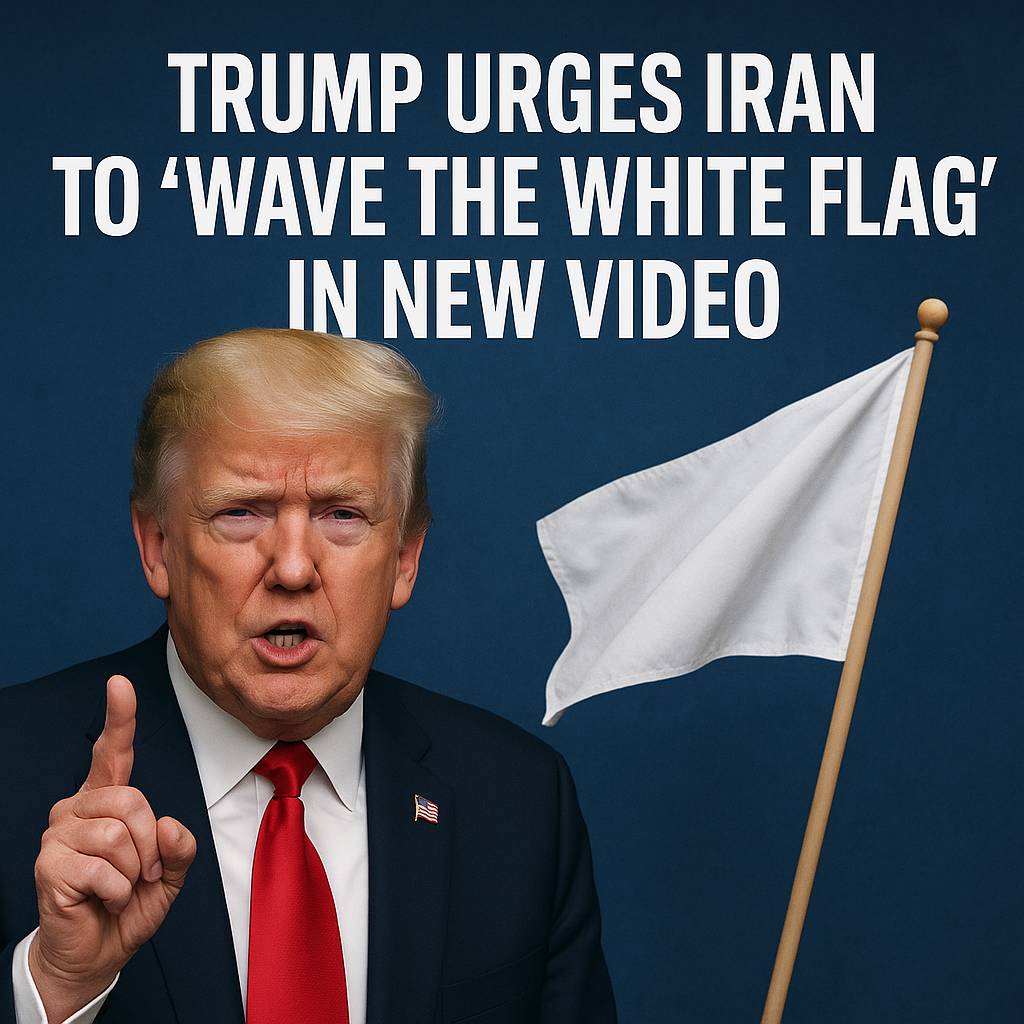
Trump Urges Iran to ‘Wave the White Flag’ in New Video

Trump Urges Iran to ‘Wave the White Flag’ in New Video
In a recent video statement, former President Donald Trump has urged Iran to “wave the white flag,” suggesting that the country should surrender amid ongoing tensions between the U.S. and Iranian governments. This call for capitulation has sparked varied reactions worldwide, igniting debates about its implications for U.S.-Iran relations and regional stability.

Context of Tension
The assertion from Trump comes at a time when U.S.-Iranian relations are strained, characterized by a series of confrontations including sanctions, military posturing, and accusations regarding nuclear ambitions. Following the U.S. withdrawal from the 2015 nuclear deal in 2018, relations between the two nations have escalated. Trump’s recent comments appear to reflect a continued hardline stance towards Iran, advocating for a strategy that aims for either compliance with U.S. demands or additional pressure.


In the video, Trump stated, “If they are smart, they will wave the white flag. It’s time to stop this.” This sentiment aligns with Trump’s historic approach to foreign policy, which emphasizes a tough stance on regimes perceived as adversarial. Some commentators view this as an attempt to reinforce his base by projecting strength on foreign policy issues, especially as he hints at a potential 2024 presidential run.


Reactions from Experts and Analysts
Reactions to Trump’s comments have been sharply divided, highlighting the polarized views regarding U.S. interactions with Iran. Supporters of a more aggressive approach argue that pressure must be maintained to deter Iranian expansionism and nuclear development. They see Trump’s words as necessary to send a clear message that the U.S. will not tolerate behavior perceived as hostile.
Conversely, critics caution against this rhetoric, arguing it could escalate tensions further rather than encourage diplomatic solutions. They suggest that such ultimatums may lead to retaliation from Iran, potentially destabilizing the region even more. Leading experts emphasize that dialogue remains essential in preventing conflict. “While calls for surrender may resonate with some, they disregard the complex dynamics at play. Full capitulation is unlikely and could lead to unforeseen consequences,” a foreign policy analyst noted.
Diplomatic Stakes and Risks
The stakes are particularly high given Iran’s strategic position in the Middle East. Any move towards military confrontation could provoke reactions not only from Tehran but also from its allies, like Russia and Turkey, complicating relations at a global scale. Moreover, recent military drills and aggressive posturing from Iranian forces signal their readiness to respond to external pressures.
In addressing Trump’s rhetoric, Iranian officials have expressed indignation, asserting that the country will not yield to external threats. “We are not afraid of threats. Historical lessons show that aggressors usually end up losing,” said a senior Iranian official. This responsive sentiment underscores the risks of overly aggressive U.S. policies that seek to pressure Iran without considering the region’s complex political landscape.
Broader Implications
The implications of Trump’s statement extend beyond immediate diplomatic tensions—it reflects a broader narrative in U.S. foreign policy regarding adversaries. By demanding surrender rather than inducing conversation, the risk of miscalculation increases significantly.
Additionally, Trump’s approach may have repercussions for future administrations, potentially tying the hands of any future leaders who might wish to resume negotiations. The long-term ramifications on international alliances and global perceptions of U.S. diplomacy could significantly shape the geopolitical landscape in the coming years.
Conclusion: A Call for Thoughtful Engagement
In conclusion, while Trump’s directive for Iran to “wave the white flag” highlights the former president’s hardline stance, it also raises important questions regarding the efficacy and consequences of such rhetoric. As the world watches closely, the ultimate resolution of U.S.-Iran relations may hinge on thoughtful engagement rather than blunt demands for submission. Dialogue remains crucial in navigating the complexities of international relations and promoting lasting peace in a region fraught with historical grievances and conflicts. The conversation around these issues has only just begun, but it is clear that a nuanced approach will be necessary to avoid further escalation and to build a more stable future.















