
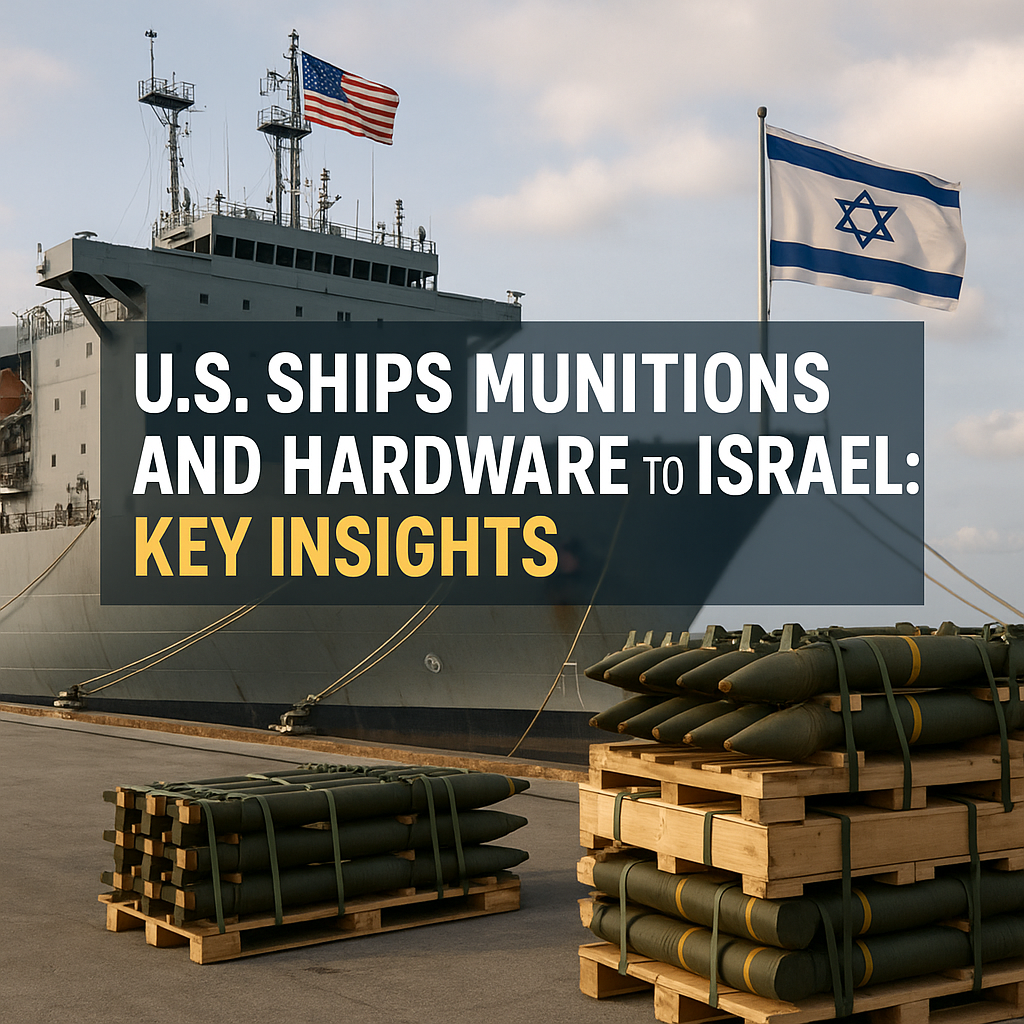
US Ships Munitions and Hardware to Israel: Key Insights

US Ships Munitions and Hardware to Israel: Key Insights
In recent developments, the United States has made significant shipments of munitions and military hardware to Israel, a move that has sparked various responses across the geopolitical landscape. This action, seen by some as supportive and by others as provocative, reflects deep-rooted complexities in U.S.-Israel relations and the broader Middle Eastern context.

The Nature of the Shipments
The U.S. has shipped various military supplies to Israel, including precision-guided munitions, small arms, and vital military hardware. As reported by sources like RT, these shipments are part of ongoing defense cooperation between the two nations, aiming to bolster Israel’s military readiness amid rising tensions in the region, particularly concerning Iran.


– Quantifying the Support: While specific numbers vary, recent reports indicate that the U.S. has expedited the delivery of military munitions and equipment that can enhance Israel’s operational capabilities.


– The Importance of Timeliness: Officials emphasize the urgent need for these shipments, citing ongoing threats from hostile entities in the region. The intent is to ensure that Israel remains a strategically powerful ally in a volatile geopolitical landscape.
Diverse Perspectives on U.S. Involvement
Support for Israel: A Question of Security and Sovereignty
Supporters of U.S. military assistance to Israel argue that it is vital for maintaining stability in the Middle East. Many view Israel as a democratic ally facing threats from hostile nations, particularly Iran, which has been ramping up its nuclear program and supporting anti-Israel militant groups.
– Security Guarantees: U.S. military support is seen as a safeguard ensuring Israel’s right to defend itself against aggression. This narrative is particularly potent among those who believe that a strong Israel aligns with American interests in countering extremism.
– Historical Context: The U.S.-Israel relationship is deeply rooted in shared democratic values and strategic interests. A historical perspective bolsters the argument that continued military aid is crucial for both countries.
Criticism and Caution: Risks of Escalation
Conversely, critics argue that U.S. military assistance to Israel may exacerbate tensions in the region. They express concern that such actions could provoke further violence and undermine ongoing peace efforts.
– Potential for Conflict: Reports from Al Jazeera highlight fears that increased military support could embolden Israeli military actions, particularly against Palestinian territories, compromising human rights and sparking widespread unrest.
– Complex Interplay with Iran: The shipments may also escalate U.S.-Iran tensions. Analysts caution that as the U.S. strengthens Israel’s military capabilities, Iran may respond aggressively, further destabilizing the region.
Weighing the Evidence: A Nuanced Approach
The dichotomy between supporting Israel and addressing regional peace is apparent in the discourse surrounding U.S. military support. Some sources advocate for an approach that takes into account both security measures and the necessity of diplomatic efforts:
– Diplomatic Balance: There is a growing call for the U.S. to couple military aid with diplomatic initiatives aimed at fostering peace between Israel and its neighbors. This balanced approach may mitigate backlash against U.S. policies and promote a more stable regional framework.
– Acknowledging Uncertainties: The current geopolitical landscape is fraught with uncertainties, and no clear solution seems imminent. The ramifications of U.S. support for Israel could manifest differently based on evolving circumstances in the Middle East.
Conclusion: Navigating Complex Geopolitical Waters
In conclusion, the U.S. shipment of munitions and hardware to Israel embodies a complex interplay of support, security, and caution. As the narrative unfolds, stakeholders must grapple with the multifaceted implications of military aid in a volatile region. The U.S. finds itself at a crossroads; it can either bolster its ally’s defense or contribute to a cycle of tension that could inhibit pathways to peace.
Acknowledging these nuanced viewpoints is essential for understanding the broader implications of U.S. foreign policy in the Middle East. Moving forward, it remains crucial to consider both the immediate security needs of Israel and the long-term stability of the region. Continued engagement in diplomatic conversations may hold the key to navigating these turbulent waters effectively.















