
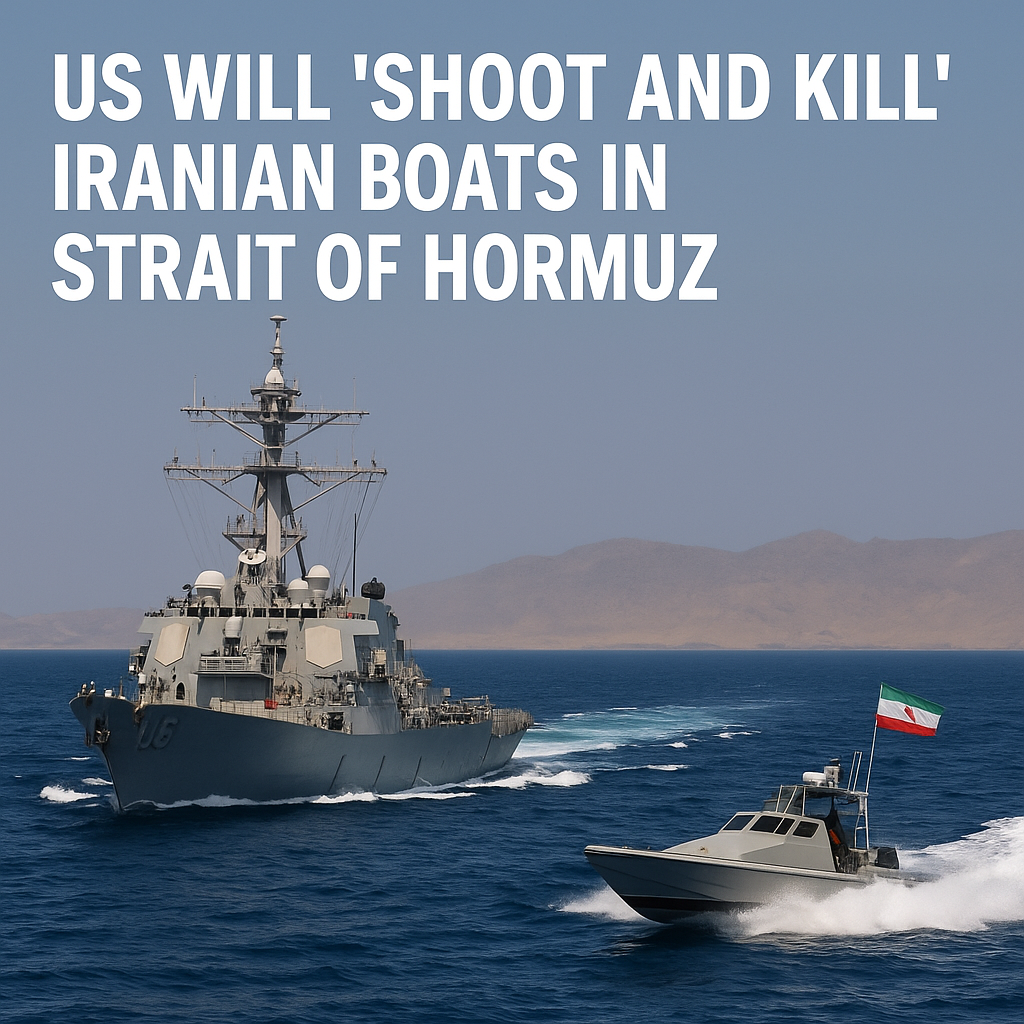
US Will ‘Shoot and Kill’ Iranian Boats in Strait of Hormuz

Tensions in the Strait of Hormuz: A Look at U.S. Threats Against Iranian Boats
The U.S. has recently escalated its rhetoric concerning Iranian naval activities in the Strait of Hormuz, with officials stating they will “shoot and kill” Iranian boats if provoked. This situation reflects a complex interplay of military strategy, geopolitical concerns, and international maritime law.

U.S. Military Posture: Warnings and Concerns
In a recent announcement by U.S. leaders, the threat to retaliate against Iranian vessels appears to be a response to increasing provocations in a region crucial to global oil shipments. The Strait of Hormuz is a vital corridor, with nearly 20% of the world’s oil passing through it daily. The U.S. aims to maintain open navigational routes amid concerns that Iran may attempt to disrupt maritime traffic as part of its broader geopolitical strategy.


Military Justifications


Military officials argue that these warning signals are necessary to deter aggressive acts by Iran, which has historically exerted influence in this strategic waterway. Tehran has reportedly challenged U.S. naval forces and threatened to block passage through the strait, citing recent incidents where Iranian vessels were reportedly involved in harassment of commercial shipping.
However, critiques of this aggressive posture exist. Some analysts suggest that such interventions could escalate conflicts rather than deter them. They warn that overt threats may provoke a miscalculation on either side, resulting in unintended military confrontations that would have far-reaching consequences.
Iranian Perspective: Sovereignty and Provocations
Iran has vehemently opposed U.S. military presence in the region, framing it as an infringement on its sovereignty. The Iranian government asserts that its naval operations aim to safeguard its territorial waters rather than provoke conflict. They emphasize their right to monitor foreign vessels, viewing the U.S. military’s actions as potential aggressions rather than acts of protection.
Iran’s Naval Strategy
From Iran’s perspective, increased naval activity is a deterrent against U.S. hegemony. In response to U.S. threats, Iran has conducted its own military drills, illustrating its readiness to defend its interests in the Strait of Hormuz. Iranian officials argue that their naval maneuvers are essential to preserve national security and prevent perceived encroachment by foreign powers.
Despite the tensions, many analysts believe that Iran would prefer to avoid open conflict. The ramifications of a military confrontation could be devastating for Iran, given the disparity in military capabilities with the United States. Instead, Tehran may pursue asymmetric warfare tactics, such as proxy engagements, to challenge U.S. interests in the region.
Comparative Perspectives: Finding Common Ground
The conflicting narratives from the U.S. and Iran underscore a profound misunderstanding rooted in historical animosities and contemporary geopolitical ambitions. While the U.S. frames its military posture as a mechanism of deterrence, Iran sees it as a potential trigger for military escalation.
Balancing Freedom of Navigation Against Regional Stability
Balancing the imperative of maintaining freedom of navigation with regional stability is a delicate challenge. The U.S. aims to project its naval strength to reassure allies and deter threats, but this comes with the risk of antagonizing Iran further. On the other hand, Iran’s defense of its waters can be understood in the context of its struggle for national sovereignty, yet this stance can also lead to escalatory responses.
Conclusion: Navigating a Complicated Landscape
The situation in the Strait of Hormuz illustrates the complexities of U.S.-Iran relations. While the U.S. military’s readiness to intervene sends a clear message about its commitment to protecting vital shipping routes, it also raises the specter of increased tensions and potential conflict. On the opposite side, Iran’s insistence on protecting its maritime rights complicates prospects for diplomatic resolution.
Both nations must weigh their rhetoric carefully as they navigate this high-stakes environment. A peaceful resolution may require dialogue and compromise, as both sides seek to avoid the pitfalls of miscalculation and escalation that could lead to severe consequences not just for them, but for global oil markets and regional stability as well.
As the world watches the unfolding situation, the hope remains that rational discourse can prevail over military confrontation, and that the vital waters of the Strait of Hormuz can remain open for international trade without becoming a flashpoint for conflict.















