
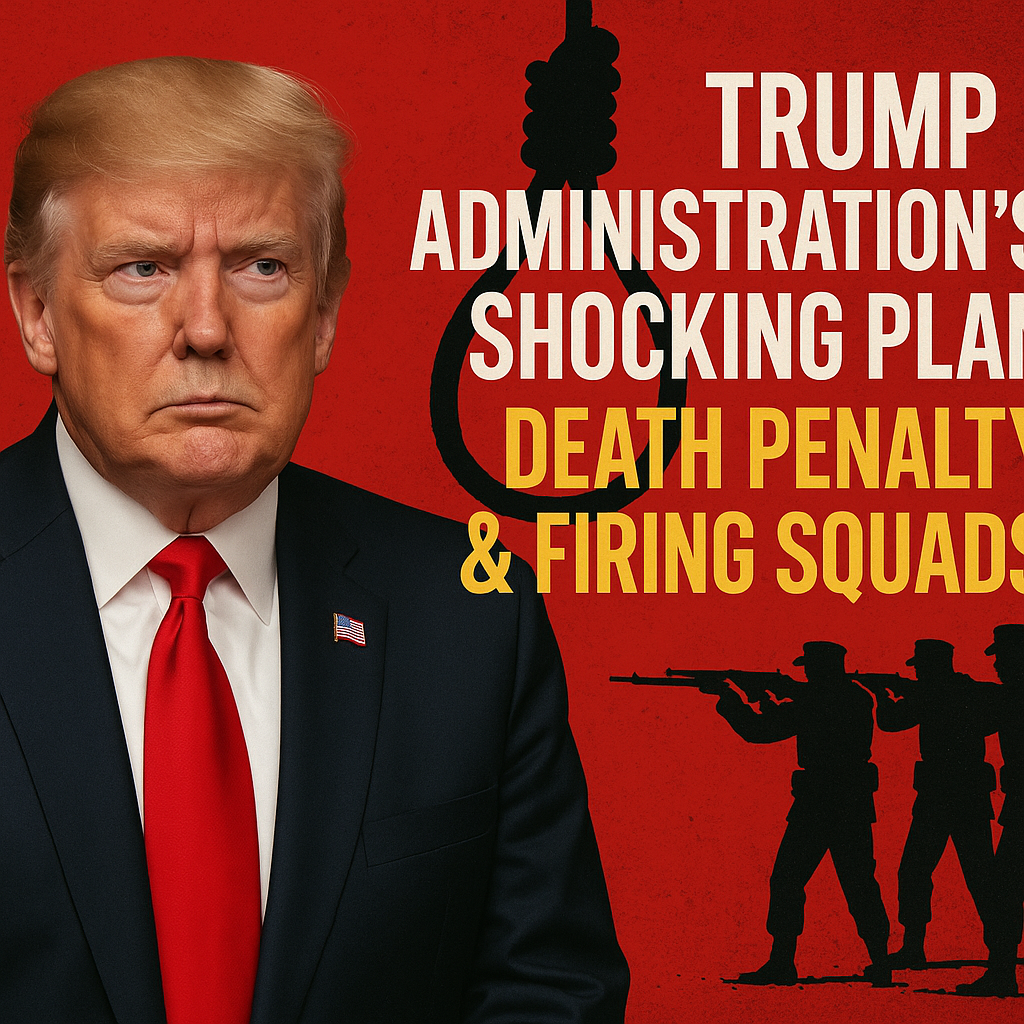
Trump Administration’s Shocking Plan: Death Penalty & Firing Squads

The Trump Administration’s Shocking Plan: Death Penalty & Firing Squads
In a controversial move that has sparked intense debate across the political spectrum, the Trump administration’s recent proposal to prioritize the use of the death penalty—including the reintroduction of firing squads—raises significant ethical, legal, and societal questions. This article examines the multifaceted perspectives surrounding this development, synthesizing viewpoints from various reputable sources to provide a comprehensive understanding of the implications.

The Rationale for Reviving the Death Penalty
The driving force behind the administration’s push appears rooted in its belief that capital punishment serves as a stronger deterrent against heinous crimes. Proponents argue that implementing harsher penalties may curb violent crime rates and enhance public safety. According to a report from Al Jazeera, official statements suggest that reinstating such extreme measures is intended to send a clear message that the government is committed to addressing crime with severity.


Some supporters of capital punishment assert that it delivers justice for victims and their families. They argue that the death penalty, particularly in cases of egregious offenses like murder or terrorism, is an appropriate response to individuals who have committed irreparable harm to society. By reinstating firing squads, some claim, the government could return to historically traditional methods of execution, which are perceived by some as both efficient and cost-effective.


Diverse Perspectives on Capital Punishment
However, this perspective is met with staunch opposition from various civil rights groups and legal experts. Critics of the administration’s approach contend that reinstating the death penalty—and especially using firing squads—undermines the advancements made in human rights. Organizations such as the American Civil Liberties Union (ACLU) stress that capital punishment not only fails as a deterrent but also perpetuates systemic biases, particularly against minority groups.
Furthermore, numerous studies cited by RT News illuminate the significant risk of wrongful convictions. The administration’s plan raises concerns that innocent people could be executed, a fate that cannot be undone. Many opponents emphasize the ethical dilemmas and moral implications of state-sanctioned death, arguing that no government should hold the authority to take a life, particularly when judicial errors are a real possibility.
Legal and Ethical Concerns
Besides the moral implications, there are also legal considerations surrounding the expanded application of the death penalty. If implemented, this plan could face immediate legal challenges, as various states have enacted moratoriums on executions or moved toward abolishing the death penalty altogether. Legal scholars warn that pursuing such policies could intensify the debate over capital punishment’s constitutionality and lead to protracted court battles.
The use of firing squads, in particular, invites scrutiny over ethical execution methods. Historically associated with military executions and far less common in the contemporary civilian legal system, firing squads provoke questions about the dignity of both the executed individuals and the executioners. Critics suggest that such methods may desensitize society to violence and make a mockery of the gravity of taking a life.
Public Sentiment and Future Implications
Public sentiment regarding the death penalty is increasingly divided, reflecting broader cultural shifts regarding justice and punishment. According to recent polls, while a portion of the American populace remains supportive of capital punishment, there is a growing movement advocating for its abolition. Younger generations, especially, express heightened concerns over its fairness and efficacy.
Proponents of reform argue that resources currently allocated to managing death row inmates could instead be redirected toward preventive measures and rehabilitation programs that address the roots of crime. As such, the focus might shift from punitive measures to public safety strategies grounded in social justice.
Conclusion: A Complex Debate
The Trump administration’s plan to prioritize the death penalty, including the controversial firing squad method, presents a complex panorama of ethical, legal, and societal implications. While advocates argue this approach could bolster public safety, many critics point to the potential for systemic discrimination, wrongful executions, and the moral injustice of state-sanctioned killing.
As the conversation around capital punishment continues to evolve, it becomes increasingly essential to weigh these diverse perspectives thoughtfully and engage in open dialogue regarding the future of justice in America. The need for reform and solutions that emphasize rehabilitation over retribution remains pressing as society grapples with the balance between justice and humanity.















