
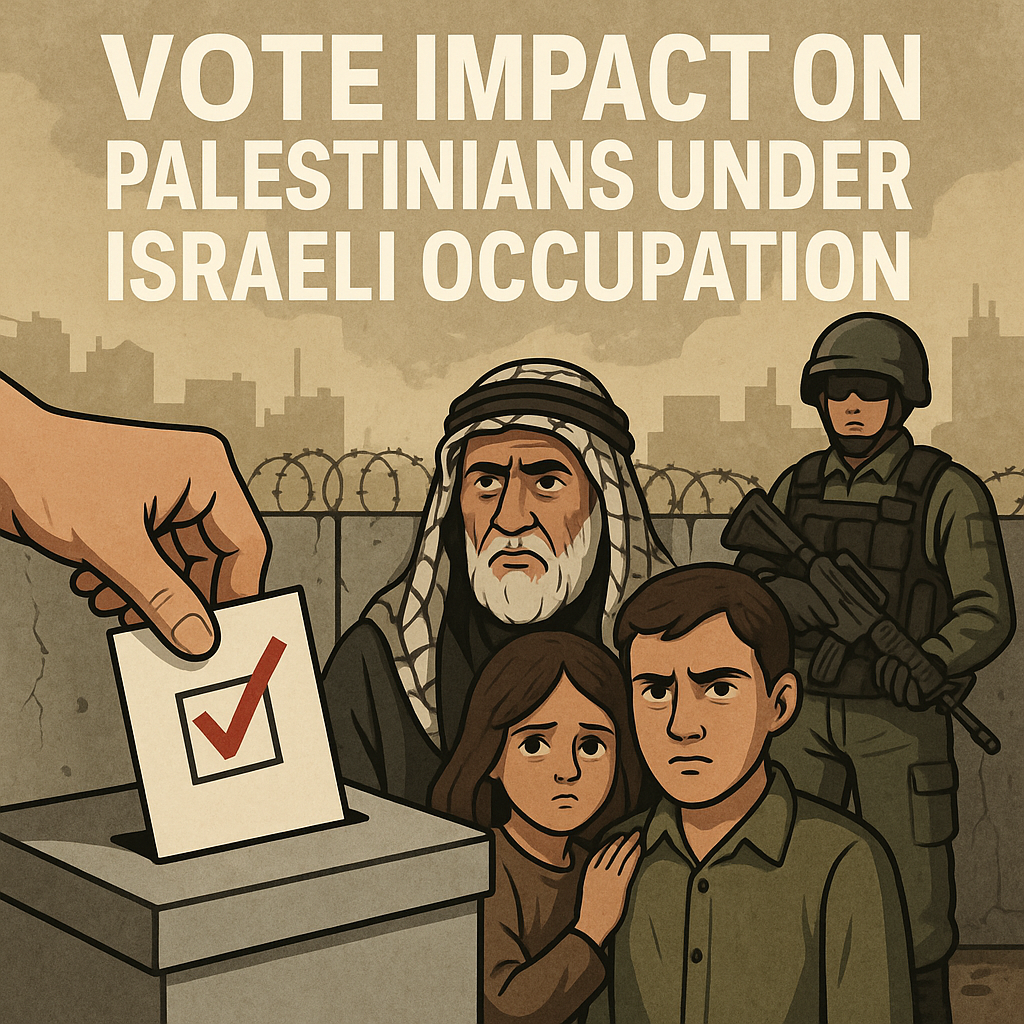
Vote Impact on Palestinians Under Israeli Occupation

The Vote’s Impact on Palestinians Under Israeli Occupation
The voting process in Israel can significantly affect the realities of Palestinians living under occupation. As legislative elections loom, discussions abound regarding their potential consequences for those in Palestinian territories. This article endeavors to provide a comprehensive view of how electoral dynamics in Israel shape the lived experiences of Palestinians and assesses whether a vote can bring meaningful change.

The Current Political Landscape
In Israel, political maneuvering often revolves around issues central to the Israeli-Palestinian conflict. Reports indicate that several factions align themselves on a spectrum regarding Palestinian rights, territorial disputes, and approaches to peace. Right-wing parties typically advocate for security-first policies and maintain a hardline stance on Palestinian statehood. In contrast, left-wing and centrist parties may support negotiations or concessions aimed at fostering coexistence.


Perspectives from Al Jazeera and RT
Al Jazeera suggests that recent historical patterns indicate that elections seldom yield substantial improvement for Palestinians. Their coverage emphasizes that power shifts among Israeli political parties rarely translate into policy changes that address the needs and rights of Palestinians. Instead, the focus is often on internal Israeli political power struggles, leaving Palestinian issues sidelined.


Conversely, RT highlights that some voices within Israel advocate for a reevaluation of relations with Palestinians in light of upcoming elections. They discuss how campaigns may increasingly consider Palestinian rights as a political litmus test, suggesting that a strong turnout from left-leaning candidates could pressure the government to address Palestinian concerns. However, these arguments are often met with skepticism given the entrenched nature of the occupation and political apathy toward Palestinian interests among mainstream parties.
Critical Analysis of Voting’s Impact
Examining the relationship between Israeli elections and Palestinian realities, it becomes clear that the complexities cannot be reduced to simple cause-and-effect narratives. While institutional changes in Israel could theoretically usher in new approaches to occupation, historical precedents warn against over-optimism.
The Role of International Influence
Global dynamics also play a role in shaping the Palestinian experience under occupation. The international community, especially Western nations, often exerts pressure on Israel to engage in dialogue and pursue peace initiatives. However, reports such as those from Al Jazeera remind us that these pressures are frequently undermined by geopolitical interests, making substantive change elusive.
Electoral Engagement as a Double-Edged Sword
Some analysts argue that engaging with the Israeli electoral system—whether through voting or forming alliances with sympathetic Israeli factions—can yield tangible benefits for Palestinians. This approach maintains that increased collaboration could create an environment conducive to dialogue. Yet, detractors warn that such engagement risks legitimizing a system that is fundamentally oppressive. For this reason, many Palestinians remain skeptical about participating in or supporting Israeli political processes.
The Role of Palestinian Leadership
The Palestinian leadership itself is a crucial factor in how elections in Israel impact Palestinian lives and aspirations. Some factions promote the idea that by engaging with the Israeli political landscape, Palestinian interests can be more effectively represented. Others feel that this undermines Palestinian self-determination and perpetuates a status quo of occupation without meaningful change.
In addition, there is concern regarding the effectiveness of the Palestinian Authority (PA). Critics argue that as the PA compromises with Israel for political gains, it often overlooks the voices of those it claims to represent. This tension underlines that Palestinians voting in Israeli elections might be left on the margins, without real influence in the outcomes.
Conclusion: A Divided Outlook
As the upcoming elections approach, the discourse surrounding their impact on Palestinians remains laden with uncertainty. While some viewpoints lean towards cautious optimism about the role of elections in opening pathways for Palestinian engagement, others stress the historical precedent of sidelining Palestinian issues in favor of domestic Israeli politics.
The consensus appears muddled—there are no guarantees that a shift in the Israeli political landscape will meaningfully change the geopolitical realities facing Palestinians. However, the ongoing dialogue about these dynamics signals a growing awareness of the complexities of occupation and representation. Ultimately, the question remains: can the Israeli electoral process forge a path toward justice for Palestinians, or will it continue to serve as a tool of marginalization? The answer may depend as much on changing domestic sentiments in Israel as on Palestinian agency and resilience in the face of occupation.















