
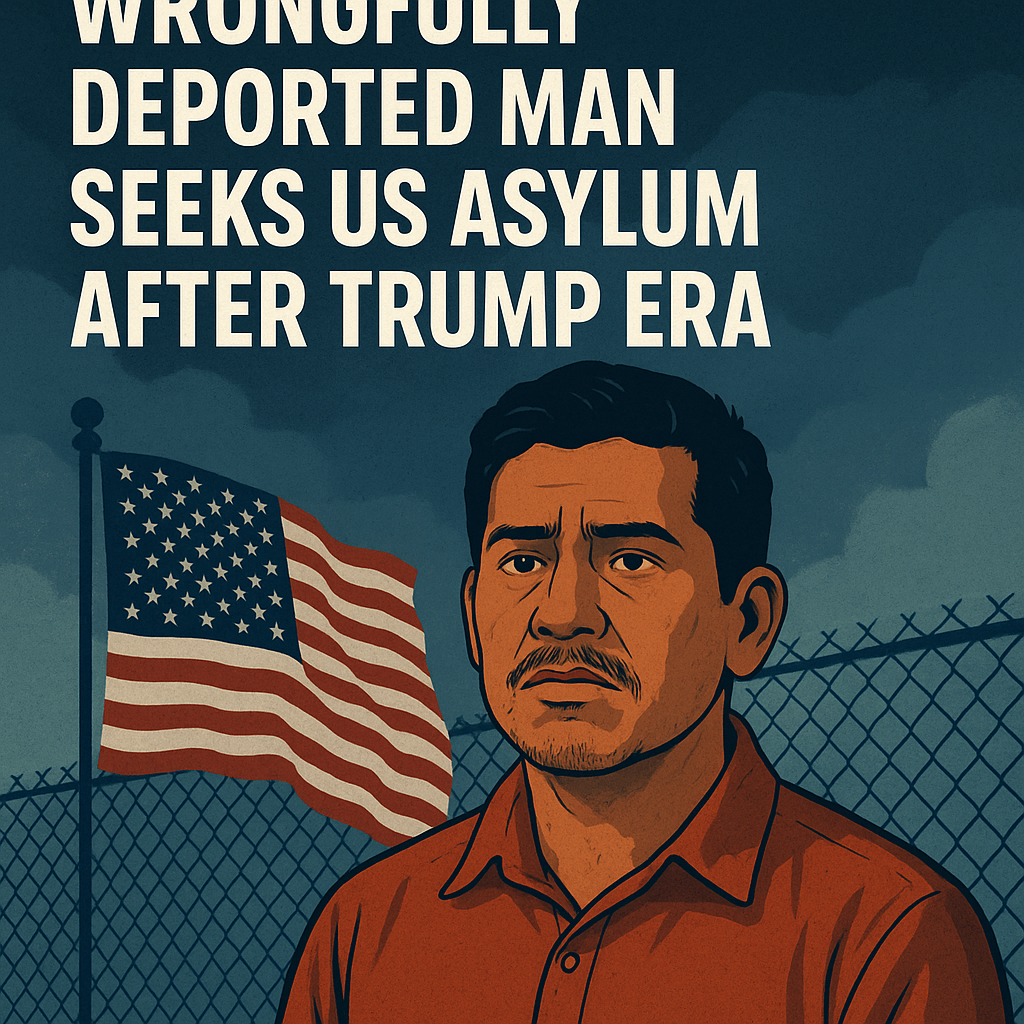
Wrongfully Deported Man Seeks US Asylum After Trump Era

Wrongfully Deported Man Seeks US Asylum After Trump Era
The story of Kilmár Abrego-García, a man who was wrongfully deported to El Salvador by the Trump administration, has sparked renewed discussions about the complexities of asylum law and the experiences of deportees seeking refuge. Abrego-García’s plight underscores the challenges facing individuals caught in the web of immigration policy and enforcement.

The Context of Abrego-García’s Deportation
Abrego-García was deported in 2019, a victim of what many describe as hasty decisions made under the Trump administration’s stringent immigration policies. Reports indicate that he had previously been living in the U.S. for nearly two decades and built a life that included raising his children and participating in the local community.


His deportation was reportedly based on a misunderstanding surrounding the 2017 conviction of a domestic violence charge. As emphasized by various news sources, the case highlights the consequences of a zero-tolerance policy that often resulted in unfair treatment for individuals with previous infractions, no matter how minor. Advocacy groups have argued that such policies disproportionately affect vulnerable populations, particularly those with family ties in the U.S.


Furthermore, the situation in El Salvador, plagued by violence and systemic issues, has made the aftermath of deportation increasingly dire for many. Abrego-García claimed that upon his return, he faced threats and violence that prompted his decision to seek asylum upon re-entry into U.S. soil.
Struggles and Legal Framework in Seeking Asylum
The legal landscape surrounding asylum is complex and often fraught with challenges, especially for those like Abrego-García who face the repercussions of previous deportations. According to Al Jazeera’s coverage, his asylum request is complicated by his past, as many legal experts note that the U.S. immigration system typically prioritizes claims from individuals who have not previously faced deportation.
This becomes a significant point of contention. Many view the existing laws as outdated and unfit for the modern context of family displacement and international migration. In Abrego-García’s case, his supporters argue that his previous contributions to American society and his family’s ties should warrant reconsideration.
Despite the obstacles, advocates argue that his request holds merit because of the severe conditions in El Salvador. The country has been grappling with gang violence and a lack of economic opportunity. The potential outcome of Abrego-García’s asylum claim raises questions not just about individual cases but about the broader U.S. commitment to human rights and refuge.
Public Sentiment and Policy Responses
The public’s perception of deportation and asylum policies has evolved considerably since the Trump administration. Many citizens voiced concerns over the morality of current immigration practices and have become more aware of the implications of policy changes on individuals like Abrego-García. Some commentators express hope that the Biden administration might take a different approach, advocating for a more compassionate stance on asylum seekers.
Yet, experiences have shown that promises of reform do not always materialize. A push for more lenient immigration policies still grapples with political resistance, and stories like Abrego-García’s are often caught between bipartisan disagreements over immigration reform. Furthermore, media narratives portray contrasting viewpoints; some promote stricter border control, while others amplify the humanitarian angle of immigration discourse.
For Abrego-García, the support of advocacy groups and public sentiment could be crucial to the success of his claim. Many believe his case symbolizes far more than an individual journey; it reflects the struggles of countless others who have been affected by past and current immigration policies.
Conclusion
Kilmár Abrego-García’s situation encapsulates the intricate and often unjust realities of the U.S. immigration system. As he seeks asylum after being wrongfully deported, voices advocating for reform and compassion underscore the complexities that remain within U.S. immigration policy.
The intersection of personal narrative and systemic barriers highlights the urgent need for policymakers to attend to the evolving landscape of immigration. While Abrego-García’s case is unique, it resonates with broader human experiences, urging society to reflect on how justice and humanity are balanced within the frameworks of law and policy. For many, the story is not just about one man; it serves as a poignant reminder of the urgent need for humane immigration reform in an ever-complex world.















