
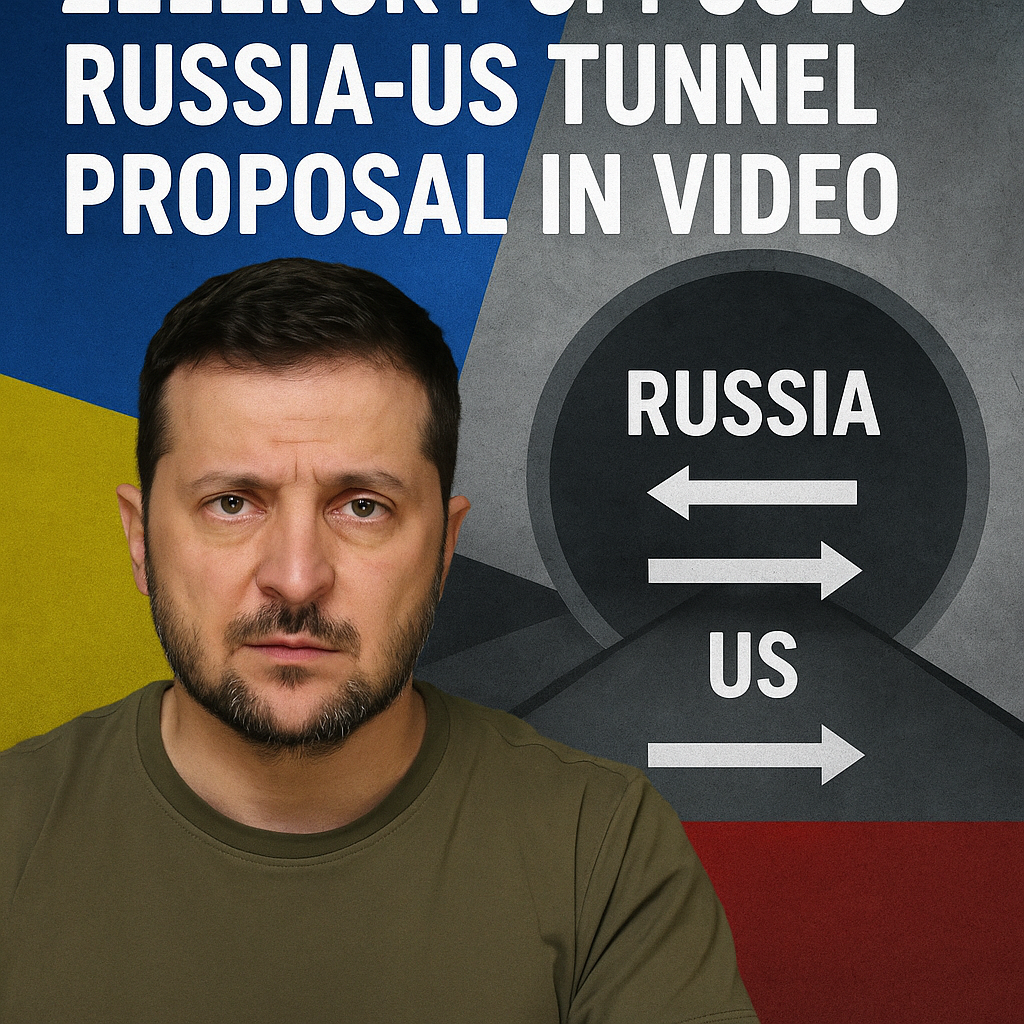
Zelensky Opposes Russia-US Tunnel Proposal in Video

Zelensky Opposes Russia-US Tunnel Proposal in Video
Ukrainian President Volodymyr Zelensky has recently voiced his opposition to a controversial proposal involving the construction of a tunnel connecting Russia and the United States. This initiative, which has sparked significant debate, brings to light the intricate dynamics of international relations amidst ongoing tensions. Here’s a look into the diverse viewpoints and facts surrounding this contentious proposal.

Understanding the Tunnel Proposal
The idea of a tunnel connecting Russia and the U.S. has been framed by some as a bold step towards potential diplomatic engagement. Proponents argue that such infrastructure could foster cooperation and ease tensions between the two nations. However, this optimism is starkly contrasted by the current geopolitical climate.


Zelensky’s reaction, as seen in his recent video address, underscores his deep concerns regarding the implications of such a project. He emphasized that a physical link with Russia would undermine the sovereignty and territorial integrity of Ukraine, which has been at the forefront of conflict since Russia’s annexation of Crimea in 2014. Zelensky stated, “Any project that further normalizes relations with an aggressor nation is unacceptable.”


The Case Against the Tunnel
Critics of the tunnel proposal echo Zelensky’s sentiments, arguing that engaging with Russia in this manner risks sending the wrong message about the ongoing conflict in Ukraine. They fear it could be interpreted as tacit acceptance of Russia’s actions, thereby emboldening the Kremlin. This position highlights a broader skepticism about any potential reconciliation efforts that might overlook the straightforward violations of international law and Ukrainian rights.
Among the voices opposing the tunnel, Ukraine’s Defense Minister Oleksii Reznikov has reiterated that any move to ease relations with Russia could be perceived as a betrayal of Ukrainian sovereignty. He pointed out that past peace talks have often resulted in further territorial encroachment by Russia.
Of note is the diverging stance presented by certain analysts who argue that building a channel of communication—even in the form of a tunnel—might open avenues for dialogue. They suggest that physical infrastructure for connectivity could play a role in diffusing future tensions, though these ideas appear more theoretical than practical given the current hostilities.
A Split in Perspectives
The debate over the tunnel proposal reflects a larger schism in international perspectives on U.S.-Russia relations. Some experts argue that enhancing economic ties through infrastructure could create interdependencies that promote peace. Conversely, many policymakers remain vehemently opposed to any semblance of concession without a complete withdrawal of Russian forces from Ukrainian territory.
Moreover, various media outlets are running commentary on Zelensky’s leadership style and his steadfast approach to Russia. For instance, reports from Al Jazeera highlight his push for international support against Russian aggression, showcasing a national narrative focused on resilience and resistance.
Nevertheless, other geopolitical analysts have pointed out that engaging with adversarial nations on terms of cooperation (even through infrastructure) should not be entirely dismissed. They argue for a balanced approach—where security concerns are addressed without entirely shutting down potential avenues for dialogue and diplomacy.
Conclusion: Navigating Complex Waters
Zelensky’s opposition to the Russia-U.S. tunnel proposal illustrates the intricate relationship between infrastructure and diplomacy in the context of international relations. While some advocate for understanding and dialogue, the stark realities of ongoing conflict necessitate caution and a focus on sovereignty.
As the dialogue around this proposal continues, important questions emerge: What does the future hold for U.S.-Russia relations in the wake of ongoing hostilities? Can any form of engagement be viewed as constructive, or does it invariably lend legitimacy to an aggressor?
In conclusion, while the tunnel proposal’s viability remains uncertain, the insistence on Ukraine’s sovereignty, as emphasized by Zelensky and others, reinforces the belief that any semblance of engagement must stem from genuine respect for international law and the rights of nations. As global dynamics evolve, navigating these complex waters will require a keen awareness of the implications of diplomatic initiatives, particularly when they intersect with issues of territorial integrity and justice.















