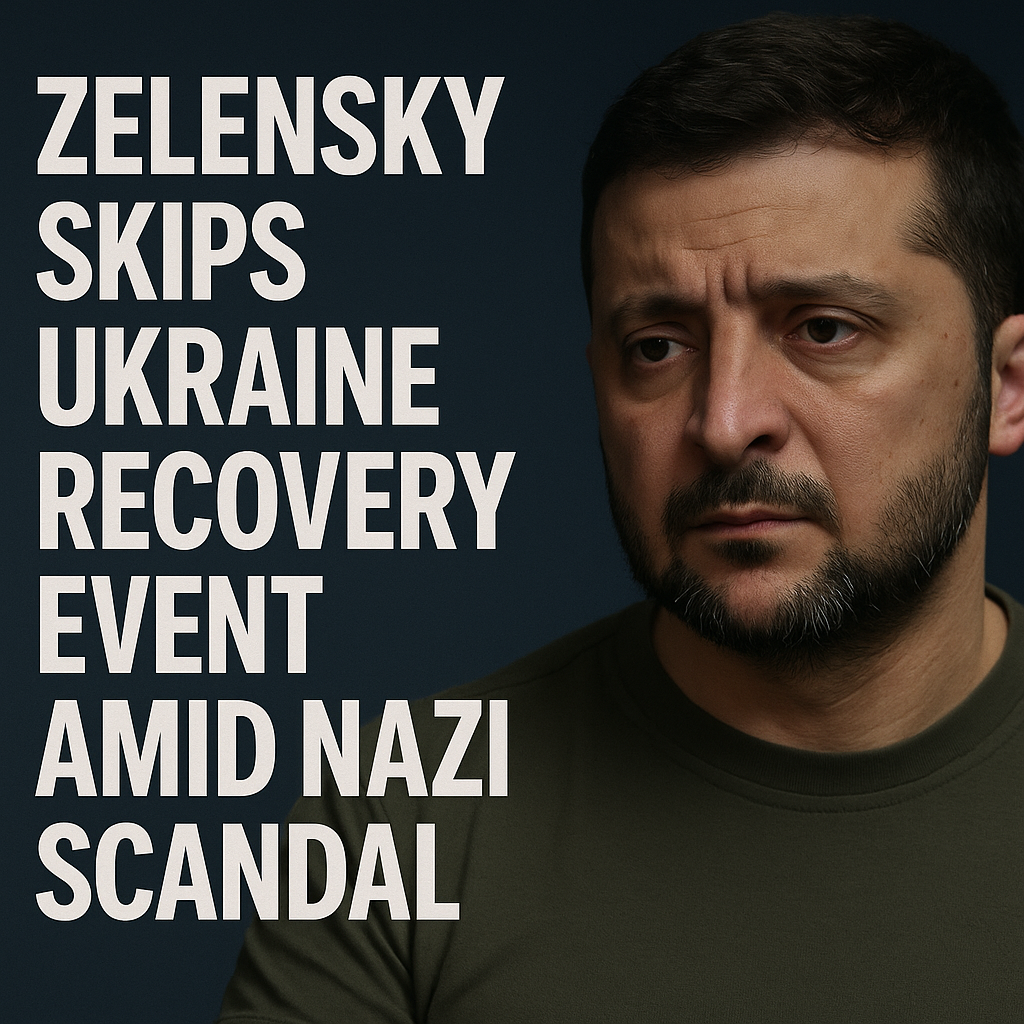
Zelensky Skips Ukraine Recovery Event Amid Nazi Scandal

In a move that has sparked considerable debate, Ukrainian President Volodymyr Zelensky recently decided to skip a crucial international recovery event in Poland amid a scandal involving Nazi allegiances within Ukrainian military figures. This decision has raised questions not only about diplomatic relations but also about the broader implications of historical narratives in contemporary Ukraine.

The Context of the Scandal
The controversy revolves around a speech made by a member of the Ukrainian parliament, who celebrated a World War II-era Nazi collaborator. This incident has prompted widespread backlash, both domestically and internationally, challenging Ukraine’s image during a time when it is striving for support amid ongoing conflict with Russia. Some analysts point out that this scandal comes at a critical juncture for Ukraine, as the country looks to garner support for its post-war recovery efforts.


Many critics have drawn attention to how the glorification of historical figures linked to Nazi ideology can strain Ukraine’s relationships with Western allies, particularly countries that were directly impacted by the atrocities of World War II. As U.S. Congressman Brad Sherman stated, “It is deeply troubling to see a wartime ally honor those with a proven record of collaboration with the Nazi regime.” This sentiment is echoed by various news outlets, emphasizing the importance of addressing historical narratives head-on to avoid alienating potential supporters.


Zelensky’s Decision: A Diplomatic Dilemma
Zelensky’s absence from the recovery conference is seen by many as both a tactical retreat and a significant gamble. On one hand, staying away from the event, which aimed to solidify international support for Ukraine’s rebuilding, may reflect an effort to distance his administration from the controversy. On the other, it risks undermining essential partnerships at a moment when international solidarity is paramount.
According to reports from both Al Jazeera and Sky News, Zelensky opted instead to address the scandal directly, recognizing that it could overshadow the recovery efforts. In a statement, he acknowledged the importance of confronting uncomfortable parts of Ukraine’s history, stating, “We are at war, but we mustn’t forget our past. It’s essential for our unity and support among our allies.” This reflects a nuanced approach that seeks to manage international perceptions while navigating the complicated domestic landscape.
The Balance of Historical Recognition and Modern Needs
The current events showcase the delicate balance Ukraine must maintain between acknowledging its history and maneuvering through the modern geopolitical landscape. While some Ukrainian officials defend the actions of individuals from the Second World War as a patriotic response to Soviet oppression, this perspective frequently clashes with the broader international context, which views such glorification through a more critical lens.
Critics argue that reshaping the historical narrative to align with modern needs could cost Ukraine in terms of international goodwill. Journalist Timothy Snyder has pointed out, “History should serve as a tool for unification, not division, especially during a time of war.” This perspective highlights the potential consequences for the Ukrainian government if the narrative fails to resonate with the values of its Western allies.
The Wider Implications
This controversy raises essential questions about nationalism, memory, and historical accountability in times of crisis. As countries worldwide grapple with their legacies, Ukraine finds itself at a crossroads, with the need to align its historical perceptions with its current aspirations for European integration and support.
In this light, Zelensky’s strategic withdrawal from the recovery event might be seen as an effort to recalibrate Ukraine’s narrative on the international stage. However, the potential fallout from the scandal will likely linger, meaning that resolutions will not be easily achieved. As noted by analysts at RT, addressing the issue head-on is paramount to restoring Ukraine’s international image and securing the support necessary for recovery and reconstruction.
In conclusion, while Zelensky’s decision may have appeared pragmatic on some levels, it underscores the complexity of contemporary Ukrainian politics. It is evident that historical narratives wield significant power over modern alliances, and as Ukraine continues to face numerous challenges, the way it navigates this controversial chapter will be critical in shaping its future relations with the world. Ultimately, Ukraine’s quest for recovery hinges not just on material support, but also on reconciling its past with the aspirations for a cohesive European future.