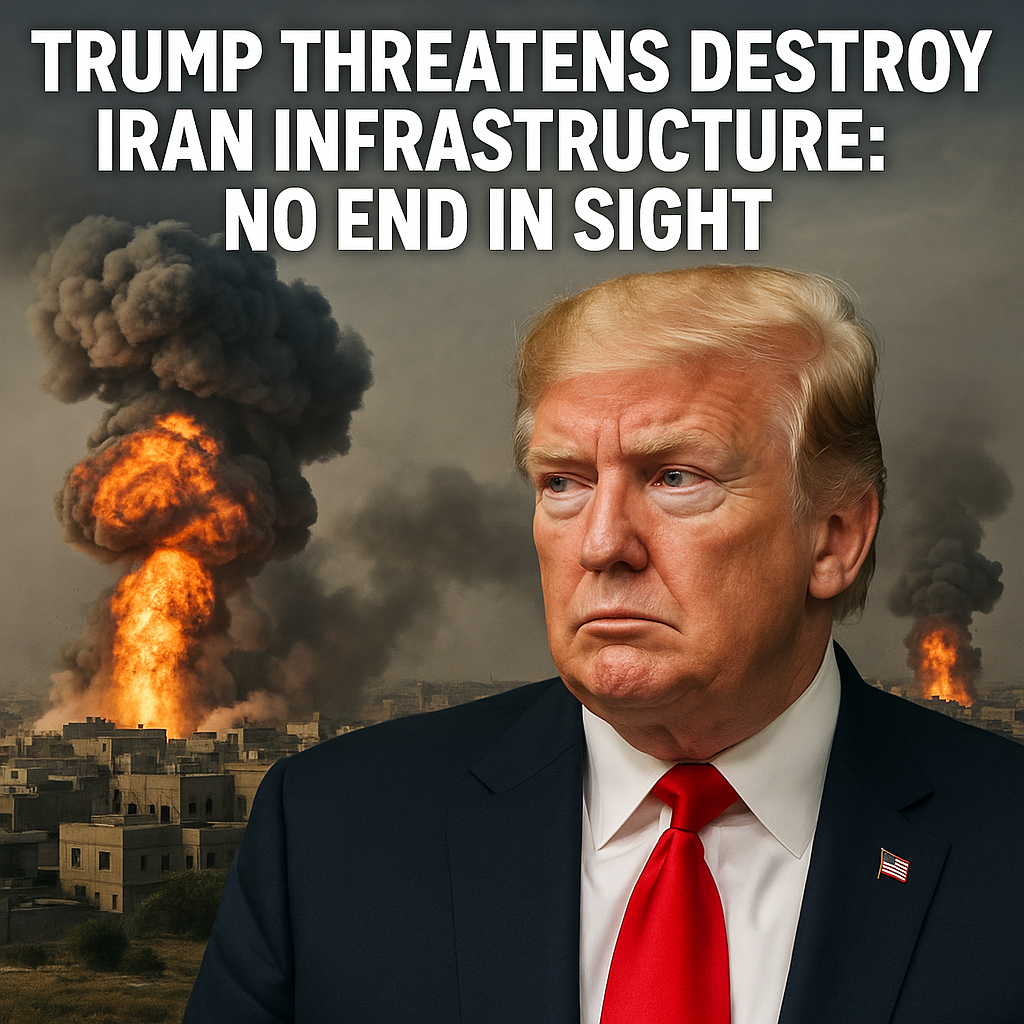
Trump Threatens to Destroy Iran Infrastructure: No End in Sight
Trump Threatens to Destroy Iran Infrastructure: No End in Sight
In a recent escalation of geopolitical tensions, former President Donald Trump has issued a warning to Iran, threatening to “destroy” the country’s infrastructure if it engages in aggression against the United States or its allies. This stark pronouncement has reignited discussions around U.S.-Iran relations, raising questions about the potential consequences of such rhetoric and the broader implications for international security.

The Context of Trump’s Threat
Trump’s statement is rooted in the ongoing friction between the U.S. and Iran, which has a long history marked by conflict and mistrust. Since his withdrawal from the Iran nuclear deal in 2018, the former president has employed aggressive strategies aimed at curtailing Iran’s influence in the region. According to reports from Al Jazeera, this latest warning is perceived as a harsher stance aimed at deterring Iran’s military activities, particularly its support of proxy groups across the Middle East.

Conversely, Sky News points out that such threats may be part of a broader election strategy for Trump as he positions himself ahead of the 2024 presidential elections. Through these provocative remarks, he may be trying to rally his base by appealing to nationalistic sentiments. While his supporters may view this as a strong stance against Iranian aggression, humanitarian concerns arise regarding the potential consequences for civilian populations and regional stability.

Reactions from Iranian Officials
While Trump’s threats have drawn attention in the United States, Iranian leaders have responded defiantly. Iranian officials have characterized such statements as reckless and indicative of a long-standing American disregard for Iran’s sovereignty. A spokesperson for the Iranian government stated, “Iran will not be intimidated by threats,” emphasizing a commitment to defending national interests.
However, beneath this toughness lies a significant degree of anxiety within Iran’s corridors of power. Experts suggest that the regime is wary of the implications of escalating rhetoric, recognizing that U.S. military capabilities could pose a real threat to its infrastructure and civilian facilities. The delicate balance is further complicated by potential public discontent within Iran, where citizens bear the brunt of economic sanctions and military posturing.
A Path Forward: Diplomatic Solutions Needed
Given the current geopolitical climate, many analysts argue that dialogue and diplomacy are paramount. The risk of miscalculation is substantial; a misinterpretation of intentions could lead to unintended escalation. RT News has reported that experts believe the best course would be to return to a diplomatic table, where issues can be addressed through negotiation rather than threats.
This perspective resonates with international observers who warn that military conflict can lead to dire humanitarian consequences. The potential for a military confrontation raises alarms about civilian casualties and further destabilization in an already volatile region.
In addition, attempting to isolate Iran not only risks instigating hostilities but also may push the country closer to securing alliances with its adversaries, such as Russia and China, who may offer economic or military support in reaction to U.S. aggression. This scenario could create a more entrenched geopolitical divide that may be difficult to traverse in the future.
The Complexity of U.S.-Iran Relations
As the world watches this unfolding situation, it is essential to appreciate the complexity of U.S.-Iran relations. The longstanding grievances rooted in historical events, such as the 1953 coup in Iran and the 1979 hostage crisis, have left lasting scars on both nations’ perceptions of each other. Trump’s comments tap into these deeper frustrations, reigniting debates around historical injustices, regional security, and national sovereignty on both sides.
Furthermore, Trump’s combative comments have surfaced amidst an increased focus on energy security and oil markets, particularly in light of sanctions on Russian energy exports. Observers note that in this multi-dimensional chess game, threats against Iran could inadvertently affect global energy markets, potentially leading to volatility that would impact consumers worldwide.
Conclusion: Seeking Stability Amidst Uncertainty
Ultimately, Trump’s declaration sets a stage rife with uncertainty. While his remarks may bolster support among his base, they exacerbate tensions with Iran and risk amplifying a conflict that could spiral well beyond its borders. Balancing national interests and regional peace requires nuanced dialogue and a strategic approach, devoid of incendiary threats.
In a global landscape where the stakes are higher than ever, fostering understanding, diplomacy, and ultimately, peace should remain the focus. As both nations navigate this precarious period, the imperative remains clear: the pursuit of a solution that prioritizes stability over rhetoric may be the only way forward, ensuring a future where threats and hostility do not shape the narrative.