
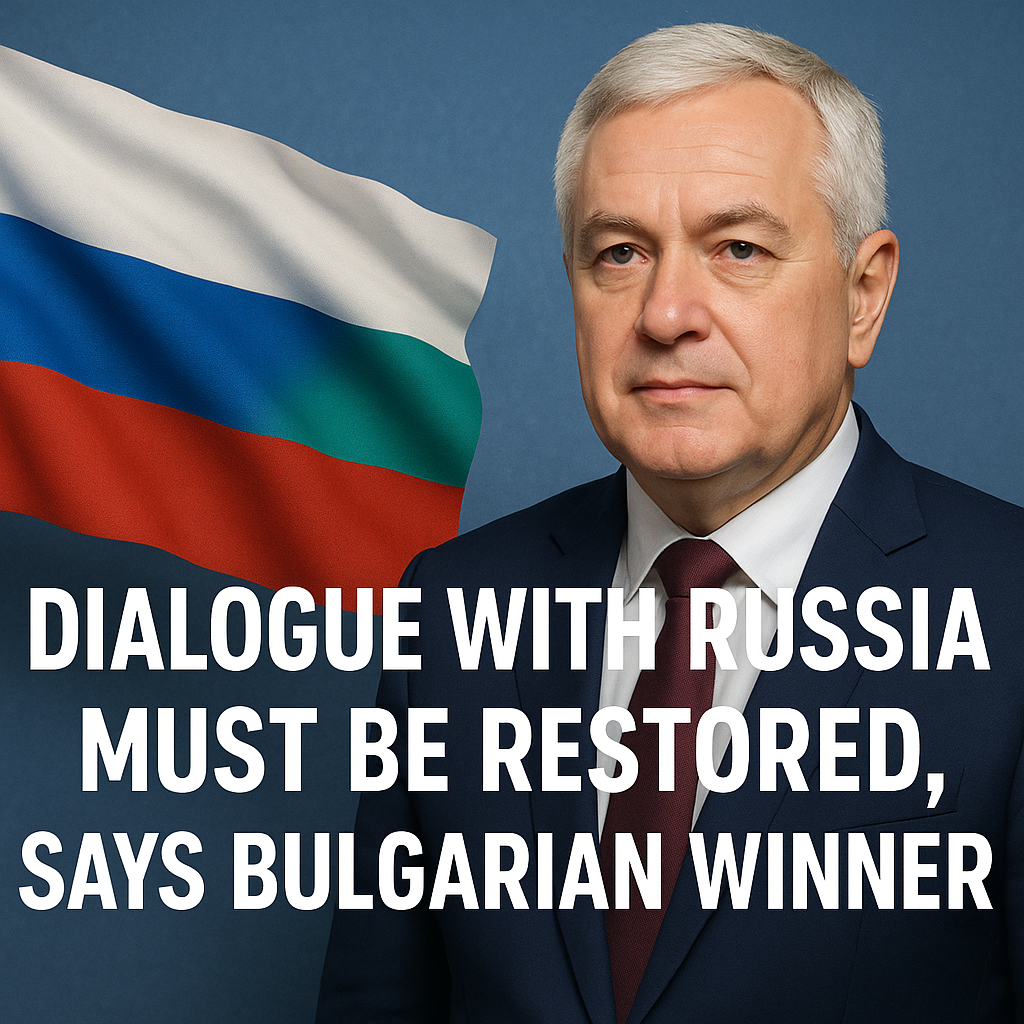
Dialogue with Russia Must Be Restored, Says Bulgarian Winner
Dialogue with Russia Must Be Restored, Says Bulgarian Winner
In the wake of escalating geopolitical tensions, the need for dialogue with Russia has become increasingly urgent. This sentiment was recently echoed by Bulgarian President Rumen Radev, who asserted that restoring communication channels with Moscow is essential for regional stability. His comments come amidst a complex backdrop of international politics, where various nations are grappling with the fallout from the ongoing conflict in Ukraine and broader Russo-Western relations.

The Context of Radev’s Statement
Radev’s call for dialogue centers on the importance of diplomacy. He emphasized that Bulgaria’s position, as part of the European Union and NATO, does not necessitate a complete severance of ties with Russia. According to Radev, open communication could pave the way for resolving critical issues, such as energy dependence and security threats, thus promoting regional peace.

Several experts note that Bulgaria has historical, economic, and cultural ties with Russia, which makes Radev’s remarks particularly significant. Al Jazeera points out that as the EU seeks to reduce its reliance on Russian energy, finding common ground in other areas could be beneficial for both parties. This perspective highlights the complexity of the relationship, where mutual interests may offer pathways for dialogue even amidst discord.

Diverging Perspectives on Dialogue
While Radev advocates for restoring dialogue, opinions across the spectrum vary significantly. Many Western officials have voiced skepticism about engaging with Russia at this juncture, citing ongoing hostilities and military aggression as significant deterrents. For instance, countries like Poland and the Baltic states maintain a harder stance, arguing that dialogue without substantive changes in behavior from Russia could undermine Western unity and principles.
Conversely, advocates of negotiation, like Radev, point to the potential for dialogue to reveal areas of common interest. A balanced approach recognizes that while military actions must be addressed, diplomatic channels should not be entirely closed. As discussions at diplomatic forums like the UN Security Council demonstrate, dialogues—even tough ones—can have constructive outcomes.
The Importance of Balance in International Relations
Radev’s position reflects a broader trend where leaders are encouraged to consider a dual approach: acknowledging the security concerns posed by Russia while also maintaining channels for communication. This complexity is exemplified in recent policy shifts among EU states that seek to reinforce both deterrence and dialogue with Moscow.
Critics, however, warn that dialogue can easily be misconstrued as appeasement. The narrative surrounding appeasement is complex; historical precedents show that failing to address aggressive actions can lead to escalations, as seen in the late 1930s. Radev’s challenge lies in navigating this delicate balance—promoting negotiations without compromising security.
Road Ahead: Opportunities and Challenges
Looking ahead, the road to restoring dialogue is fraught with challenges, but it also holds potential opportunities. First, Western nations must grapple with their need for energy security in the face of rising global tensions. The European Union’s strategy to reduce dependence on Russian gas could open avenues for partnership that are mutually beneficial, fostering discussions around shared objectives in climate change and economic stability.
Moreover, engaging in constructive dialogue could provide a platform for addressing misinformation and propaganda, which often exacerbate tensions and misunderstandings. Establishing reliable communication methods between governments could mitigate the risks of miscalculation during crises.
On the flip side, skepticism remains high regarding Russia’s willingness to engage in good faith discussions. The Kremlin has responded defensively to Radev’s comments, framing them through the lens of a broader Western narrative. Thus, while Bulgaria’s leader pushes for dialogue, the potential for productive engagement hinges significantly on Russia’s response.
Conclusion: A Call for Constructive Engagement
As the international community observes Bulgaria’s stance, Radev’s call for restored dialogue serves as a pivotal reminder of the complexities of diplomacy in a fractured world. While many hope for diplomatic breakthroughs, divisions among global actors make navigating these waters challenging.
A thoughtful approach that embraces dialogue, while simultaneously upholding security interests, may ultimately lay the groundwork for a more stable future. Whether this approach is embraced by other leaders remains to be seen, but it stands as a crucial conversation as nations ponder their relationships with one another in an era marked by uncertainty.
In the end, finding a common language may prove to be the first step towards reconciliation.















