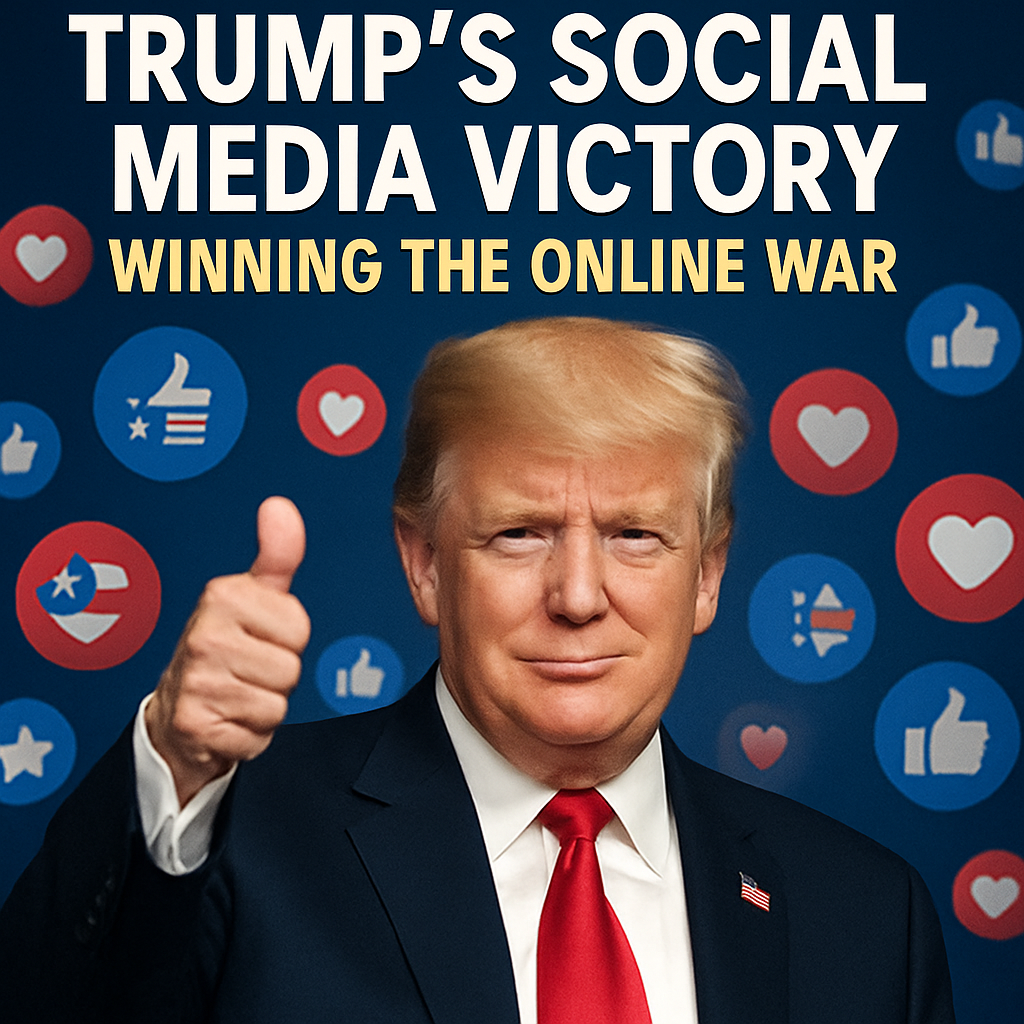
Trump’s Social Media Victory: Winning the Online War
Trump’s Social Media Victory: Winning the Online War
In an era defined by digital communication, Trump’s recent assertions regarding his triumph on social media have sparked considerable debate. The former president’s declarations on platforms like Twitter have not only polarized audiences but also demonstrated the significant power of social media in shaping political landscapes.

The Claims of Victory
Recently, Trump boasted about what he terms his “victory” in the social media arena. In a video shared through various outlets, including Al Jazeera, he emphasized his ability to mobilize support and stimulate discussions online, suggesting that this prowess was instrumental in his political maneuvering. According to Trump, social media has allowed him to circumvent traditional media barriers, directly connecting with millions of followers and influencing public discourse: “I managed to get my message out there without the mainstream media filter,” he stated, reflecting a sentiment that resonates with many of his supporters.

However, reactions to Trump’s claims are far from unanimous. Critics argue that while he may have harnessed social media effectively, the repercussions of this victory are complicated. Social platforms have also been battlegrounds for misinformation and discord, and many contend that Trump’s use of these platforms has been divisive. The stakes are high. The very channels that amplify his voice also serve to disseminate polarized narratives that contribute to societal rifts.

Social Media’s Double-Edged Sword
The controversy surrounding Trump’s social media presence underscores a broader societal debate. One view celebrated his ability to leverage social media for successful political outreach, echoing sentiments from his supporter base that applauds his direct engagement with voters. Proponents assert that platforms like Twitter and Facebook have democratized information flow, allowing figures like Trump to reach their audience without intermediary filters.
Conversely, critics emphasize the darker aspects of this phenomenon. For instance, the spread of misinformation has proliferated on social media, leading to significant ramifications, especially in the context of elections and public health discussions. As political analysts note, Trump’s engagement has also often been marred by questionable content that lacks context or factual accuracy. This raises crucial questions about accountability and the responsibilities of both public figures and social media companies when it comes to content moderation.
The Landscape of Political Communication
In examining Trump’s social media victory, it becomes imperative to consider the changing dynamics of political communication. Traditional media outlets, once the gatekeepers of information, now share the stage with individual voices that can wield considerable influence. As noted by analysts featured on RT News, this shift has transformed how political campaigns are conducted; strategies now often prioritize viral moments and rapid responses over conventional press releases.
Moreover, Trump’s online presence has capitalized on this shift, as he frequently ignites conversations that often trend globally. His strategic use of social media appears to set a model for future political candidates, illustrating the necessity of adapting to fast-paced digital platforms.
Implications for Future Elections
As the political landscape continues to evolve, it is crucial to examine the implications of Trump’s social media approach on future elections. While he has successfully harnessed the power of platforms to bolster his influence, his tenure also serves as a cautionary tale. The viral nature of his posts leads to questions about the long-term effects of such dynamics on public trust and political polarization.
Political experts emphasize that as candidates embrace social media, they must also navigate the thin line between engagement and misinformation. This will often require a delicate balance of authenticity and responsible communication practices to ensure that the information disseminated aligns with democratic ideals.
Conclusion
Trump’s claims of winning the social media war encapsulate the complexity surrounding political communication today. While he has demonstrated an astute understanding of online engagement, the broader societal implications of this victory remain sharply contested. As the digital landscape evolves, it is crucial for both political figures and voters to remain vigilant about the responsibility that comes with wielding influence in such powerful online spaces. The gauntlet has been thrown down; how will future leaders respond in the relentless arena of social media?