
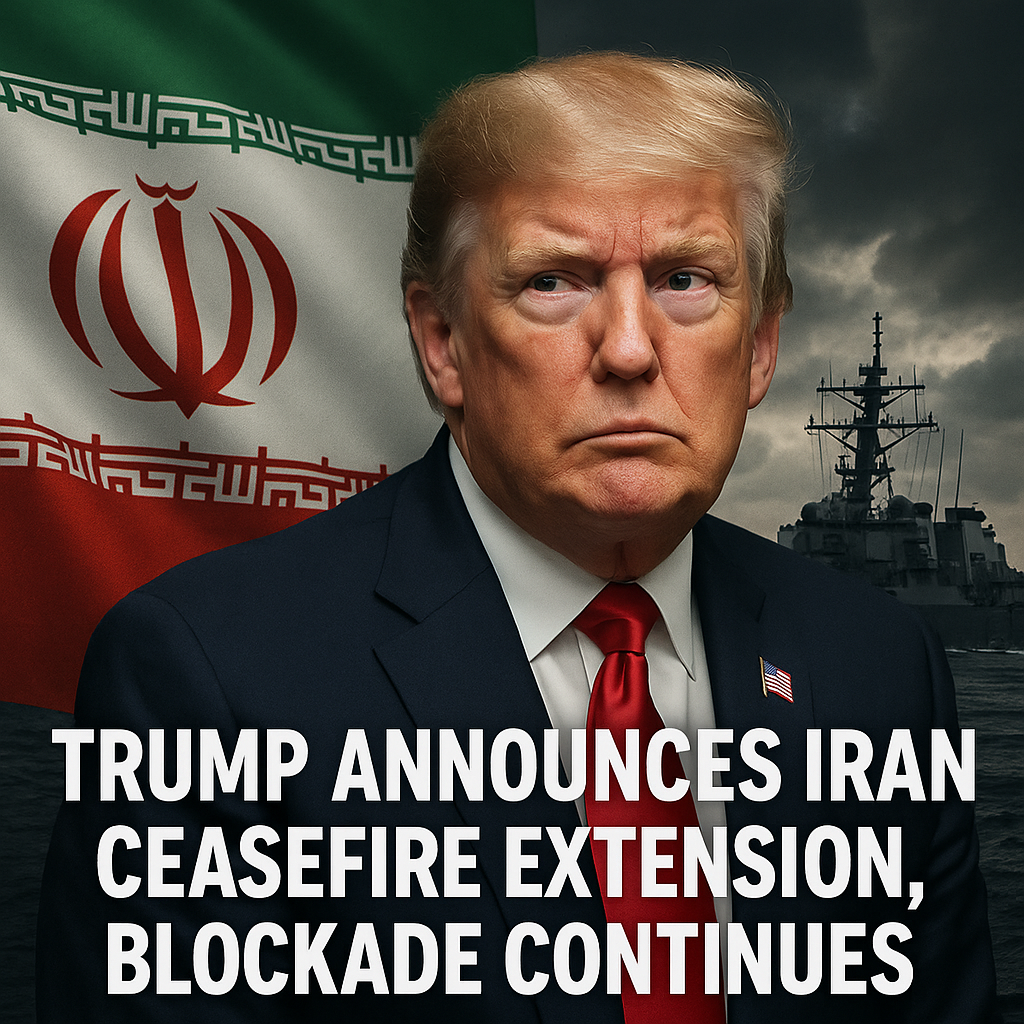
Trump Announces Iran Ceasefire Extension, Blockade Continues
Trump Announces Iran Ceasefire Extension, Blockade Remains
In a recent announcement, former President Donald Trump revealed plans to extend the ceasefire in Iran while simultaneously emphasizing that the U.S.-led blockade will continue. This move has sparked a flurry of reactions, reflecting the complex geopolitical landscape that defines U.S.-Iran relations.

The Context Behind the Ceasefire
The announcement comes amid ongoing tensions in the Middle East, particularly concerning Iran’s nuclear program and its role in regional conflicts. The ceasefire, initially established to mitigate military hostilities and pave the way for diplomatic dialogues, represents a significant yet temporary reprieve in a long-standing conflict.

According to Al Jazeera, Trump highlighted that the extension is a step towards opening diplomatic channels, urging both Iranian leaders and international stakeholders to engage in discussions. However, he maintained that the blockade—a series of economic sanctions aimed at curbing Iran’s nuclear ambitions—would remain firmly in place. This dual approach has drawn mixed responses from various factions, raising questions about its effectiveness and implications for peace.

Perspectives on the Blockade
The rationale behind the blockade as stated by Trump, aligns with the broader U.S. strategy of applying economic pressure to dissuade Iran from pursuing nuclear weapons. Supporters of this perspective argue that the continued sanctions are essential to ensure compliance and to deter aggressive behavior in the region.
An article from RT captures sentiments from the administration, with officials asserting that the blockade effectively limits Iran’s ability to fund various militias across the Middle East. Proponents believe that keeping the pressure on Iran during the ceasefire period serves to strengthen the U.S.’s bargaining position.
Conversely, critics of the blockade assert that it exacerbates humanitarian crises and stifles opportunities for peaceful resolution. For instance, humanitarian organizations have frequently voiced concerns that economic sanctions disproportionately impact ordinary Iranians, leading to shortages in essential goods and services. Sky News reported that many regional experts argue that the continued blockade could undermine any progress made from the ceasefire extension and hinder future diplomatic efforts.
Weighing the Consequences
The situation presents a delicate balance between asserting political influence and fostering genuine diplomatic efforts. While the ceasefire extension is a welcome development, questions linger regarding the sustainability of peace when military and economic pressures continue to loom.
Furthermore, discussions around the effectiveness of the blockade reveal a broader debate on foreign policy. Simplistically regarding the blockade as merely a tool of leverage overlooks the complex realities on the ground, where economic hardship may lead to increased anti-American sentiments and a galvanization of hardline factions within Iran.
Statements from various analysts highlight the lack of consensus on the efficacy of such a strategy. While some believe that maintaining the blockade strengthens the U.S. position, others caution that this approach can lead to increased resistance and inadvertently push Iran towards pursuing more aggressive posturing.
The Path Forward
The road ahead requires careful navigation. As diplomatic dialogues remain at the forefront, both the U.S. and Iran must consider the broader implications of their actions. While the ceasefire extension may provide a brief respite, the underlying tensions between these nations are far from resolved.
Negotiating with Iran requires balancing the demands of both security and humanitarian considerations. Ending the blockade while pursuing diplomatic engagement could potentially create an environment conducive to sustainable peace. However, the current trajectory, as illustrated by Trump’s announcement, suggests a preference for maintaining pressure over fostering dialogue.
In conclusion, while the continuation of the ceasefire marks a hopeful moment, the persistence of the blockade raises critical questions about the efficacy of such an approach in achieving long-term peace in the Middle East. The contrasting viewpoints underscore the complex dynamics at play, and it’s evident that a multi-faceted strategy may be necessary to navigate the turbulent waters of U.S.-Iran relations.
As discussions evolve, stakeholders on both sides must remain open to adapting their strategies, balancing hard power with meaningful diplomatic efforts for a more stable and peaceful future.















