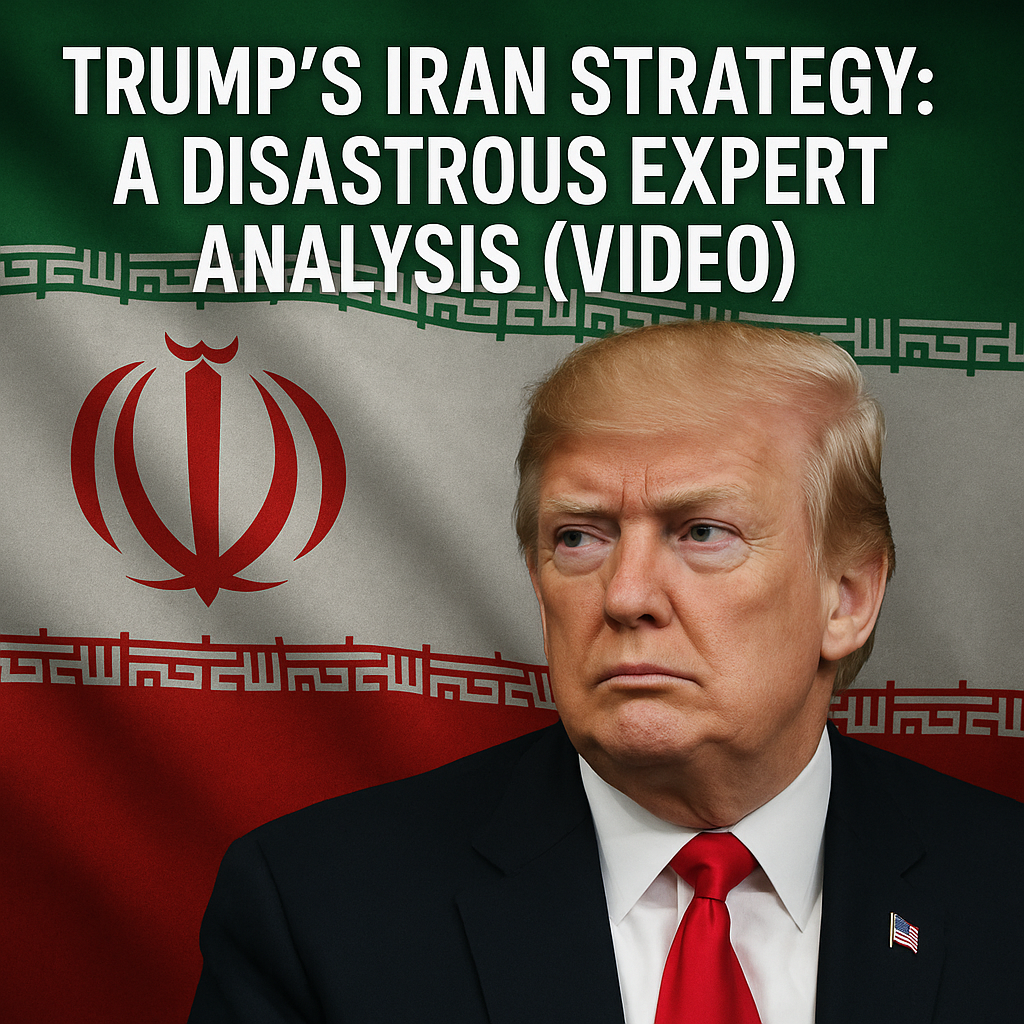
Trump’s Iran Strategy: A Disastrous Expert Analysis (VIDEO)
Trump’s Iran Strategy: A Disastrous Expert Analysis
The complexity of U.S.-Iran relations has reached new heights, particularly under the Trump administration’s foreign policies. An expert analysis reveals that Trump’s Iran strategy might be more disastrous than previously understood, leading to significant implications for both nations and the broader Middle East.

The Fallout from Sanctions and Withdrawal
One primary element of Trump’s strategy was the withdrawal from the Joint Comprehensive Plan of Action (JCPOA) in 2018 and the subsequent re-imposition of sanctions on Iran. Experts argue that this maneuver has not achieved its intended goals of curtailing Iran’s nuclear ambitions but instead has led to increased tensions and instability in the region.

According to an analysis from Al Jazeera, the re-imposition of harsh economic sanctions resulted in severe economic hardship for ordinary Iranians. While the U.S. aimed to cripple Iran’s economy to compel policy shifts, it inadvertently fueled nationalistic sentiments and empowered hardliners within the Iranian political landscape. The sanctions spurred more defiance rather than compliance.

Diverging Perspectives on Military Escalation
While some experts, such as those cited in RT, characterize Trump’s approach as reckless militarism, others suggest that measured responses could have prevented greater conflict. The Trump administration’s role in escalating military actions—including targeted strikes and troop deployments—has been widely criticized. An opinion piece from RT states that this strategy threatens to push both nations closer to a full-scale military confrontation.
However, supporters of Trump’s stance argue that presenting a strong military front is necessary to deter Iran’s aggressive posturing in the region. They posit that by showing military readiness, the U.S. aims to protect its allies and maintain stability in the Strait of Hormuz—a vital maritime passage.
The Diplomatic Vacuum and Its Implications
In the wake of Trump’s withdrawal from diplomatic engagement, a vacuum has formed that has complex ramifications. The Al Jazeera commentary emphasizes that diplomacy was a more effective tool for mitigating risks. The absence of dialogue has left both sides in a precarious standoff, making the possibility of miscalculations more likely.
Moreover, without consistent diplomatic channels, the potential for misunderstandings leading to military engagements remains high. Recent events, including Iran’s advances in nuclear technology, underscore the urgency for conversation. Analysts warn that the continuation of a “maximum pressure” strategy devoid of a diplomatic component invites greater instability—not only for the U.S. and Iran but for their allies in the region as well.
Emerging Consensus Among Experts
Despite varying opinions on the effectiveness of Trump’s Iran strategy, a growing consensus suggests that the strategy has largely backfired. Many experts believe that a renewed focus on diplomacy is essential for addressing Iran’s nuclear developments. The need for a balanced approach—recognizing the complexities of Iranian politics and society—has become increasingly apparent.
As the situation evolves, the debate continues on how best to engage with Iran. The potential re-engagement of diplomatic negotiations might present an opportunity for finding common ground, it remains uncertain who will take the lead in fostering a new path forward.
Conclusion: A Call for Balanced Engagement
In summary, the analysis of Trump’s Iran strategy reveals a myriad of unintended consequences. The harsh sanctions and military posturing have not only failed to achieve their primary goals but also entrenched divisions and heightened tensions in the region.
Moving forward, a balanced approach that incorporates diplomatic engagement, rather than solely coercive tactics, appears essential for navigating the complexities of U.S.-Iran relations. As the global political landscape shifts, the need for nuanced strategies grounded in dialogue may offer a pathway to reduce hostilities and foster stability.