
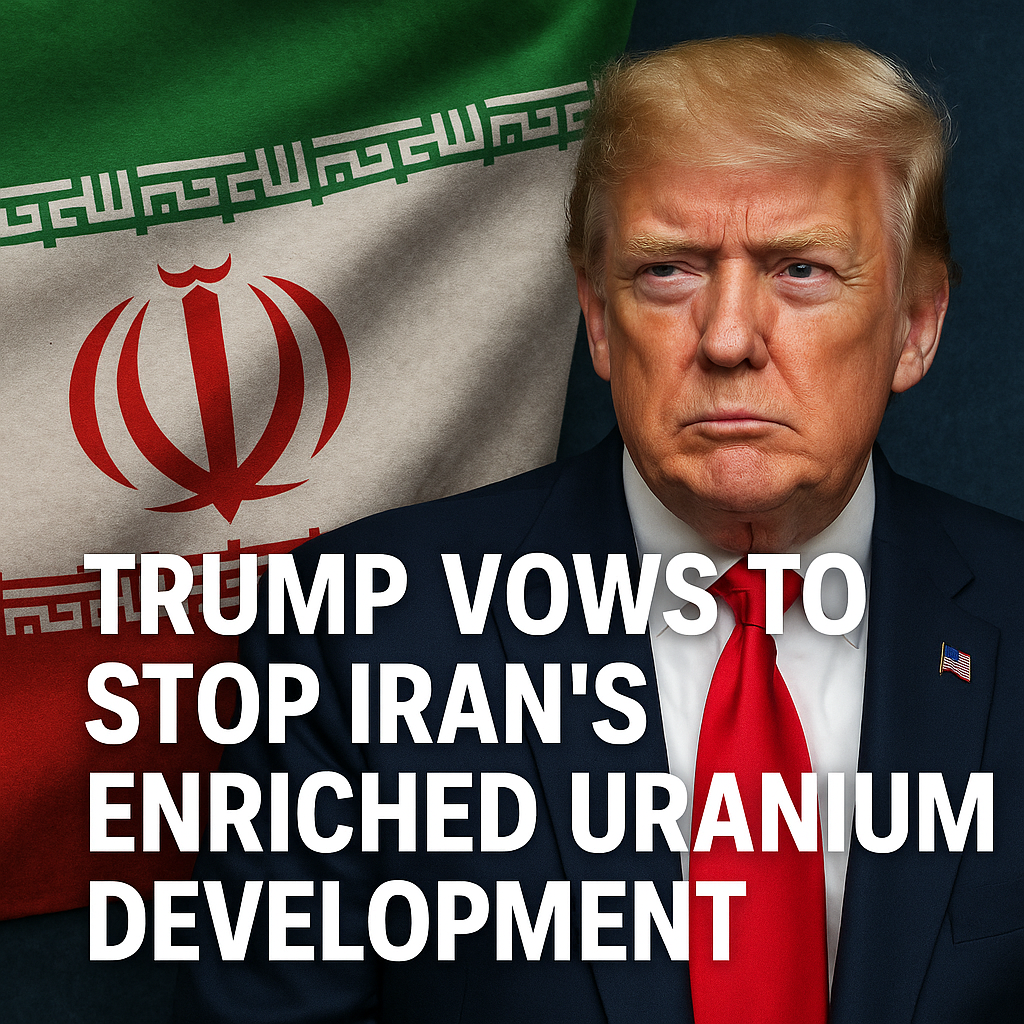
Trump Vows to Stop Iran’s Enriched Uranium Development
In a bold statement focused on international nuclear negotiations, former President Donald Trump recently vowed to halt Iran’s enriched uranium development if he were to reclaim the presidency. This commitment raises significant questions about U.S.-Iran relations, the effectiveness of diplomatic strategies, and the implications for global nuclear proliferation.

The Context of Trump’s Promise
The promise to prevent Iran from advancing its nuclear capabilities finds its roots in the broader context of the Joint Comprehensive Plan of Action (JCPOA), the landmark 2015 nuclear agreement that aimed to limit Iran’s nuclear program in exchange for sanctions relief. Trump infamously withdrew the United States from the JCPOA in 2018, citing concerns that the deal did not adequately prevent Iran from developing nuclear weapons capabilities. His administration argued that the agreement failed to address Iran’s ballistic missile development and its regional activities, which are perceived as aggressive by the U.S. and its allies.

Current tensions have escalated as Iran continues to enrich uranium beyond the limits set by the JCPOA, prompting fears over the country’s potential to develop nuclear weapons. In this heated environment, Trump’s renewed commitment resonates with a segment of the American electorate that prioritizes a tough stance on Iran. Yet, the implications of such a position require deeper analysis.

Diverging Perspectives on U.S. Diplomacy
Trump’s claim draws mixed reactions from different factions within U.S. politics and international policymakers. Proponents of diplomatic engagement believe that re-entering negotiations or negotiating a new deal might yield better results than a solely confrontational approach. Al Jazeera reports that various experts and political commentators advocate for a balanced strategy that incorporates dialogue combined with pressure. They argue that without addressing the grievances of both sides, the cycle of escalation may continue uncontrollably.
On the other hand, critics of the JCPOA, including many in Trump’s camp, argue that the agreement has been ineffective at curbing Iran’s nuclear ambitions. They cite Iran’s violations of enrichment limits as indicative of a broader strategy to achieve nuclear capability, asserting that a more aggressive, sanctions-driven stance is necessary to deter further developments. According to multiple sources, Trump’s supporters echo this sentiment, emphasizing the importance of a strong American posture in the region might dissuade Iran from further provocations.
The Broader Implications of Trump’s Stance
Trump’s declarations potentially complicate the delicate balance of power in the Middle East. Should he act on his promises, the outcomes could influence not only U.S.-Iran relations but also dynamics among other regional players, notably Israel and Saudi Arabia. In the eyes of some analysts, a hardline approach could provoke a backlash, uniting Iran with its regional adversaries against perceived American imperialism.
Moreover, the uncertainty surrounding Trump’s future in politics complicates the situation. Polls indicate a divided Republican base, with many indicating support for his return, but the unpredictability of voter sentiment must also be factored into any potential policy shifts regarding Iran. With the general election looming in 2024, Trump’s foreign policy platform could either pivot significantly or remain static, depending largely on the political winds leading up to that time.
Conclusion: The Path Forward
As Trump’s rhetoric on Iran continues to unfold, the implications of his approach warrant careful attention. While the promise to prevent enriched uranium development seeks to appeal to hardliners and those concerned about nuclear proliferation, the path ahead is fraught with complications. Balancing assertive foreign policy with diplomatic efforts remains a formidable challenge, and as events evolve, the international community will be closely monitoring the unfolding dynamics.
In summary, Trump’s vow to intervene against Iran’s enriched uranium development encapsulates a broader and contentious debate about how best to manage nuclear threats in an increasingly complex geopolitical landscape. The interaction of diplomacy, sanctions, and military posturing will likely dictate future relations with Iran, shaping the broader implications for security in the region.















