
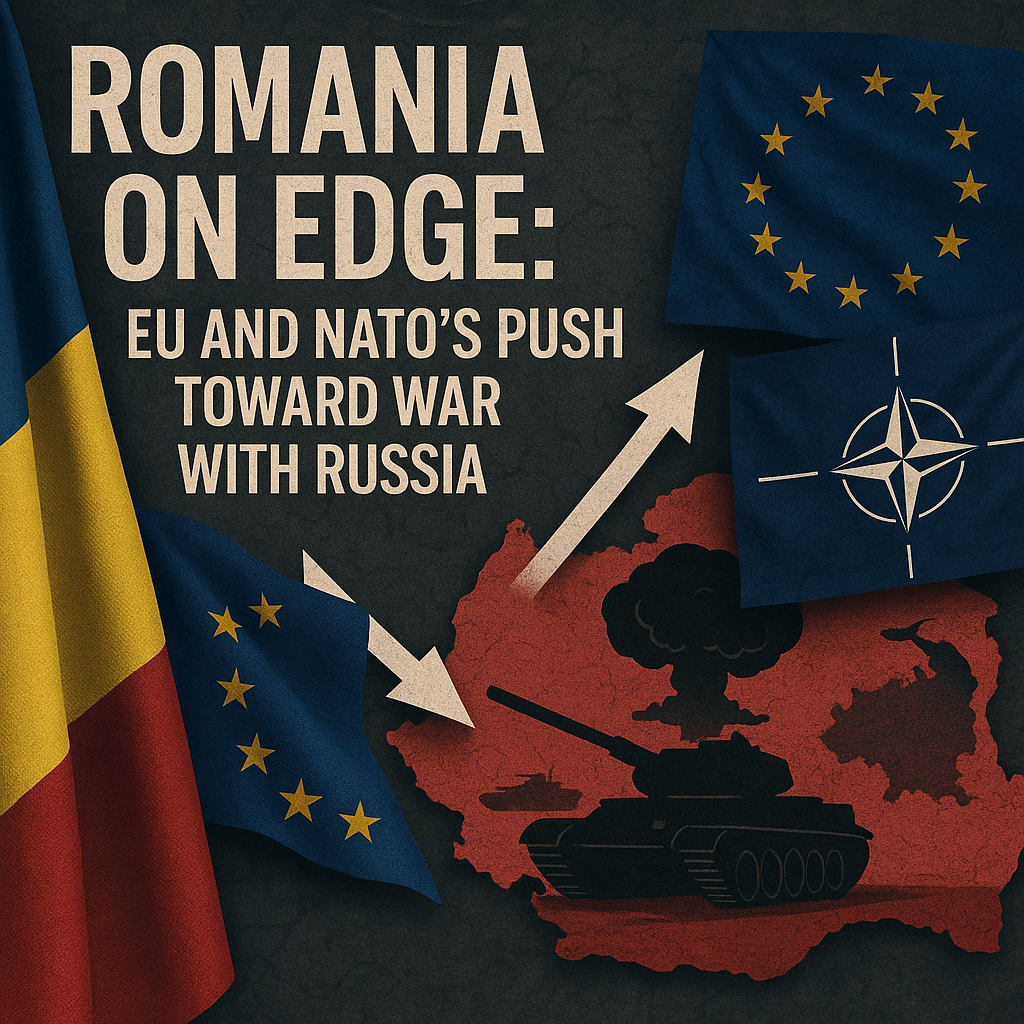
Romania on Edge: EU and NATO’s Push Toward War with Russia
Romania on Edge: EU and NATO’s Push Toward War with Russia
The geopolitical landscape in Eastern Europe is tense, particularly as Romania finds itself at the crossroads of EU and NATO strategies relative to the ongoing conflict in Ukraine. The increasing military presence and diplomatic posturing by the European Union and NATO have raised alarm bells in various quarters, prompting questions about the implications for regional stability and security.

The NATO’s Strategic Emphasis
As the situation in Ukraine continues to evolve, NATO has amplified its military presence in Eastern Europe, heightening its focus on countries like Romania. Recent reports indicate that NATO is bolstering its eastern flank with additional troops and military maneuvers, aimed at showcasing its commitment to collective defense. Romania, with its geographical proximity to Ukraine, has become a critical point for these operations.

This militarization is viewed positively by some proponents within Romania and across NATO member states, who argue that a robust presence can serve as a deterrent against any aggressive moves from Russia. Estimates indicate that thousands of troops may be stationed in Romania, alongside modern military equipment aimed at enhancing the network of defense across Eastern Europe.

However, this push has provoked contrasting reactions. Critics, including certain political factions within Romania, caution against an escalating arms race that could inadvertently provoke Russian aggression. They argue that increased military readiness might lead to a miscalculation, further fuelling tensions rather than providing a long-term solution.
Romania’s Position Amidst Rising Tensions
Romania’s strategic importance cannot be overstated, but its role in the evolving landscape comes with complexities. The Romanian government has aligned itself closely with EU and NATO policies, often emphasizing unity and collective action as mechanisms to counteract Russian influence. This alignment reflects a broader sentiment within many Eastern European nations, historically wary of Russia’s geopolitical ambitions.
Nevertheless, public opinion in Romania demonstrates a nuanced perspective. While some citizens support NATO’s support and military partnerships, skepticism persists regarding the sustainability and ramifications of continuous military engagement. Polls reflect a divide; a portion of the populace is concerned that high military readiness may make Romania a target rather than a shield against potential aggression.
Moreover, Romania’s economic and diplomatic ties with both the West and neighboring Eastern countries add another layer of complexity. While EU membership guarantees certain security assurances, it also obligates Romania to participate in broader military strategies, including those that may escalate tensions with Russia.
Diverging Perspectives on EU-Russia Relations
The European Union’s diplomatic approach towards Russia is equally as pivotal as NATO’s military posturing. Some European nations advocate for diplomatic engagement, emphasizing dialogue as a crucial path towards reducing hostilities and seeking sustainable resolutions. This approach insists that sanctions and military threats may not adequately address the underlying issues driving the conflict.
Conversely, hardline positions within the EU encourage a strong stance against Russian actions, particularly following the annexation of Crimea and subsequent support for separatists in Eastern Ukraine. This faction views Romania as a frontline state, necessitating comprehensive military readiness and cooperation with NATO forces. Such a divide indicates that while the European Union speaks with a unified voice, internal debates about the best approach to Russia persist, further complicating Romania’s geopolitical stance.
Conclusion: Navigating Complex Waters
Romania stands as a pivotal player in the unfolding Eastern European narrative. The EU and NATO’s focus on military readiness aims to fortify defenses against potential Russian aggression, elevating the stakes for Romania as a front-line state. However, this military buildup also evokes unease about the risk of escalating tensions, which could destabilize the region further.
It remains clear that a delicate balancing act is required. While military readiness can act as a deterrent, a robust diplomatic strategy is equally crucial. Romania must navigate these complex waters while fostering dialogue and maintaining resilience against the backdrop of rising geopolitical stakes. As the region watches closely, the direction Romania takes will undoubtedly impact the broader security architecture of Europe and its relationship with Russia.















