
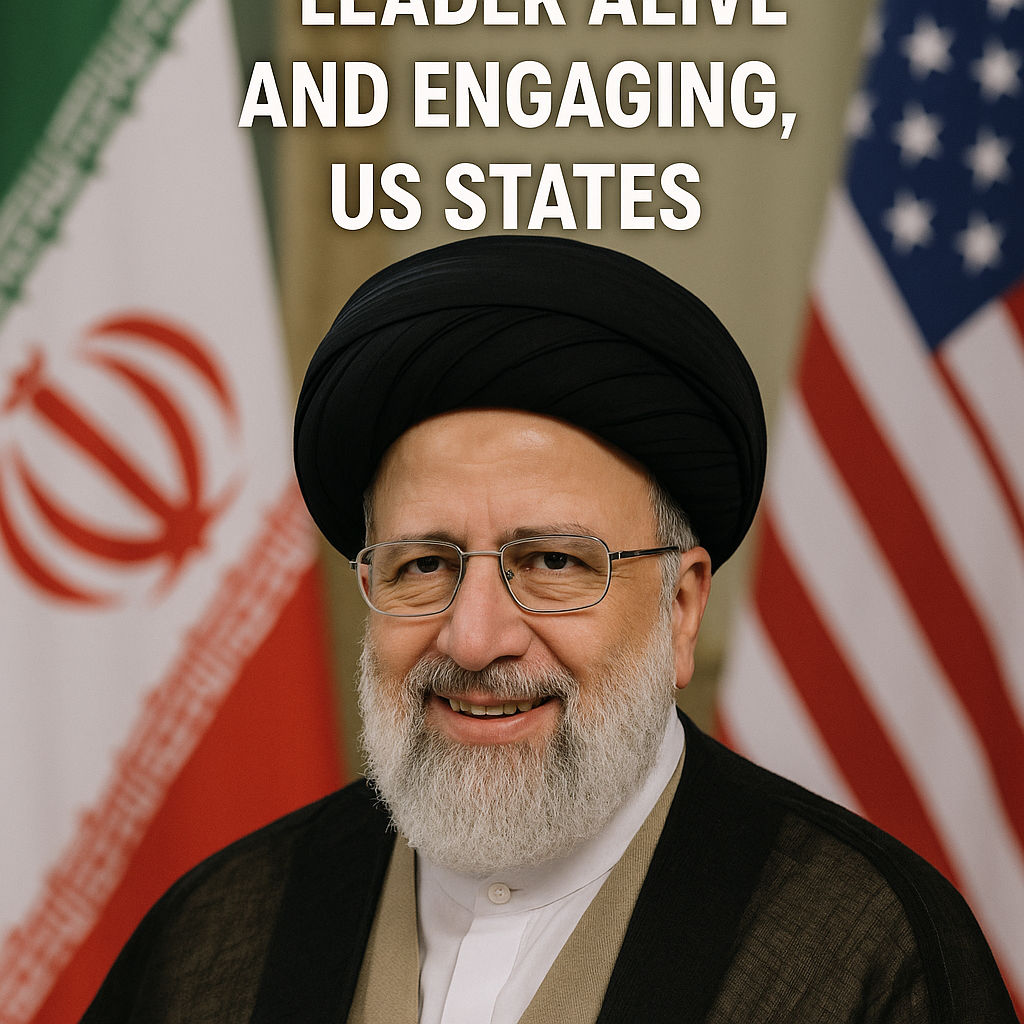
Iran’s New Supreme Leader Alive and Engaging, US States
Iran’s New Supreme Leader: Alive and Engaging, US States
Recent statements from US officials have ignited discussions surrounding Iran’s political landscape, specifically regarding the new Supreme Leader. Reports indicate that this key figure is alive and actively involved in state affairs, which has significant implications for both domestic and international politics.

The Context of Leadership in Iran
Following the death of Ayatollah Ali Khamenei, Iran found itself in a crucial transition period. The Supreme Leader holds substantial power, influencing not only political directions but also religious and military matters. The role’s prominence reflects the intertwining of religion and governance in Iran, making the individual occupying this position both a spiritual figure and a political titan.

In a recent statement, US intelligence suggested that the new Supreme Leader, whose identity has been cloaked in speculation, is indeed alive and has been increasingly engaging with various state apparatuses. This revelation comes at a time when Iran faces numerous challenges, including economic sanctions, regional conflicts, and persistent protests demanding reform.

Perspectives from Different Corners
Different media outlets have varying takes on the implications of this leadership clarity. Al Jazeera emphasizes the significance of a visible and active leader in Iran, stating that such engagement could stabilize the region. The report mentions that US assessments may reflect an interest in ongoing negotiations regarding nuclear policies. Understanding the new Supreme Leader’s stance could play a pivotal role in thawing tensions and exploring avenues for diplomatic dialogue.
Conversely, RT expands on the concerns surrounding the new leadership’s posture, suggesting that sustaining a strong militaristic presence in global affairs remains a priority for Iran. Analysts quoted in the outlet caution that while the leader’s presence might suggest stability, it could also indicate an intensified commitment to confrontational policies, particularly in response to perceived aggression from the West.
This juxtaposition of views highlights a critical point: the new Supreme Leader’s actions may swing between factors of internal survival and external legitimacy, directly affecting global diplomatic initiatives and military strategies involving Iran.
Implications for US-Iran Relations
US strategies often pivot on the nature and communication style of Iran’s leadership. The recent acknowledgment of the new Supreme Leader’s existence signals a potential shift in the intelligence landscape. Recognizing a leader who is engaged in governance could pave the way for more comprehensive engagement strategies from the West, particularly if they are aiming to address contentious nuclear negotiations.
However, the landscape is complex and subject to rapid changes. Ongoing reports highlight that while Western nations, including the US, express cautious optimism, the military rhetoric emanating from Iran suggests a dual approach: one that seeks cooperation but is fully prepared for adversarial stances if required. Such duality must be navigated delicately, as trust-building in diplomatic relations often requires clarity of intent, which may not be immediately forthcoming from Iran’s leadership.
The Road Ahead
As we observe the unfolding narrative of Iran’s new Supreme Leader, it becomes clear that the situation remains fluid. The leadership’s direction will likely be shaped by both internal pressures and external diplomatic interactions. What remains evident is the nuanced nature of this leadership transition and its potential effects on global stability.
From what has been reported, the new Supreme Leader’s engagement could signal a willingness to navigate a different path; however, it also leaves room for skepticism given the historical context of Iran’s leadership dynamics. In conclusion, the complexities surrounding this topic warrant ongoing vigilance and nuanced understanding from all parties involved, as the implications of leadership choices in Iran extend far beyond its borders, prompting a reevaluation of strategies from the US and allied nations across the globe.















