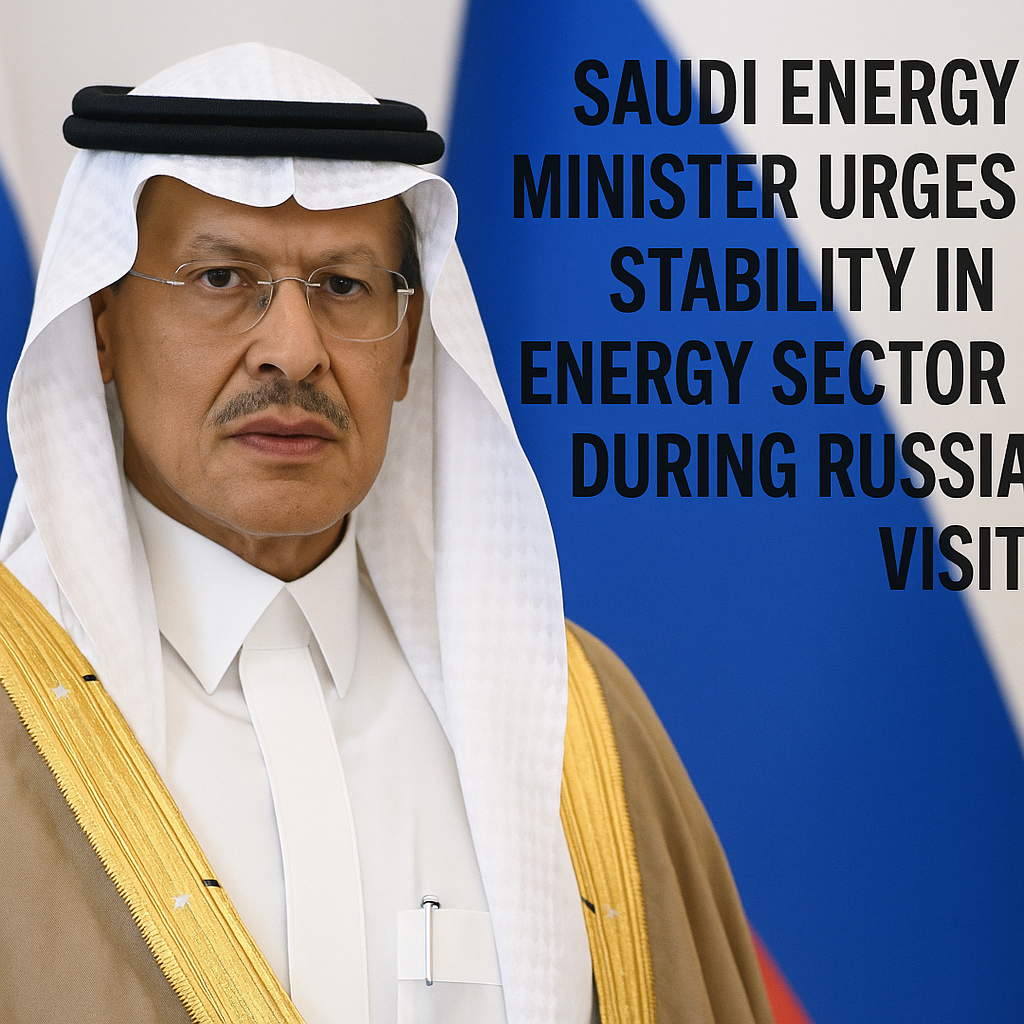
Saudi Energy Minister Urges Stability in Energy Sector During Russia Visit
In a dynamic global climate, stability in the energy sector is more crucial than ever. Saudi Arabia’s Energy Minister, Prince Abdulaziz bin Salman, emphasized this point during his recent visit to Russia, calling for cooperative efforts to ensure the sector remains resilient amid ongoing geopolitical tensions and market volatility.

The Context of the Visit
During his visit, which is framed within broader discussions about energy supply, Prince Abdulaziz met with key Russian officials, including his counterpart, Alexander Novak. The discussions took place against a backdrop of fluctuating oil prices and the shifting dynamics of global energy supply chains. Both ministers recognized the importance of their nations’ roles in the OPEC+ alliance, which has been pivotal in managing production levels to stabilize the market.

Saudi Arabia’s call for stability comes at a time when disruption is more common. As Al Jazeera reports, the energy minister urged for a united front among energy producers to mitigate crises caused by geopolitical tensions, particularly those stemming from conflicts such as the ongoing situation in Ukraine. Retail prices and inflation are high on the agenda in both nations, aimed at finding a consensus to manage output effectively while maintaining robust economic ties.

Different Perspectives on Energy Stability
While the call for stability received positive reactions, opinions diverge when discussing the underlying causes and solutions for energy market volatility. Russian officials highlighted their challenges in maintaining production levels amidst Western sanctions, which have restricted their access to international markets and investment. On the other hand, Saudi Arabia advocates for long-term strategies rather than short-term fixes, suggesting a need for an overarching framework that emphasizes collaboration rather than competition.
Concerns Over Dependency
While the partnership between Saudi Arabia and Russia plays a crucial role in global energy stability, concerns about dependency on fossil fuels continue to emerge. Some analysts argue that reliance on oil-producing nations not only risks national energy security but also delays the transition to renewable energy sources. The urgency of addressing climate change has prompted calls for diversified energy portfolios, which could increasingly challenge the longstanding petroleum-centric view held by both countries.
Future Implications of Energy Cooperation
The joint commitment to stability can have far-reaching consequences, especially as the world grapples with shifts to cleaner energy. Both Saudi Arabia and Russia must navigate the delicate balance between optimizing current oil production and exploring sustainable energy alternatives. The Energy Minister underscored that the joint vision should not solely concentrate on meeting current demands but should also plan for future scenarios shaped by environmental policies and market transformations.
Such collaboration can potentially stabilize oil markets, but it also poses risks of entrenching fossil fuel dependencies at a time when alternative energy investments are rapidly gaining ground. As both countries engage in discussions, stakeholders from both within and outside the energy sector are watching closely.
Conclusion: A Balancing Act
Prince Abdulaziz’s visit to Russia serves as a reminder of the complexities at play in the energy sector today. Both the Saudi and Russian energy ministers echoed the significance of unity and resilience, yet the path forward must address fundamental issues, including geopolitical barriers, economic dependencies, and the urgent demand for sustainable energy solutions. Ultimately, while cooperation could yield short-term stability for the oil markets, the broader implications of such partnerships will require navigating a rapidly evolving landscape marked by challenges and opportunities alike.