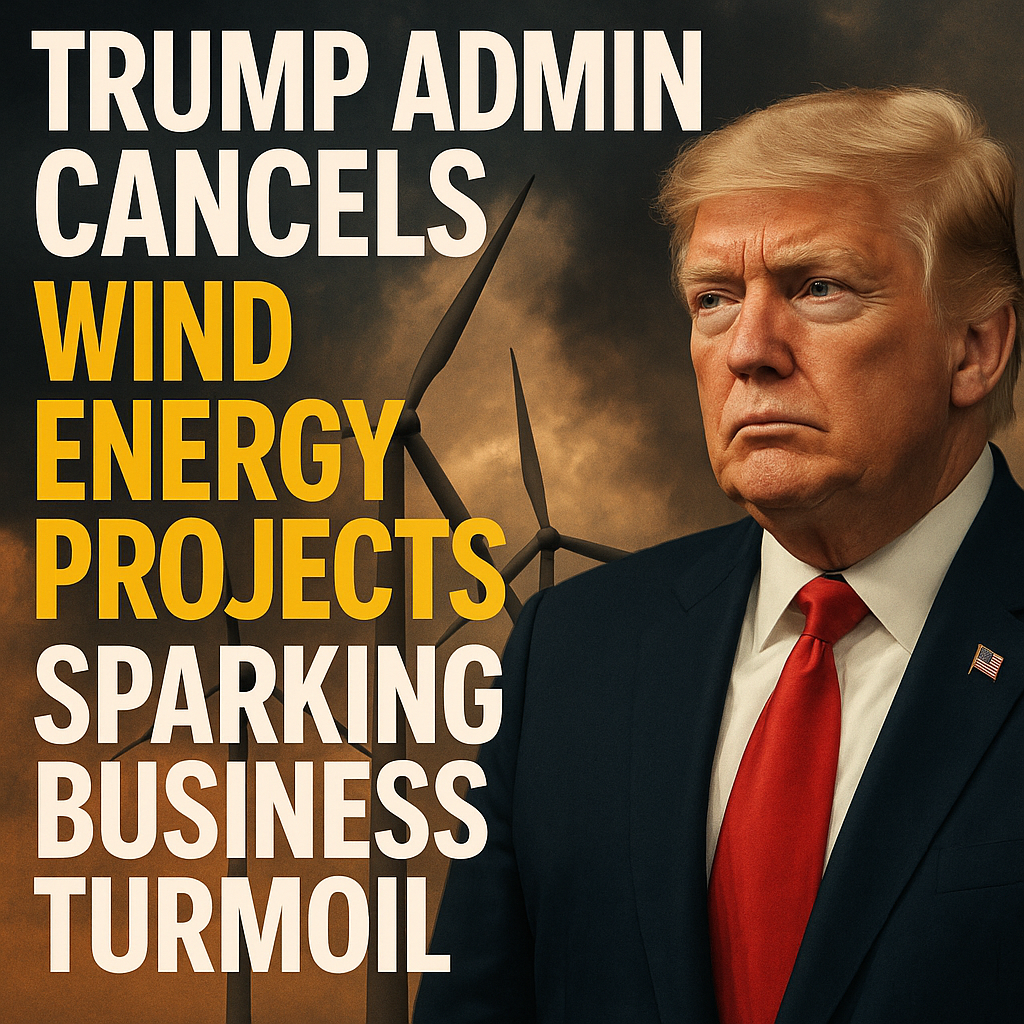
Trump Admin Cancels Wind Energy Projects, Sparking Business Turmoil
The recent decision by the Trump administration to cancel various wind energy projects has sent shockwaves through the renewable energy sector, triggering concerns among businesses and environmentalists alike. As multiple stakeholders engage in the discourse surrounding this significant policy shift, it’s essential to evaluate the implications and reactions shaping the narrative.

The Fallout of Cancellations
The wind energy projects, poised to generate a significant amount of clean energy and provide thousands of jobs, have faced abrupt termination. According to reports, the administration’s rationale primarily stems from an ideological stance favoring fossil fuels while allegedly prioritizing state and local concerns over renewable energy expansion. Following these cancellations, business stakeholders who had invested substantial resources into project development are now grappling with uncertainty.

Economic Impacts on Local Communities
In areas where these wind projects were planned, the economic ramifications are profound. Local economies that anticipated job creation and infrastructure development are now left to contend with the disruption. Data from industry experts underscores that the wind energy sector is a critical contributor to job growth in regions reliant on renewable initiatives.

Business sentiment is reflected in comments from stakeholders who argue that abandoning these projects undermines not only potential job opportunities but also local investments. A report from Al Jazeera noted that, “The withdrawal of support for renewables clashes with broader market trends favoring sustainable energy,” highlighting a growing rift between political directives and economic realities.
Diverging Opinions on Energy Policy
The cancellation has drawn stark contrasts in opinions. Proponents of renewable energy argue that this decision jeopardizes efforts to combat climate change and transition towards sustainable energy solutions. Environmental activists claim that governmental support is imperative to combat the looming effects of climate disruptions, emphasizing the urgency of green energy transitions.
Conversely, some supporters of the administration laud the decision, asserting that the focus should return to traditional energy sources. They argue that fossil fuels are essential for energy reliability and economic growth, framing the discussion as one of balancing innovation with the needs of taxpayers and industry stability. However, critics of this viewpoint stress that failing to invest in renewables undermines future energy independence and environmental preservation.
The divergence in viewpoints illustrates the complexities surrounding energy policy, revealing deep underlying tensions between economic priorities and environmental responsibilities.
Looking Ahead: Uncertainties and Opportunities
As the dust settles from these cancellations, industry stakeholders are left navigating a rapidly changing landscape. The future of wind energy, particularly within the regions impacted, remains uncertain. However, opportunities for dialogue around energy policy can emerge from these tensions.
While the current administration’s direction may lean heavily toward traditional energy forms, the broader market trends still show a steadfast demand for renewable energy solutions. Businesses adapting to this shift may find pathways for innovation that align more closely with consumer preferences for sustainable practices.
Moreover, the ongoing developments in the wind energy sector could ignite further discussions in legislative arenas. Advocates for renewable energy may leverage this moment to campaign for policies that sustain clean energy investments despite current obstructions. This could involve collaboration among diverse stakeholders to create a more cohesive strategy that addresses both environmental urgencies and economic viability.
Conclusion
The cancellation of wind energy projects by the Trump administration represents more than just a political decision; it reflects broader tensions between evolving energy needs and existing policies. As businesses assess the impacts of this growth-limiting strategy, the conversations spawned by this event may ultimately influence future energy discussions. Navigating these complexities will require active participation from stakeholders across the spectrum—from business leaders and policymakers to environmental advocates—bringing all voices to the table in pursuit of a balanced and sustainable energy future.