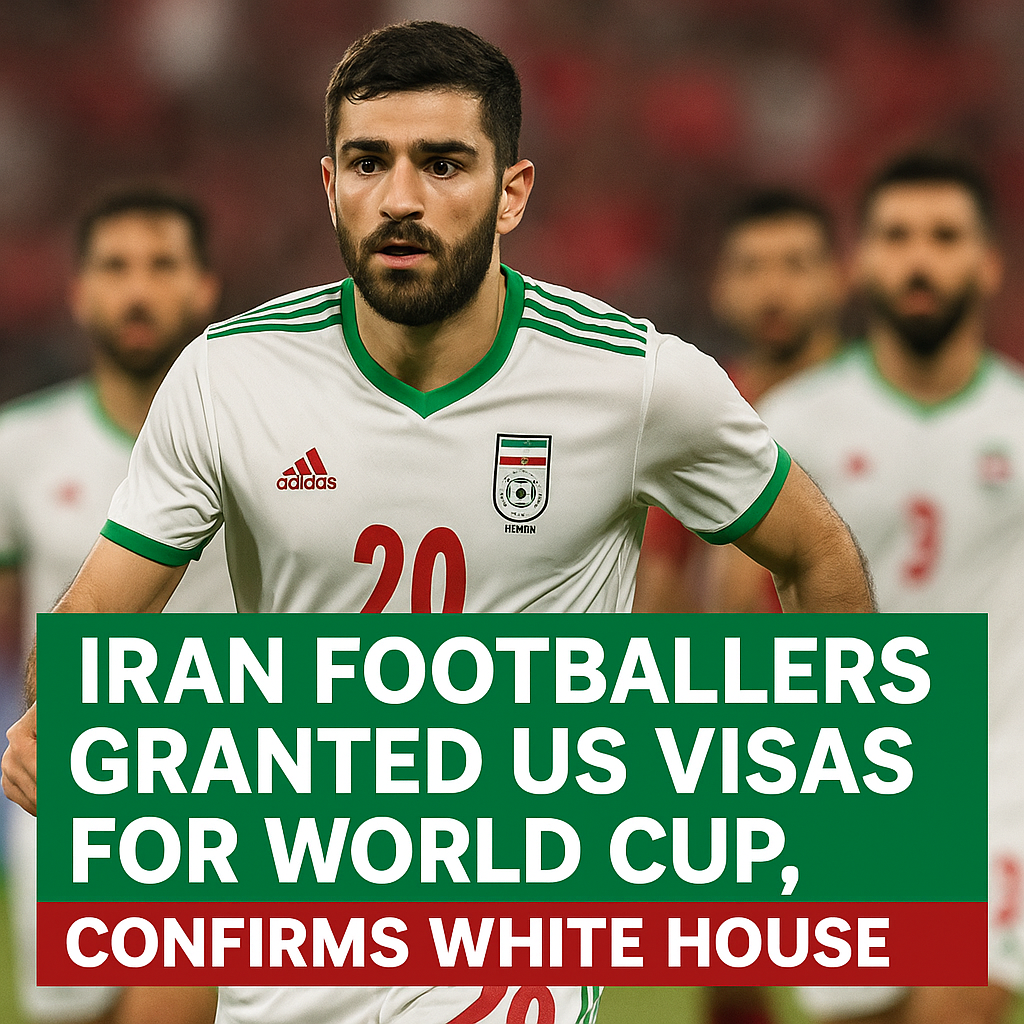
Iran Footballers Granted US Visas for World Cup, Confirms White House
Iran Footballers Granted US Visas for World Cup, Confirms White House
The recent confirmation from the White House that Iranian footballers have been granted U.S. visas for the upcoming World Cup has stirred a mix of optimism and skepticism. Amid rising political tensions between the two countries, the decision highlights the complexities of sports diplomacy and international relations. This move not only paves the way for athletes but also reflects broader themes of engagement and the power of sports to transcend geopolitical divides.

A Step Towards Engagement
The issuance of visas to Iranian players for a global sporting event like the World Cup is significant, considering the strained relations between Iran and the U.S. The players are set to participate in the 2026 FIFA World Cup, jointly hosted by the U.S., Canada, and Mexico. According to reports from Al Jazeera, this decision suggests a willingness on the part of the U.S. government to engage with Iranian citizens, even amidst ongoing political tensions. The potential of sports to foster a spirit of camaraderie and mutual respect is underscored by this decision.

Moreover, the success of Iranian footballers on the world stage can serve as a narrative of pride for a nation often depicted solely through the lens of conflict. In this respect, the visas can be seen as an opportunity for Iranian athletes to showcase their talents and present a different narrative to the international community.

Challenges and Concerns
However, not everyone views this development through a lens of optimism. Critics point out that granting visas does not alleviate the broader issues between the two nations. Some commentators, particularly from outlets like RT, argue that while sports should ideally unite, they cannot ignore the underlying human rights concerns and governmental repression in Iran. The very act of sending athletes abroad amidst domestic unrest has raised eyebrows; there’s a fear that these players may become symbols of a regime while simultaneously being celebrated as hopeful ambassadors of their nation.
Additionally, the decision to approve the visas is set against a backdrop of a contentious political climate. Iran’s government has been criticized for its stance on dissent and the treatment of its citizens. The paradox lies in the fact that while sports aims to unify, the political realities complicate such narratives, raising questions about the appropriateness of celebrating such achievements when critical social issues remain unresolved.
The Role of Sports in International Relations
The situation surrounding the Iranian footballers emphasizes the role sports can play as a diplomatic tool. While some may argue that it is naïve to couple sports with political engagement, history shows that athletic events have frequently served as a platform for dialogue. From the Olympic Truce in ancient Greece to the “Ping Pong Diplomacy” between the U.S. and China in the 1970s, sports have often facilitated conversations that might otherwise be challenging.
However, this situation is not devoid of risks. The hope that athletes can bridge divides may falter under the weight of political misinterpretations or misuses by governments aiming to showcase a façade of openness while ignoring critical human rights issues. Thus, while the visas grant access to a grand international stage, they are layered with implications that extend far beyond the sports arena.
Conclusion: A Complex Landscape
As the Iranian footballers prepare for their journey to the World Cup, the narrative surrounding their participation is far more intricate than a simple tale of victory or defeat. The issuance of U.S. visas may symbolize a potential thaw in relations, albeit within the confines of a sporting event. Yet, it provokes a broader inquiry into how sports can be wielded as instruments of diplomacy without overshadowing the pressing societal issues that linger in the background.
In navigating these waters, it is essential to remember that sports can indeed highlight shared humanity and aspirations, but they are not a panacea for the complex geopolitical issues at hand. The hope is that this opportunity for Iranian players will not only showcase their athletic prowess but also lead to more meaningful exchanges that address the deeper concerns affecting their nation.