
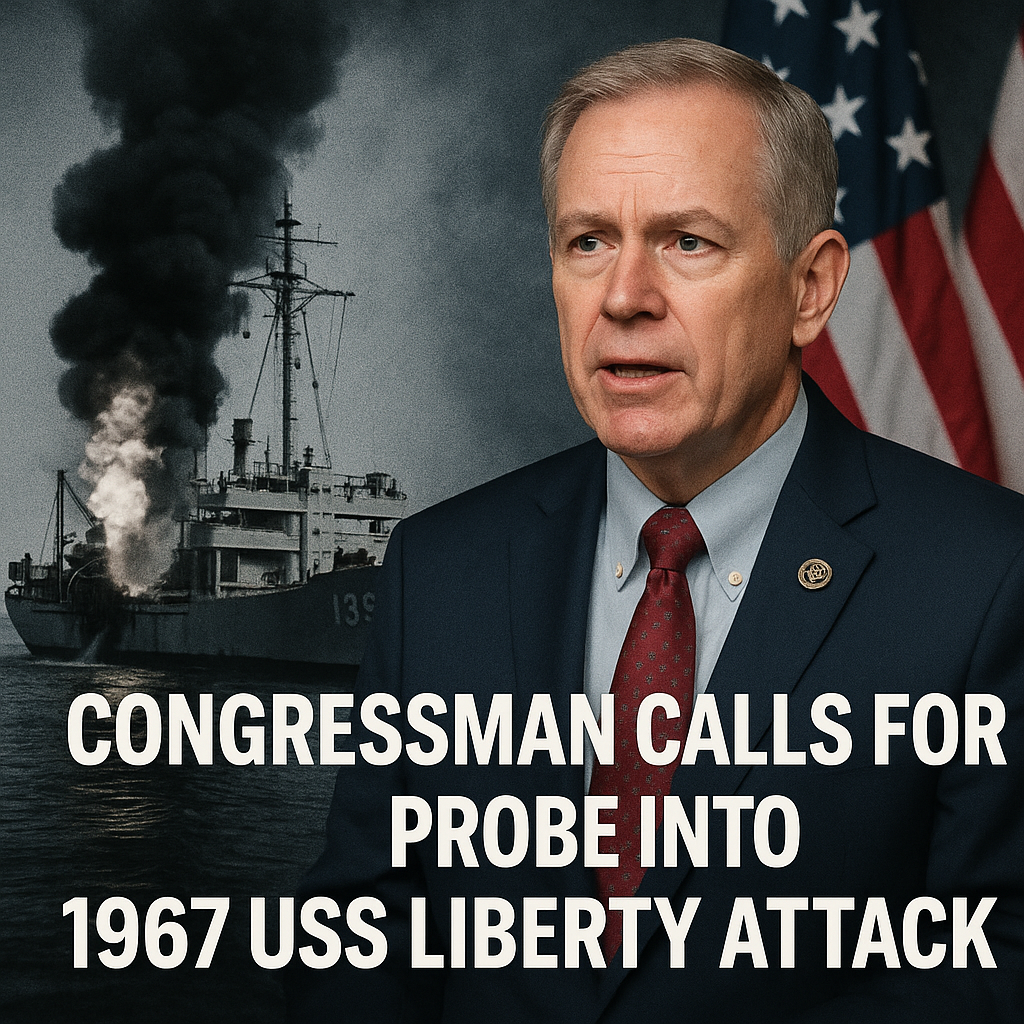
Congressman Calls for Probe into 1967 USS Liberty Attack
In recent months, a significant shift in U.S. political discourse has emerged, highlighted by a congressman’s call for a probe into the 1967 attack on the USS Liberty. This event, wherein the Israeli military mistakenly attacked a U.S. Navy ship during the Six-Day War, has been a source of contention and controversy for decades. The congressman’s demand signals a renewed interest in examining the historical narrative surrounding this incident, raising questions about accountability and transparency in international relations.

Revisiting the USS Liberty Incident
The USS Liberty attack occurred on June 8, 1967, when Israel’s military forces launched air and naval assaults on the vessel, resulting in the death of 34 American servicemen and injuring another 171. Official investigations, including a report by the U.S. Navy and subsequent reviews, concluded that the attack was a case of mistaken identity. Yet, skepticism persists, and many families of those who were killed believe there was a cover-up.

Recent statements from Congressman Thomas Massie indicate an emerging political will to revisit this contentious historical episode. Massie is advocating for a formal investigation, arguing that the truth should be established in a transparent manner. “It is vital that we examine all available evidence and provide closure for the families of the victims,” he said, emphasizing the need for accountability—an assertion that resonates with numerous advocacy groups advocating for a deeper exploration into U.S.-Israeli relations.

Diverging Views on Accountability
The call for an inquiry into the attack has sparked a variety of perspectives. On one hand, proponents of the investigation argue that reconciling the historical record may lead to significant policy shifts regarding military and diplomatic engagements in the Middle East. They contend that understanding the true nature of this incident could reshape perceptions of Israel in American foreign policy.
On the other hand, critics argue that reviving this narrative may affect U.S.-Israeli relations negatively. Some political analysts warn that delving deeper into the incident could strain an alliance that is already under pressure due to various geopolitical factors. “We must be cautious,” stated a spokesperson for the American Israel Public Affairs Committee (AIPAC). “The relationship between Israel and the U.S. is vital for stability in the region; opening old wounds only serves to benefit those who seek further division.”
Despite contrasting sentiments, both sides acknowledge the complex legacy of the USS Liberty incident. The emotional weight carried by the families who lost loved ones complicates the discourse, pushing policymakers to consider both historical accountability and contemporary diplomatic realities.
Balancing Historical Narratives and Present-Day Diplomacy
As the call for a probe gains traction, the broader implications for U.S. foreign relations are becoming focal points of debate. America’s stance towards Israel has long been characterized by unwavering support, driven by shared strategic interests and historical ties. However, calls for accountability in situations such as the USS Liberty attack may indicate a shift towards a more balanced view of U.S. partnerships—one that encompasses accountability and justice.
Moreover, as new generations of lawmakers enter Congress, the historical critiques of American policies and alliances are becoming more prevalent. This surge of interest in revisiting specific historical events reflects a growing public appetite for transparency and accountability in foreign policy.
In recent years, movements advocating for Palestinian rights have gained momentum, and critics of U.S. foreign policy are more vocal than ever. They argue that any investigation into painful historical events is a step toward understanding the broader context of U.S. involvement in the Israeli-Palestinian conflict.
While the congressman’s push for a probe signals a potential shift in how America engages with Israel, it remains to be seen how this inquiry will unfold. Key questions remain: Will it lead to a deeper understanding of the incident? Could it change the legislative approach to Middle Eastern policy?
In summary, while Congressman Massie’s request for an inquiry into the USS Liberty attack speaks to a longer-term desire for transparency and reconciliation, it also highlights the complexity of navigating historical grievances alongside contemporary diplomatic relations. As debates continue to swirl around this issue, it’s evident that reconciling the past with the present will require both careful navigation and open dialogue among all stakeholders involved.















