
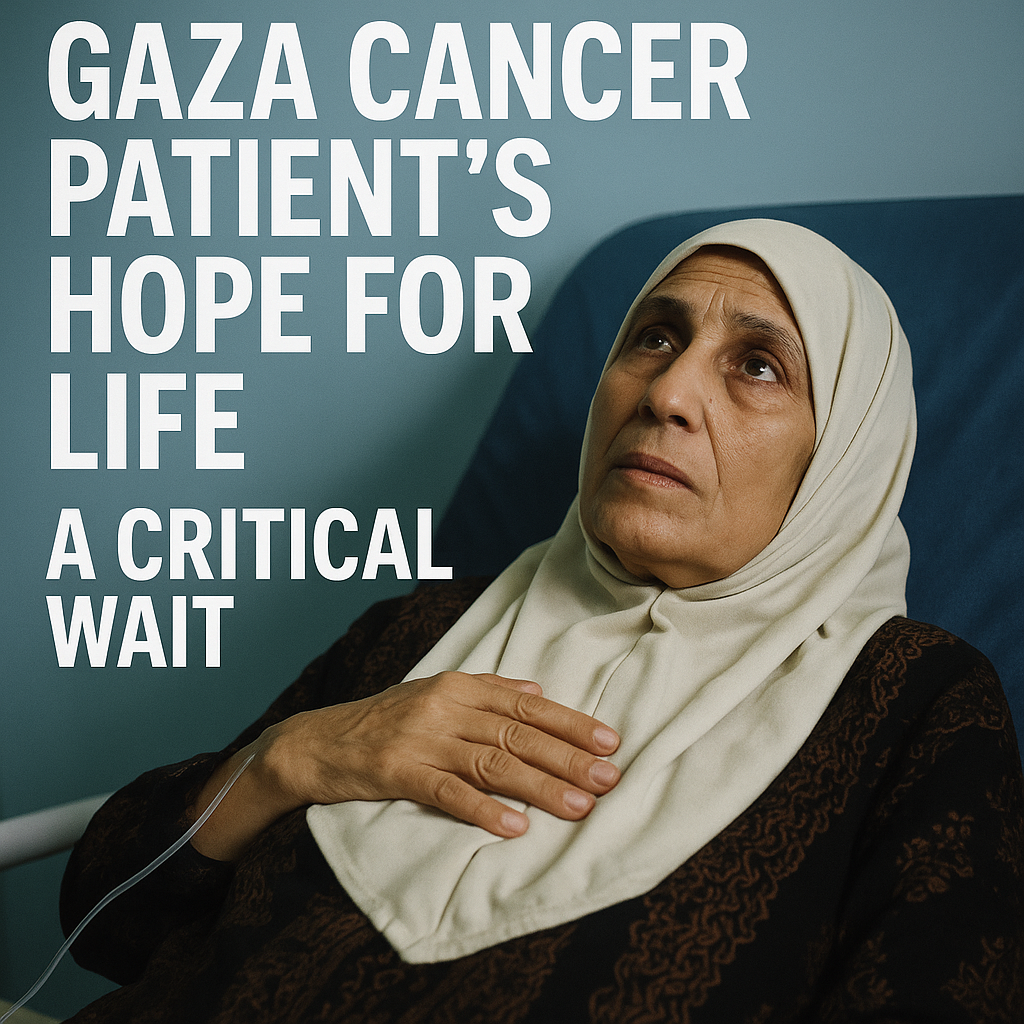
Gaza Cancer Patient’s Hope for Life: A Critical Wait
Gaza Cancer Patient’s Hope for Life: A Critical Wait
In a region marked by conflict and humanitarian crises, Gaza’s cancer patients are often left grappling not only with their health but also with the harsh realities of access to necessary medical care. The plight of these individuals, especially in times of increased military tension, highlights a critical humanitarian issue that transcends politics.

The Medical Landscape in Gaza
The healthcare system in Gaza operates under significant strain, largely exacerbated by the ongoing blockade and conflict. Since 2007, the restrictions on the flow of medical supplies and personnel have limited the ability of healthcare providers to deliver adequate care, particularly for serious conditions like cancer. For patients requiring specialized treatments—such as chemotherapy or radiotherapy—the wait can often extend indefinitely, as they navigate bureaucratic hurdles and the instability of the situation.

Recent reports have illuminated the story of one such patient, a young girl diagnosed with cancer, who is desperate for treatment. Her situation is emblematic of a broader crisis. Al Jazeera reported that families often face immense struggles to secure medical permits, which are necessary to seek treatment outside Gaza. The lengthy wait times can significantly worsen health outcomes, turning the hope for recovery into a race against time.

Further complicating matters, the healthcare system’s limited resources mean that even when patients receive permits, the services they require may not be available. This creates a paradox where patients are caught between the immediate need for intervention and the systemic limitations that make timely care incredibly challenging.
Calls for Action and International Response
Amid these troubling conditions, both local and international voices are calling for enhanced humanitarian aid and political action. Advocacy groups stress the importance of lifting restrictions on medical supplies and allowing for greater autonomy within Gaza’s healthcare framework. Voices from the international community argue that ensuring access to medical care is not merely a local issue but a global responsibility.
Contrastingly, some perspectives emphasize the complexities involving the governance of Gaza. Opinions vary about the role of Hamas and its impact on the delivery of services. Some argue that political factions limit resource distribution, further complicating access to healthcare. The framing of these viewpoints can create a divide in public opinion, leading to a simplistic narrative that overlooks the intricate realities faced by both health workers and patients in Gaza.
Organizations such as Médecins Sans Frontières (Doctors Without Borders) have been vocal about the urgent need to address these systemic issues. In their reports, they highlight both the heroism of local healthcare providers working under dire conditions and the heartbreaking stories of patients who continue to suffer due to a lack of essential services.
The Human Cost of Inaction
As the world watches, the personal stories behind the statistics are often relegated to the background. The young patients in Gaza, awaiting vital treatments, symbolize a humanitarian crisis that demands attention. The human cost of this situation cannot be overstated; every hesitant moment in securing treatment risks not just individual lives but collective futures.
Many families live in a constant state of anxiety, fearing that each day lost to bureaucracy could be a day their loved ones cannot afford. This undercurrent of despair is intensified by a frustration at the apparent inaction from various sides, leaving families feeling powerless in the face of such overwhelming obstacles.
A Complex Path Forward
There is no straightforward solution to the healthcare crisis in Gaza. Multiple facets—political, humanitarian, and social—intertwine to create a complex web that prolongs suffering for patients like the young cancer victim currently making headlines.
While some advocate for immediate international intervention to alleviate the humanitarian struggles in Gaza, others point to the need for a sustainable framework that addresses long-term health system resilience. Without addressing both the immediate needs and the underlying issues, the cycle of crisis may continue indefinitely.
In conclusion, the hope for a cleaner, healthier future for Gaza’s cancer patients depends not only on localized efforts but also on a concerted global response that recognizes the deep-rooted nature of the issues at hand. As spotlighted by recent stories, the voices of those affected must drive discourse, urging us not just to empathize but to act decisively in pursuit of change.















